Creative Technology, best known for its audio-related products, has announced the sale of a chunk of its ZiiLabs subsidiary to Intel - bringing the latter company's decision to abandon its partnership with Imagination Technology and its PowerVR GPUs into sharp focus.
Creative Technology isn't a name that springs to most peoples' minds when it comes to 3D graphics hardware, with the company's Sound Blaster products far closer to the fore. A long time ago, however, Creative competed with the likes of Matrox and Diamond Multimedia with its 3D Blaster accelerator boards. For a while, Creative continued its 3D Blaster lines with dedicated graphics cards based on Nvidia's GeForce GPUs, but it gave the market up in 2006 in order to concentrate on its audio-related products.
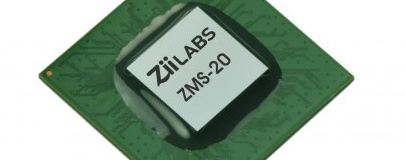
Well, almost: when the company ceased the production of its 3D Blaster product lines, it still had a use for the 3DLabs subsidiary it acquired in 2002. Following the demise of the 3D Blaster product line, the company renamed itself to ZiiLabs and its primary product was the StemCell system-on-chip (SoC) family - not to be confused with the Cell processor - which combined ARM architecture processing cores with in-house media processing hardware. The company's top-end design, the ZMS-40, packed four Cortex-A9 processing cores with a 96-core StemCell array, and formed a central part of the company's JAGUAR reference platform for Android 3.2 tablets.
The ZiiLabs processors did not, however, take off in the market. While the StemCell array provided surprising power, it proved awkward to harness and as rivals started to improve the processing power and multimedia capabilities of their own SoC designs sales for the ZMS family stagnated.
It is no surprise, therefore, to find that Creative Technologies is selling off a chunk of the ZiiLabs division - but the surprise comes when you learn that the buyer is Intel. According to an announcement made by the company today, Intel is shelling out $50 million in order to acquire '
certain engineering resources' of ZiiLabs along with the entirety of Creative's GPU technology. The deal isn't a buyout, however: Creative will still maintain full ownership of ZiiLabs, and has announced it will continue the development of its StemCell product line.
The deal is split across the two product areas: the UK engineering resources of ZiiLabs are being purchased for $30 million, while Creative's GPU technology is being licensed - not purchased - for $20 million.
With
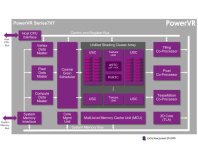
leaked slides indicating that Intel's future Atom system-on-chip designs will go for in-house graphics technology, rather than continuing the trend of licensing PowerVR IP from Imagination, it's not difficult to see Intel's plan: the $50 million is a push in getting more powerful integrated graphics processing technology, to better take on the likes of Nvidia, Samsung and Qualcomm in the low-power SoC market. Thus far, however, Intel has not formally commented on the deal, nor on its plans to use Creative's GPU technology in future products.











Want to comment? Please log in.