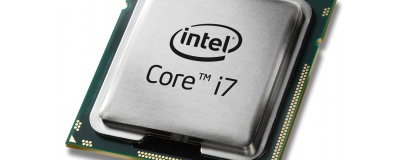
Intel's Sandy Bridge platform will include upgraded anti-theft capabilities for portable devices.
Intel has confirmed that Sandy Bridge will take aim at corporate computing, introducing upgraded anti-theft technology in the vPro-equipped chips.
While precise details of the improved security features are currently under wraps, Intel's David Allen confirmed that they're set to include the ability to remotely disable Sandy Bridge-based systems from a remote administration console.
Speaking to
IT Business, Allen explained that corporate IT departments could configure Sandy Bridge-based laptops to be deactivated on demand, providing a remote 'kill-switch' that enables lost or stolen laptops to be rendered useless remotely.
While the technology is simply an enhancement of anti-theft technologies already available on some corporate Intel platforms, it's an indication that Intel may be targeting Sandy Bridge at large corporations. Sadly, however, there are currently no signs of the technology appearing at the consumer level, where it could mimick Apple's Mobile Me remote management technology on its iPhone and iPad devices.
It's a focus that Allen is keen for Intel's OEM and ODM partners to focus on. '
As we go forward into 2011,' stated Allen,
'Sandy Bridge will deliver the security, connectivity and performance options that businesses need, and we'll rely on our channel to help deliver this to the SMB market.'
Allen also took the opportunity to claim that Intel has nothing to fear from ARM co-founder Hermann Hauser's
comments that Intel will be 'obliterated', explaining that the company has long since '
evolved from being a chip company to a computing solutions company with platforms, software and services.'
Do you like the sound of a laptop you can shut down remotely, or are you worried about what could happen if ne'er-do-wells figure out how to maliciously activate the new security protocols in Sandy Bridge systems? Share your thoughts
over in the forums.

29 Comments
Discuss in the forums ReplySeriously though, it's a good idea, albeit one that throws up a huge amount of questions regarding possible malicious use of this feature. I can already see LAN parties where a competitor simply disables other gamers' PCs to gain the upper hand at SC2..
that is more important imho
I'm not even sure it's a good idea for desktop stuff that might get stolen. let alone laptops. Makes a nice attack vector that shuts down an entire company office for a few days when deployed right. Or you're sitting in a coffee shop using WiFi and next thing you know you're staring at a brick with keys on it.
In the NHS we used Safeboot to do almost exactly the same thing without it being at the hardware level so you could do something about it if it kicks in inappropriately.
http://www.trustedreviews.com/cpu-memory/news/2010/12/20/Sandy-Bridge-Processors-Go-On-Sale/p1
A shop in Malaysia has put some Sandy Bridge on sale!
"The high end Core i7 clocks in at 3.4GHz and will set you back 939 Malaysian ringgits (RM) or about £190. This is followed by 609RM (£125) for the 3.1GHz 2400, and 585RM (£120) for the 2.8GHz 2300. "
this would make an amusing virus,
seriously though how hard would it be to create a virus that auto destroys these chips
Normally it takes them about a week to crack the DRM for a game. Since this is a bit more hardware based I would say two weeks? Three at the top.
To be fair, the most likely person to pick up your lost laptop is the person sitting near you on the train. If it's stolen, it's more likely that's it going to be your resident hoodie thief than some professional hacker, they probably don't need your laptop to begin with.
My work laptop's got drive encryption on it, not sure how good it is but it sounds more useful than being able to shut off the processor. The only thing this is useful for is to stop people who can't use a screw driver. Abu Hamzer must be kicking himself for taking those hacking night classes.
What moron thought up this idea?
do not see how different this is to how currant TPM implementations is with Vpro
love the comments in here know do not seem well thought out
there is nothing stopping you from Enabling it never mind disabling it (like when dell laptops come with that computer trace its set to disable by default), note i did say enable first before disable as its default state would be disable
Welcome Scott :)
(To everyone else: he is an Intel employee, so direct questions his way on here ;) )
I'm imagning his PM box getting flooded with messages now!
*BOOM*
Thanks a lot Takei, now everybody knows!