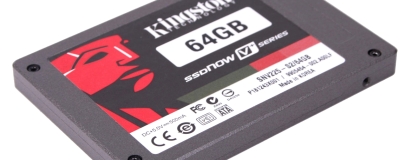
Kingston explains its naming and why the 40GB model didn't get a TRIM update.
Even though Intel provided a
TRIM update for its 40GB value SSDs earlier this year, Kingston's re-branded Intel drives didn't receive the fix. We recently had the chance to ask Kingston why, and it explained it believed Intel kept the TRIM fix to itself because it wanted something more to offer its own customers.
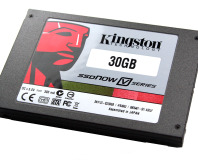
Kingston claims it then pulled its original 40GB Intel drive to replace it with a
30GB drive instead. While we appreciate this move, Kingston's endless chopping-and-changing of the internals of its SSDs, while keeping the same name has hardly helped.
While we were told last November that this practice would stop, the last six months have seen a mish-mash of controllers used for its V and V+ series drives. When we asked Kingston about this change of heart, it did actually apologise to
bit-tech for initially stating that it would indicate which controllers were used in future products - apparently this was never the intention. It explained to us that it wants to promote its products under its own brand as "Kingston drives" and let the price and capacity being the sole distinction between V and V+ series SSDs.
It said only enthusiasts care what goes inside and that the majority of its customers couldn't tell the difference: only that as far as the value segment was concerned they were "
notably faster than a hard drive." It also pointed out that its M-series was promoted towards enthusiasts had consistently used an Intel controller, which is better suited to the performance market. All clear? Let us know your thoughts,
in the forums.

14 Comments
Discuss in the forums ReplyRegarding this bit though:
It said only enthusiasts care what goes inside and that the majority of its customers couldn't tell the difference: only that it was "notably faster than a hard drive."
That'd make a good slogan!
Kingston SSDs
We know barely anyone cares, but it's faster than a hard drive
Catchy
the new sanforce has issues that Trim is FAIL at the moment and drive could fail as well, JM not sure if they have fixed the 0.01MB/s random read/writes yet
even if kingston made an good SSD i would not buy one as it take me an day to work out if they are still makeing it
I believe that to be true for people purchasing single drives, but I don't think that accounts for a very big part of their sales.
I wouldn't be surprised if 80% of their sales went to system builders, and when the pc is in the shop then most people have only 2 criteria
1. I want an SSD
2. It needs to be as big as possible
when was the last time you saw a banner in a store saying "new pc with a Intel M SSD with response time xx and random access time xx"
usually it only says SSD with xx GB space
The majority of people entrust the enthusiasts to get the scoop on buying decisions. When the company makes it harder to find the specs, the less they even get included on the decision table.
Problem is price 64gb for £300 ish is alot of money
quite agree... but then I dont have an SSD... though this is how I justfy the electrical expense.
Actually I sympathise with Kingston's position. In the short discussion it pointed out that it only pushes the Intel stuff to enthusiasts who want the best performance and that product has been consistent since day 1. It's marketing for the V/V+ series is solely brand and price focused, which means that it constantly looks for the best solution for people who just want an SSD for other reasons: low power, high reliability in mobile products and faster than hard drive response times.
Considering Kingston sells more V/V+ than there probably ARE enthusiasts, I can't blame them. For example - a US police department contacted them to entirely kit out their highway patrol fleet in V drives because the hard drives in their cars constantly failed.
I don't have an SSD but I know they are also useful for program. It's faster to launch a programs wich is stored on SSD rather than on HD. Plus enthusiast surely already have big hard drive. So if they have money better invest it on something that will help maek their PC faster than storage thhey won't use unless for saving three time their data.
Also sure, after the initial JMicron controller failure most SSD drives today are pretty decent and give you tons of performance for the money so it doesn't really matter which one you get anymore in the grand scheme of things. But that does not mean we don't do informed purchases. And we demand to know what chips and tech is inside what we buy. I do not want to buy a black box and just have to trust the manufacturer that it will perform well.
I have a large source code tree I work with, using subversion for revision control. The tree is over 1GB in size, and has 90,000 files in it. Doing an svn update on the root on a HD used to take several minutes as svn scanned the tree; on my Intel SSD, it takes less than 6 seconds. Similarly, a recursive directory listing - which I just did to get that 90K figure - took 12 seconds cold, as compared to 9 seconds the second time - and that's using Cygwin utilities to strip out the .svn directories, so a couple of cores were pegged.