Some of AMD's triple and dual core CPUs can be unlocked to quad core CPUs, however no stability is guaranteed and AMD's reputation has apparently suffered because consumers don't understand why.
When we first previewed AMD's latest
8-series chipsets, we were told by some motherboard manufacturers that they wouldn't support core-unlocking - the feature which allows you to take a triple-core Phenom and try and turn it into a quad-core.
Although some motherboard manufacturers,
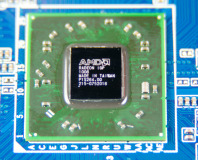
notably Asus, managed to get core unlocking working (using a variety of methods which we'll hopefully look at a future feature), it is a feature officially missing from the chipset.
The word from the manufacturers here in Taipei is that the reason AMD dropped the core unlocking capacity were fears over its reputation. Users and system integrators were buying the CPUs, unlocking them then blaming AMD if they found the resulting system was unstable or simply didn’t work. AMD decided this wasn't good for its reputation - and we also suspect grey market activity in predominantly developing countries played a part in the decision too.
Multiple motherboard companies told us they were highly critical of this decision prior to the launch of the 8-series chipsets, and decided to continue to engineer workarounds. MSI has issued a BIOS fix to its current motherboard revisions, however we’ve recently found while it is certainly an improvement over the original we reviewed, it still has some issues we will detail in a later, full lab update.
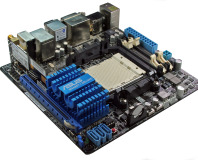
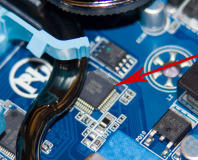
Gigabyte has gone to the next step and engineered a completely separate hardware fix (i.e. a discrete chip) that issues its own unlocking codes for all its 8-series boards. This has required a PCB revision (Rev.2), but Gigabyte assures us that all the products now shipping to the channel now feature it. As we know from our previous reviews, Asus was the only manufacturer ready at the launch of its 890GX motherboard that included core unlocking already.
Do you agree with AMD’s decision? Let us know
in the forums.

38 Comments
Discuss in the forums ReplyI believe the real reason they want the feature removed is because yields are now so good, that the vast majority of chips that come out of the foundry will unlock successfully.......last year it really was a lottery if you got free cores, now its a virtual certainty...
AMD cant afford to setup seperate production lines for 2,3,4 and now 6 core chips, so disabling core unlocking is the easiest way to protect their distinct product lines.....
don't agree with you here, better to underpromise and overdeliver rather than have a raft of problems and bad press
This would not go down too well, and if the machine was unstable, it would appear on the net in forums etc before it was traced back to a 'dodgy' system builder/reseller.....
Just enable it for OCers, who know where to find it etc.....(and add a big disclaimer)
Sounds like they took the "lottery core" April fool article to heart...
very true
intel : we are releasing a new cpu that will change the industry
people : yeah right its gona suck
AMD: we will release a new cpu that will change the industry (twice as slow and intel)
people: OMG !!!! OMG !!! #&(%##
However, using this argument you could state that a Q6600 was clocked at 2.4GHz for a reason and allowing people to overclock them to upto 4GHz is likely to ruin Intel's reputation.
Plainly this is ridiculous. We know that some Q6600's comfortably clock to epic levels, while some others struggle above 3.2GHz, depending on the luck of the draw.
Some AMD triple cores had a "good" fourth core, some didn't.
If a system builder was selling an AMDx3 with 4 cores and stating it was a quad core they should be in trouble for trades description, just like an overclocker can't take a i7 930, clock it to i7 extreme clocks and call it an i7 extreme chip.
AMD should be blameless and therefore shouldn;t have to remove enthusiast support.
Anybody buying a PC part with a stated specification shouldn't be able to complain if the part won't run stably at a different specification. Half the fun of these things is seeing how much extra you can get for free. Not buying cheap and expecting extra for free.
Spot on guys. Just more white noise from AMD and more promises that they can't deliver. Same old AMD PR machine trying to cover up their cracks that have clearly appeared.
Why AMD didn't see this coming though is beyond me. It has long been known that shady system builders do this.
How is this promises they can't deliver? Did you even read the article or did you just decide to troll?
I vote just trolling
+1.
why are people blaming AMD for doing something they never said it was ment for? Stupid, just stupid. AMD gives us the opportunity to get more out of our processors and moron's complain. :(
Intel has also done something somewhat similar already. Look at Extreme Editions with unlocked multipliers. The technology is obviously possible, so how come my cheaper CPU can't change the multiplier? Same reasons why AMD is disabling core unlocking. A mix of enforcing a product line and not leaving themselves liable for complaints when things go wrong.
The latter, as always
Whats the point of offering an unlocked CPU if the market place wont support it?
Why then do they remove it when they realise it's not that stable and not that beneficial unless your other component has the upto date bios work round. That's even if they have a supporting bios, which by the look of things not that many have.
So my original statement is accurate, truthful and correct. More white noise from a typical deflated AMD!
Just because you own one girls, it doesn't mean we have to listen to your whining when it doesn't cut the mustard!
I go for Troll
Nice to see you're getting along in there Bindi, you're justifying your paycheck =P
Although I'm a not a fan of buying triple core and try to unlock the extra one - I prefer buying the real deal - I can understand the success and reputation of this cpu's. Sad to see the "Complaint Way" so present in today's life, they're ruining something great for enthusiasts by making AMD scared of losing rep.
It's no different to all the people who borked their GPU's trying to unlock more pixel pipelines. It's a user's error not the manufacturer's. They should have left it alone IMO.
The point of offering was that it had the potential to be unlocked, they never said it was a 100% guarantee that it would work. It's a good marketing gimmick, plus it sells chips.
The reason they decided to "remove" it was that some people complained it didn't work, AMD never guaranteed that it would, it's just that it's better for their reputation that they don't officially condone it.
It's not really white noise as unlocking cores was quite a good way to get free performance but as with all overclocking things, it was a "your mileage will vary" and people should've known before hand.
And I think we've all been there with the 9700/9800 series pipeline unlocking..or that X8xx unlocking? Or that 7800/7900 Series, unlocking? It's not a matter of it being supported or not, Overclocking was never condoned by any sane manufacturer.
It would be rather like Intel removing the ability to overclock the CPU at all - they'd be well within their rights, after all, it isn't performance you have paid for, it can cause instability etc etc.
Seems that regardless of what AMD do these days, people just go "aww, there's a shame", whereas their rivals get 10 page threads about how they are the spawn of satan.
How is that a similar comparison? They are not removing the ability to overclock the CPU, as far as i understand it. Just the ability to unlock cores that you haven't actually paid for? (and are not guaranteed to be stable).
This was from the original review of the Phenom II X3 on bit-tech:
AMD's Overclocking Guru, Sami Mäkinen, has a specific technique for testing the overclockability of Phenom II CPUs. By setting the Advanced Clock Calibration (ACC) to zero percent initially, then overclocking to the maximum stable all cores will accept, before checking each core individually with the latest AMD OverDrive.
Unlike the original Pheno's which benefited from a negative two to six percent ACC, Sami explained that with 45nm Phenom IIs it can be used to boost "weaker" CPU cores to higher speeds by using positive ACC. If there is one (or several), applying two percent ACC to that core(s), while leaving the rest at zero percent can eke out a few extra MHz. However he was also keen to point out it may or may not provide additional MHz over leaving ACC disabled - it's entirely down to the quality of the CPU and its synergy with the motherboard and BIOS.
No mention of core unlocking was made in the article and it was only in the comments section that mention was made of the possibility of unlocking a 4th core with some motherboards and some CPU's.
Not a guaranteed feature at all...
To me a 550BE/545/555 seems pointless for unlocking abit, im stuck between buying a 550be or athlon x4 which games just as good as phenom x4's in benchmarks anyway, l3 cache really isnt that usefull in gaming full stop.
Less power consumtion, less heat and clocks fairl comfortable normally.
A little closer of an example would be the way that not all motherboards allow overclocking anyway. It's not something that Intel has included as a feature in any way, just something that other manufacturers are letting you do at your own risk by including BIOS settings that alow it. I have an Intel board laying around that has no options in the BIOS to allow overclocking because, quite simply, it isn't something Intel is trying to do. Much the same way AMD is now leaving core unlocking as something which must be entirely handled by third parties at their own risk. Unless I misread, AMD is not forcing manufacturers to stop working around it.
I run an i7 920 overclocked to 4.2GHz, so sorry to disappoint.
It's a perfect reason that AMD were getting bad press because people were trying to do it and it failed. It was a feature they left in because they weren't sure it would work, so removing it because it was getting them bad publicity is the reasonable option if parts of the market won't appreciate it.
Alternatively, the cynical side of me reckons that it's because they've got their yields high enough that the vast majority can be unlocked in this way, so they've removed it so that people buy their more expensive processors.
Unlikely, as it is impossible. The board unlocks the CPU. Without the board adjusted in the BIOS to do so, its still whatever it left the factory as.
Sorry, didn't get around to answering this. In both cases you are using bios settings to increase performance of a product that goes beyond the capabilities of the shipped product. Whether it is a rated clock speed for that chip or the number of functioning cores, it makes no difference - you are getting extra performance you haven't paid for. If Intel decided to lock the bus speed to a maximum value for a particular chip after previously allowing overclocking, there would be hell to pay.