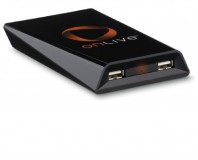
Onlive, the cloud-based games system, will launch in the US this June for a $15 per month subscription fee.
Onlive, the controversial cloud-based games system which has had tech-heads arguing since it was first announced last year, will launch in the US on June 17th.
The premise for the system is simply that gameplay is streamed back to players over the internet, with the actual computing done in Onlive server farms. Player inputs are pinged over to the farms and results are sent back as video, continuously. The theory is technically sound, but
doubts have been raised over how viable the idea is on current internet connections.
Either way, Onlive is confident the system will work and has signed up publishers like EA, Ubisoft, 2K Games and THQ to support the system from launch.
Pricing for Onlive has been revealed too, with users coughing up a $14.95 USD monthly subscription for access to the network, with game access costing extra. Players will also be able to buy games over the service, as well as rent them and the first 250,000 people to sign up will get three months of free access.
"
This marks a huge milestone for both OnLive and the interactive entertainment landscape as a whole, changing the way that video games are developed, marketed, accessed and played," said Steve Perlman, Founder and CEO of OnLive. "
We are opening the door to incredible experiences for gamers and enormous opportunities for developers and publishers."
Let us know your thoughts in
the forums.

44 Comments
Discuss in the forums ReplyTaking gaming out of the hands and control of enthusiasts and making it a paid subscription service is not a paradigm I want to see popularised one bit.
If services like OnLive became the new norm you could say goodbye to mods, originality, quality, the enthusiast hardware market - pretty much everything many of the people who post on bit-tech hold dear in their gaming hobby.
As I see it OnLive directly opposes everything we nerds and enthusiasts stand for.
Hell, OnLive deserves an even deeper level of hell than console gaming. :p
Do not want.
[/melodramatic]
I hope it fails completely and utterly. I think anyone that values their money at more than a promise of being able to play a game, should feel the same.
It's not only us enthusiasts who want to see this fail.
I can't see any of my console fan boy friends accepting the idea of a video game not being 'directly' processed at home by the console hardware they love.
How can PC gamers and consoles gamers brag about how much memory or cpu clock their favorite console has if it no longer matters? :(
as a gaming or hardware community, surely we should applaud and encourage such innovation, change is good, even with its success, the enthusiast hardware market would surely survive, because simply put, onlive is not enthusiast hardware or for that market. its simply an extention of the console (IMO) aimed at low-budget pc users.
the enthusiasts will still build a big, original pc, modded, watercooled, with all the best hardware because they want to, like to and could possibly get a more purpose built machine with better quality than a streaming service like onlive. if you enjoy building a pc that can mop the floor with crysis, why the hell would you buy onlive? and why the hell would onlive try and target that audience in the first place?! they simply wont.
tl;dr? onlive is for low budget gamers who desire high res gaming on latest titles. not enthusiasts who can all ready purchase and experience it.
Sooo... the enthusiast hardware market will survive if OnLive becomes popular with budget PC owners? Who do you think stumps up the cash for all the R&D graphics card makers do and who allow the small batches of the ridiculous 5970 and GTX295s to turn a profit whilst not being over £700? It's the 4350 and the 5750 card buyers just as much if not more so than the 5870 and 5850 buyers.
I'll stick with Steam, thanks all the same.
Same goes for hardware. With a streaming model, you only need a lightweight video processor to decode and display the streaming experience. No need for a chunky GPU in your system. And if the mainstream has no need for chunky GPUs, do you think Nvidia and AMD will continue to push forward with innovation? High end GPUs are halo products which are only economical with a mass market of lower end products underneath. Take that away and you can kiss goodbye to any prospect of a Radeon 6870 next year. A wholesale shift to streaming gaming would force Nvidia and AMD to focus instead on producing chips for OnLive servers, with no DVI output, no HDMI, no Displayport, and integrated hardware to encode and stream video. Heck, if I were OnLive I'd be pushing for a one board homogenous product including CPU, GPU, RAM, sound, video encoding, streaming and networking hardware all on one PCB.
Anyway, this is all academic because I expect OnLive will fail hard. The round trip from controller to server and back again will introduce far too much input lag for any serious gaming; people are unlikely to stand for a mandatory £10 a month flat charge which doesn't include access to games; and they'll be crippled by the capital expense of hardware.
My prediction - after 8 years in the making, the people behind this have invested a lot of money, time and effort. They take the product around the world showcasing it in a cloak of smoke and mirrors, shouting about how it's the next big thing in gaming while demoing it in carfully controlled conditions that don't reflect real world network performance. They float OnLive on a stock market, capitalise on their massive hype machine to drive a vastly inflated valuation, and extract a fat profit by cashing in their own shares. 2 years later OnLive is dead.
It would be cool, though, but it is way overpriced for not getting any games included.
It's not really about whether or not they are targeting at us enthusiasts.
The problem is that this OnLive may possibly start off a damning trend.
If successful, in the future, the only way for anyone to play the latest games may be via the cloud to play (rent) games because all developers and game publishers decide they are only releasing via the controlling cloud method.
Monthly subscription. Xbox live does it. PSN does it and a whole load of online games do it. So why not Onlive?
Buy games online. Xbox does it. Pplaystation does it, steam does it and many many more do it as well.
There is also the good part of tht you are always able to play the newest games without the need to upgrade your PC or buy the newest console.
The only problem i see is the massive amount of bandwidth people need to play. But with internet speed steady rising that wont be a problem for long
PSN is still free for use and one of the reasons I like owning a PS3 as I'm not a fan of paying ontop of my net fees just to unlock the online gaming (no console war/flame intended just my IMHO).
Still here's hoping for a review on Bit-tech at somepoint if it takes off!
Allegedly it needs about 1M/bs.
Take a look at this article on impressions of the Onlive beta: http://www.pcper.com/article.php?aid=859&type=expert
Summarised: Customized low detail 1280*720 resolution in all games, significant input latency making FPS titles unplayable, all games and menus showing latency issues with mouse control, latency control issues not as noticeable when using a game pad, some games very playable, bandwidth needed a fairly constant 1Mb/s.
I should mention I'm slightly dubious about the article I linked to and summarised. While the author has an excellent reputation and I certainly believe he was using Onlive as he said I'm unsure as to why Onlive have allowed the article to remain available. It's very possible that Onlive have at the least approved it, which would suggest it's painting a rather flattering picture. Just a thought.
This.
I don't care who the service is aimed at - My issue is with the trends that a service like OnLive will promulgate, as others have pointed out.
If successful, it creates an appealing avenue for the big-name publishers who have proven time and again that they don't care what 'hardcore' gamers want - Nor do they have to, because the average moron with more money than sense will still go out an drop his €50 on an overpriced, underdeveloped cashcow title for their idiot-friendly console.
I'm not going to turn this into a discussion about consoles vs pc or mainstream vs elitism etc, I've done that often enough elsewhere on this forum, but this topic ties into it.
The dominance of the mainstream/console gaming market has arguably resulted in a decline in the quality of gaming (in favour of publishers making a quick buck from mass-market cashcows) even for those of us who don't buy into it, because developers and publishers are inclined to go where the money is, not where the artistry is.
By the very same token if OnLive is successful there will be a market shift towards it and away from those of us who don't want it.
Whether or not we are the target market for OnLive, it will affect us if it is successful, just as the success of modern consoles has affected PC gaming and the overall direction of the games industry.
Taking choice out of the hands of customers is never a good thing and anyone trying to claim that the existence of OnLive is offering extra choice is fooling themselves and falling for marketing rhetoric.
As always, I'm standing on a virtual soapbox in a forum, ranting impotently about a topic that matters to me, but as I said; I want OnLive to fail and fail hard.
It represents everything I take issue with in the modern games industry.
The big difference is that on OnLive you pay monthly before you can even access your games.
XBOX Live doesn't charge you monthly just to access your games.
You own your games. OnLive is only technically for renting games.
OnLive have said you can only be max 1000km from the datacentre that you are connecting to, I guess this is to improve performance but does this mean that they are not going to allow inter-country multiplayer or are they going to put fiber between their clusters, I would like to know how they are going to do it all.
Then theres the server issue, its bound to fail at some point and nobody will be able to play, but they cant cancel the subscription to the service because they've bought loads of games and cant use them in any other way.
either way i can see a terminal in the home and games running on third party servers being in the far future of gaming, just not in this implementation or this decade.
I remember whatching an interesting demo of this online (while try to link it later) but the cost of games through onlive is set to be around 60% cheaper than RRP as they make their deals direct through game developers and cut out the middle man i.e. the publishers and again don't have to pay for packaging, shipping, advertising (Onlive will advertise through it's own ways when you log on) so for some it may not be as expensive as first thought but in my honest opinion, I can't see this working (internet latency requirements etc) and full heartedly hope it doesnt catch on.
I don't even buy from Steam, I like having my media where I can reach it. But then I still have VHS tapes in cupboards, vinyl in the garage and audio cassettes in boxes. I'm sure I've got a couple of programs & games on 3.5" floppy floating around somewhere. Whether or not this is the future of gaming remains to be seen, but the publishers & software houses want to control piracy, & this is potentially more secure (for them) than any DRM solution that relies upon the license purchasers being either scrupulously fair about what they install or not equipped to bypass their DRM controls.
But people pay a hell of a lot per month for Sky without ever getting to own what they watch!
Hey I own all the games I bought years and years ago, but they never get installed let alone played!
And as many have said before, server availability will be a huge problem. The mainstream gamer wants to plug it in and have it work. If it doesn't always work, no one's going to try 'plugging in'. Seeing as many of these users will be people who can't be arsed to actually get a decent computer and actually install games you can just imagine how short their patience with technology probably is. Even when they can play if it's not consistently the same quality experience as one can get with a console then it won't last long.
There's not much 'replayability' in TV content like there is in video games anyway.
Most stuff on TV, you wouldn't really care whether or not you watch it more than once, or whether you own the content.
Also, if I see a movie on Sky that feel I really must own, I can go to the shop and buy it. Then it's mine to own for life. Nobody can tell me if or when I am allowed to watch my movie that I own, and I don't need to worry about whether my TV service or internet service allows me to watch my movie. I can watch my movie on my portable in the car if I want.
The ultimate question about Onlive is what would happen if it became successful. I'm not only fearing a future where we have OnLive-exclusive games, but where almost every AAA type of video game is cloud based. The problem is that we may no longer have any choices.
You may be totally happy to have a gaming future where nobody ever owns their games, they only rent or demo games for the time they are subscribing to OnLive.
This will be huge, enjoy.
I can't see MMO's being offered this way. OnLive players will only be able to play with other OnLive players who are connected to the same data centre. This is likely to mean that a very large percentage of your guild mates will be uncontactable by the service (unless you have a guild where all the members live in the same city). OnLive will need to have their own WoW servers in their data centres, and then they'll need servers for the next MMO that comes along, and so-on. And that's assuming the MMO devs/publishers allow that to happen.
... Because stagnation is good :)
basically as I see it, it's very similar to having an xbox live or steam account. accept your games are accessible from anywhere you have an internet connection ( probably aren't there yet bandwidth wise for a lot of people)
people makes it sound more expensive. But if you look at never having to upgrade anyhardware again, and being able to play at any location that has the bandwidth that's a pretty big plus IMO.
The formula for this being cheaper is cost of games bought a year + hardware costs per year. Compared to cost of games at reduced price + $180 per year for subscription.
If you buy 10 games a year and save $20 per game it will save you money. If you buy 5 games a year and save $20 plus spend 100 a year on hardware ($300 console every 3 years) It will save you money.
That's how I see it