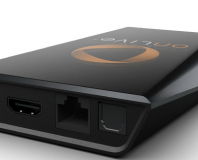
Despite being decried as unworkable by cynics, Perlman still believes OnLive will work.
Steve Perlman is one of the founders of the OnLive cloud computing system that was unveiled at the Game Developers Conference in America recently, so he's obviously very biased on the topic, but that hasn't stopped him declaring that the cynics are wrong. OnLive is a viable and workable product, he insists.
Chatting to the
BBC recently, Perlman slammed a recent Eurogamer article about the system titled
Why OnLive Can't Possibly Work as nothing but ignorant.
Perlman points to the article as an example of extreme and utterly uninformed cynicism, saying that none of those behind the article had ever used the OnLive system or had gone to any effort to try and understand it. The Eurogamer article put a lot of emphasis on how infeasible the video encoding system is, but Perlman says that it isn't an issue for OnLive as they won't do encoding in the usual way.
"
It's a very ignorant article," Perlman said, claiming Eurogamer had conflated issues of frame rate and latency, which were actually independent factors.
Instead, if you want proof that the system is stable then Perlman suggests you take a look at the list of partners who have all used the system and given it a seal of approval; EA, Ubisoft, Take2, Eidos, Atari, Codemasters, Epic and THQ.
"
We have nine of the largest game publishers in world signed up. They have spent several years in some cases actually going and reviewing our technology before allowing us to associate with their company names and allowing us to have access to their first-tier franchises."
What are your thoughts on OnLive? Let us know in
the forums.

34 Comments
Discuss in the forums ReplyI think the system will work just fine at the start, the problem I see is them sustaining the performance after 6 months when more and more people sign up. If the system fails or 'lags' at the early stage at all that could be the breaking for them.
I love the principle of the system though, rest in peace £450 8800GTX card, hopefully I won't need to buy another like you again for high spec PC gaming (Well, once its rolled out in the UK)
In the UK especially, our upload rates are - and always have been - completely crippled. I'd like to see/hear someone test this service in a busy town, at peak time, 3 miles from the nearest exchange, on a BT line broadband package (BT themselves or wholesale) and then see what the latency is like.
Last time I checked my broadband speed, it came out as 7Mbit download, but ~570Kbps upload... and I live about 1 mile from the exchange...
otherwise it will work for first few month, and then won't work during peak hours
To be honest, the issues raised by the Eurogamer article are valid. To be honest, I can't help but feel skeptical...not only because I spent just over a grand on a new PC 5 months ago, but because it does seem to good to be true. There are too many things that have to be correct for this to fully work- latency issues being the foremost...
But as the Eurogamer article does conclude, I hope I am proved wrong. Only mass real world tests will see...
No, they won't. They need one PC per concurrent player. I game for about 2 hours a week, so they only need a PC for me 1.2% of the time. For the other 98.8% of the time, the PC can be assigned to other subscribers. Say a decent gaming PC costs £500, they could charge me £1 per month and have their money back in under half a year. Obviously they have to pay for bandwidth, maintenance, a building etc. but the whole point is that you spread the cost across many subscribers.
Even twitch gamers anticipate lag, I find that it takes a little while to fine tune and sync your actions (so to speak) with a servers lag. But when you do...... it's KILLING SPREE!! HOLY SH1T!!
They recon they can get 10 players per server. Steam have 1.7million concurrent players online at peak. so if onlive get that many players thats means 170,000 high end servers minimum!
but at what time of the day do you do those two hours? i very much doubt much is done at 5 in the morning, but that is the time you would probably find your concurrent pc isnt being used (or attempting to be used) by 10 other people.
plus, if my 8mb connection fails to provide me with a decent game of l4d at peak times i cant see how its going to be able to play crysis at 720p on a pc 1000 miles away. seems to me at least here in the uk our infrastructure is nowhere near good enough yet, i think someone else said they should have tried this in japan or similar fibre countries first, why start in europe?
the fact that all these major companies have invested in this shows it has potential, whether that potential can physically be realised is another matter. for one thing i definately dont think this is 'omg the end of the hardware industry!!!1111!1!1' there are always gonna be people (current pc gamers) who want to play their games any time they like, without 35-40ms lag and at a higher res than 1280x720. in fact we could find more people coming over to our side of the tracks once they've tried some of these titles and want to see the full extent of pc gaming.
time will tell, its certainly going to be interesting either way!
same, even if it works I can't see my Virgin powered conn being able to handle this :(
They tested it live from a server 50 miles away, not a LAN connection.
And according to what I've heard from journalists I trust, such as the Idle Thumbs group, there was still a noticeable feeling of delay in some of the games they had at GDC.
If that's 5mpbs sustained, I can see ISPs fighting this. They might expect you to grab a sizeable chunk of the upstream feed for a short period (file download, for example) but in their shared model, pulling off a 5mbps chunk (per user) for a sustained period of time is going to result in limits or outright banning... or price increases.
They say in that article that 40ms is an expected average, maximum of 80ms, try my little latency experiment I find 60ms or less playable, and I'm not a particularly fussy or hardcore gamer, so I think they're going to need a better maximum round trip latency than 80ms if they want to dominate the market.
*facepalm*
Yep, my bad. Either way, I use Citirx on a daily basis (exactly the same concept, but for Office apps) and any kind of delay at all (let alone 40ms) is not only very noticeable but very annoying. The problem is when you do anything that is not based on *looking*, *acting*, *looking to see if it worked*, *acting again*. A lot of time gameplay is not like this, you pre-empt what your actions will do.
Take an FPS. You see an enemy is 15 degrees to your left, so you spin and shoot. You don't think about it, you just react and you get the kill. With a 40ms delay on your input affecting the screen's update, and given this latency will change over time (it may jump from 40 to 50 and back again in a second) you'll probably not only miss, but you won't even know if you aimed correctly until the game catches up. What's more, the command to "fire" may make it to the server quicker than the command to "turn". This is the Internet afterall, and you end up shooting too early. You end up doing everything half as fast because you're not 100% sure of what effect your inputs will have.
I really hope to be proven wrong, but it was a real shock to the system when I started using Citrix. Even just opening the file menu and pressing New on Excel suddenly felt awkward and difficult. You have to go to File, press open, wait, then move down to the New and click on it, and wait. This would totally kill a quick-reaction game.
Good test, but totally different in an FPS, any slight lag is annoying, it's smooth or nothing.
And with that block, 80ms was fine for me, and I used to be a hardcore FPSer.
http://en.wikipedia.org/wiki/Sega_Channel
not even, with virtualization, one server can probably run 4 or more people depending on the game, on top of what you said they'll be for concurrent users. That's way more efficient they can have 4x the amount of users on a £1700, and make more money that if it were 1:1, pc:active user.
I need OnLive!!!11
Because everyone knows Gears of Lag provides the best online gaming experience...ever.. :)