Windows Blue may be coming as soon as August, less than a year after the launch of Windows 8, as Microsoft move to a more Apple-esque release schedule.
Hot on the heels of of Microsoft confirming Windows Blue's existence in a
quickly-deleted job posting, fresh rumours have emerged suggesting that the next-generation operating system may get a release as soon as August - less than a year after the launch of Windows 8.
If you're confused as to why Microsoft would replace Windows 8 so quickly, rumours suggest that the company is giving up on its traditional release cycle in order to be more competitive in the fast-moving world of operating systems. Today's Windows releases typically last for five years or more - Windows XP launched in 2001 and was replaced by Windows Vista in 2006, which was in turn replaced by Windows 7 in 2009 then Windows 8 in 2012 - but that isn't exactly common across the industry: while Apple's OS X is approaching 12 years old, the company releases annual paid-for upgrades; open-source software specialist Canonical, meanwhile, updates its Ubuntu Linux software for free every six months, releasing a long-term support (LTS) version every two years for those who prefer a more sedate upgrade path.
That leaves Microsoft as the odd-one out: while it has done more rapid releases in the past, bringing out Windows XP just one year after Windows Millennium Edition (ME) failed to set the world on fire, it has traditionally stuck with a longer release cycle with free minor upgrades being released as Service Packs.
Windows Blue, the rumours claim, will change all that. The first in a series of rapid-release operating systems, Windows Blue will mark the start of an annual upgrade cycle similar to that offered by Apple. Like Apple, each Windows upgrade will be made available cheaply to those only a version or two out, and like Apple each will include more incremental changes than the jumps seen from Windows XP to Windows Vista to Windows 8.
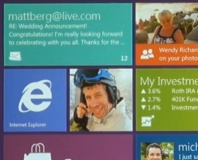
So far, so common knowledge: Microsoft's previously-leaked job description for a Windows Blue engineer already confirmed that the next-generation operating system will feature an improved version of the tile-based Modern UI with few changes to its underlying functionality - but it was silent on a launch schedule, and with good reason: Windows Blue may be released as early as August.
According to an unnamed source speaking to
Win8China, Windows Blue will hit Release To Manufacturing (RTM) status in June and then be released to the public in August following a period of developer-centric testing and roll-outs. If you think that's a little soon to be splashing out on a new operating system, there's good news coming with it: an upgrade to Windows Blue will be provided to Windows 8 owners free of charge, as with previous Service Pack releases.
The full details of the changes wrought by Windows Blue are not yet clear, but the site's source claims that the Modern UI will be tweaked with improved functionality offered by the 'Charms,' a new kernel version will bring performance improvements and enhanced battery life, and Modern UI applications will be better able to scale to different display resolutions.
Microsoft, naturally, has refused to comment on the rumours, but with Windows Blue confirmed as an impending product it's looking like Windows 8 users might be upgrading sooner rather than later.

51 Comments
Discuss in the forums ReplyFixed that for you. Most people didn't bother with Vista and those that did, wished they hadn't. Myself included in the latter category. :(
Edit: I also don't plan to upgrade from Win7 anytime soon.
I wouldn't count on that either, I'll upgrade to the next version of windows which offers tangible improvements or the first version to drop metro :D
i'm still on 7 because I honestly see zero reason to upgrade to 8.
If you put it on a computer with 2GB and singlecore CPU, then Vista had every right to be slow. On dual-core or better and 4GB or more it ran just fine. The primary issue with Vista was NVIDIA (and their crappy Vista drivers) and people trying to run it on old computers
So you will never upgrade ? :D
If windows 8 cost £35-£40 and these updates where £20-£25 each then they may get upgraders.
If they try charging £80 for windows blue it will be the lowest selling OS of all time.
Vista was fine people moan about it all the time but strictly speaking if you ran it on a modern computer it was a flawless OS with a few niggles. Nvidia drivers were awful but besides that most other items ran without issues.
It will be years before i upgrade from windows 7 they will need to give me a reason to ugprade that is yet to really be seen.
Correct accepted workflow should go:
read headline -> comment -> take umbrage at comment -> start flame war.
And maybe integrating Bing with the search charm in a better way, i wounder if Google and other search engines will take issue with this like we had with IE being packaged in previous OS's
And most of the rumours ive read on the internet suggest a high price point and it wont be included for free.
Im surprised we have not started to see all of apples rumours posted like another site has recently started doing, Its not real news just space fillers.
Didn't know Gareth works for ZDNet and trying to hide that under picture and name of a woman :
http://www.zdnet.com/microsofts-next-windows-blue-test-build-said-to-be-a-public-preview-7000011728/
Does that not make it worse lol?
No worse than trying to debate one rumor with another rumor, all these rumors come from Win8china so its probably best to take them with a rather hefty pinch on salt.
So you would instead have a website where you would get only PR about new product launches and reviews of released products ? A big part of pretty much all tech websites are rumors about future software and hardware stuff .
I'm sorry but you're going to have to take your own advice here Gareth. I said "If they are going to continue" not "If this next one". The next one may be free, but if they charge full whack for something afterwards then it's not any better. If they're not charging, then where is the money coming from? I'm simply making the link that with a decreased main lifespan, the cost needs to go down for future releases to compensate.
Come on, I've read every article I've ever posted on fully, this is no exception.
Yearly updates aren't going to help system familiarity for anyone.
Just seems like a bad idea, just my thoughts though.
I will be sticking to Windows 7 for a while yet.
I used Windows Vista for a long time and had no issues with it, until a gpu waterblock leaked and caused problems with Windows once I took that card out.
When I got the block back and fitted the card again it, went back to being fine straight away.
As for faster releases of Windows I cannot think of anything good that would come from it.
It will be like 15-30$ Can/US, so what 8-9 pounds? Guys clam down.
Microsoft has no choice to do this. If they continue with the 3 year life cycle, the Microsoft is already doom. People expect faster OS releases, and the market is pushing toward that.
Really? In my experience people hate having to upgrade their OS. Case in point - all the people who are sticking with Windows 7 because they don't want to learn how to use the Windows 8 UI. Everytime MS release a new OS people are going to ask themselves 'what do I gain by upgrading' and if MS can't continually offer them strong incentives people aren't going to bother.
I do wonder if this hole release new version quickly isn't something thought up in the marketing/PR department, as one thing to catch headlines is the release of a new version of X.
Or am i being cynical ?
Sadly that was 8 for me. I didn't NEED SMB3.0, but it is very, very nice to have. Or so I assume. I only have Windows 8 on my desktop so far (trialing before I install on my server)., but I really, really wanted SMB3.0. The advantage of SMB multichannel makes a big difference for me.
Again, SMB2.1 I could live with, but I really wanted the extra throughput. I am running static link aggregation with a pair of Intel CT GbE adapters in both my sever and desktop, for 2Gbps of bandwidth, thoughput with SMB2.1 I am limited to 1Gbps per connection for a max of 2Gbps. With SMB3.0 I can connect at the full 2Gbps and I wanted to run another pair of cables, I could get the on-board NICs in on the action for 3Gbps of through put. I might do that with the server (so desktop to server I can have 2Gbps and leave a spare connection to the server at 1Gbps from another source), but probably not with my desktop. In the end though my limitation is my disk arrays currently as my desktop 1+1TB array maxes out around 300MB/sec max with a minimum of around 190MB/sec (outer versus inner tracks) and my server is a little slower at 280MB/sec max with a minimum of around 180MB/sec.
I do miss my start menu and plenty of other things make no sense, but some of the performance upgrades are very nice (such as SMB3.0, smaller memory footprint, faster booting, etc). I'll probably grab a utility to "reinstall" the start menu and then most everything will be right in the world again.
Corky42 is probably right though, its a marketing dept led initiative to garner positive headlines more often. They must be worried about Apple its not like they really need to market they're still virtually a monopoly.
I don't know... people are really exited when a new MacOS comes out, when a new Android update comes out, they even root their Android phone to get the update NOW and an not wait for their service provider and make it available, same for iOS. Windows is the only one that is slow as a snail, with a 3 year update cycle... imagine 3 years from now.. do you think Windows 8 on tablet will be mildly interesting? how about Windows Phone 8? Both will be looooonnng have bitten the dust.
You guys think you'll have to re-install everything, and that's the end of the world. It will be like when you install a Service Pack. The same way you update you phone, tablet, MacOS.
Screw businesses, they have a 6 year update cycle.. they wither catch up, or stay continue with 6 year life cycle. It is simple as that. Why should WE suffer when businesses are slower than a race against a can of tomato. A company with an active IT department, and an active software developer team in their hands for any custom solution, have no problem keeping up. Yet you only see that in small and medium companies, and tech companies.
It's because Microsoft trying to make a full loop that will create this massive singularity.
You see, now we have Windows 8.. then 9, then 10... soon.. 95! A full circle that will make Microsoft... TAKE OVER THE WORLD!!! (even more so)
I don't think so, because Microsoft has completely restructured itself inside, to do this. I believe we will see, for possibly the first time, some level of actual communication between departments. At least on the Windows RT, Windows and Windows Phone side. Could that mean, in the near future (I don't expect that on the coming up update of Windows, but after that), finally a proper integration between devices, like Apple? There is no question that Microsoft tried to do this, time and time again, but just fails. It got better (I mean look at Vista): http://www.aerotaskforce.com/uploads/Capture5.JPG
But not between devices to actually have a proper connected devices.
So no I don't think its marketing.
p.s:
I know I am on going on 3 posts in a row, sorry about this, I just taught of about what I am going to say.
majority of PC users in the home are normal ppl using it to surf the web and facebook, they dont care about upgrading, as long as it works,
another section of the industry are gamers and enthusiasts, who dont mind re-installing every couple of years, but test before they jump in,
and last but not least, companies and servers, use an OS that has been patched to hell before even trying making sure it will run as table as possible, saving money is the key here, the less needing doing to it the more money saved in the long run.
but considering Microsofts past history where a new copy of windows takes almost 6-12 months of patches to even get stable or do what u need efficiently, then this yearly option will never work, in any of the sections of the PC userbase,
microsoft, should look back and learn from its mistakes, and not make new ones, make a stable OS straight out of the bat, make 2 different styles of OS, WIN 7 style for most users, and Win 8 block style for all in one touch screen users, also phones and tablets, listen to what the consumer wants, and not what u think is best for us (stupid idea getting rid of the start menu,), and probably take a little longer between OS's, making sure they are almost perfect as soon as it is released,
i think my rant here is done, sorry, but sometimes i have a lot to say.
People make a big thing over phone updates as they actually do something.
Windows vista to windows 7 was a tiny change. It was mostly under the hood improvements.
Windows 7 to 8 if you disable metro is a similar tiny change of under the hood improvements.
Take iOS 4 to 5 and you gained alot more in usable features vs vista to 7.
Or andriod 2.2.2 to andriod 4.0 which is what most users saw and its a major change.
Apple OS releases are made a big thing of cause whatever apple does has to be widely published by media outlets and television. They also seem to generate exciment and hype that Microsoft has never been able to generate for its windows brand.
Main reason I feel there doing this is for the surface rt as if they left it with the same OS for 3 years with just dif hardware it would struggle to really get any hype for releases.
Windows 8 is after all a touch os first.
Android 2.2.2 to 4.x is the only huge leap forward I can think of.
It's all good, probably wasn't as clear as it should have been :D
If they were to go the Apple route, then I don't really see how it would affect businesses much. I mean if somebody wanted to remain stable with an OS, they simply don't upgrade for several years, leading to the same cycle as normal. Pretty much all software on OSX works within several software generations. It's usually quite a while before the old stuff is phased out, even then it's the developer's decision whether to produce packages for the older versions.
Having smaller, yet more numerous updates could have some real compatibility benefits, with fewer changes along the way so fewer rogue variables. It could, however, if implemented poorly, result in a very heavy system after a few releases. If they keep tacking stuff on with updates, then I won't be too happy. It also means that they have the opportunity, as stated, to adapt quicker to the ever changing computing space. IMO this could be a very good move, especially if the upgrade costs are kept minimal. I happily updated my OS every release when I was a mac user, looked forward to what would be implemented each iteration.
I think the main question is are they going to keep the same extended support. I.e security updates etc.
I cant see them wanting to support a OS that is 10+ version old.
And in other news Saddam Hussein was a nicer bloke than Adolf Hitler.
NTFS supports file path lengths of up to around 30,000 characters so why is explorer.exe use/have APIs that are back in the stone age of computing?
Then again, you don't need book length file name.
Its part of those never be fixed bugs and issue of Windows, like how the mouse looses its shadows in after playing a game (not all games). Or how you open the Windows calculator and do: square root of 4 -> [=] (you get 2), then you do -2 on it -> [=]. You should get 0, but you don't.
Why they can't (won't) offer a corporate version that has metro as an option only is beyond me.
Which is why I see this as a marketing led exercise, XP SP had some press coverage but home users couldn't tell you why it was better to have SP3 but now its Windows BLUE! New, More Shiny! and Greater! When in actual fact, like most windows releases, its the one that should have been shipped 12 months ago.
In other words: Windows Blue appears to be a milestone release, not a mere Service Pack. Now, it's not impossible that Microsoft is fudging the numbers - there's nothing to stop it sticking a Version 42.0 label on any damn kernel it likes - but indications are that Blue is a little more than just Windows 8 SP1, regardless of its cost or how Microsoft intends to market it.