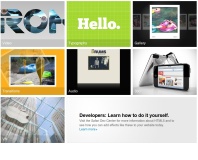
Internet Explorer 6 users wanting to view videos will see the above nag screen every two weeks until they upgrade.
Google is continuing its campaign to gently encourage users to upgrade from the severely out-of-date Internet Explorer 6 to a more modern web browser that properly supports web standards and features such as HTML 5 - and it's using YouTube as its primary weapon in the fight.
As reported over on
ReadWriteWeb, the advertising giant is looking to end support for Microsoft's aging Internet Explorer 6 web browser - the default browser in Windows XP, replaced by Internet Explorer 7 in Vista - and hopes to encourage users to upgrade via a nag screen.
The message - which will appear every two weeks for IE 6 users - warns that support will officially end on the 13th of March, and offers download links to several alternative browsers. While anyone aware that Google owns YouTube will be unsurprised to see the Chrome browser headlining the list, links are also offered for Opera 10, Internet Explorer 8, Safari 4, and Firefox 3.6 - all browsers which support the HTML 5 standard.
With Google already pledging heavy support for the new HTML standard - with the first project being to move its flagship offline browsing API
Gears to HTML 5 - it makes sense that it would want to implement the technology across its video streaming services, which it will struggle to do if users refuse to upgrade their browser.
Interestingly, the company has stated that IE 6 users will still be able to watch videos via YouTube after March, but that certain "
new features" will be unavailable until a newer browser is used.
Do you applaud Google's efforts in getting users to upgrade their browser, or should Google continue to support IE 6 - which still holds a not-unimpressive
10 percent market share, putting it way above both Opera and Safari combined - despite its lack of HTML 5 support? Share your thoughts over in
the forums.

23 Comments
Discuss in the forums ReplyWe need companies like this with the power to change the user base to push web browsers forward.
Time to move on, otherwise we'll be living in the past. Might as well support the ol' Netscape too :D
But if IT departments have not upgraded yet for other reasons why would they do it for Youtube support?
As for corporate entities, do we care? Surely the whole web-dev world doesn't need to maintain support for an archaic browser just because a few corporations refuse to upgrade. The IT Techs of said corporations should be aware of the benefits of newer browsers, and if they keep using IE6 despite all of those benefits, that is their choice and they have to live with the consequences.
IE6 was released on the 27th of August 2001 (eight and a half years ago). IE7 was released on the 18th of Oct 2006 (three and a half years ago) and IE8 was released on the 19th of March 2009 (nearly a year ago), it's not like people haven't had enough time to move on. Eight and a half years is an awfully long time in the Tech industry.
(dates are according to wikipedia)
As I recall IE6 was released with windows XP. Now how many people are still using XP? ;)
I'm certainly not supporting IE6 but within a big company (for instance my company has 40,000+ employees) it's not just a case of upgrading everyones browser and it certainly wouldn't be some tech guys decision. It would be up to the management to approve something like that and they simply don't understand why it needs changing. IE6 works, to a degree, so they won't understand the benefits.
Corporate IT will sit up and listen, as YouTube is a major site.
The thing holding most Corporate environments back from upgrading, is the support costs. First off you have to deploy the newer versions, then you have to pay for support when a user calls the helpdesk and complains that their Web Applications (that were designed for IE6) do not work anymore. THEN you have to pay out to re-write or find alternatives to those applications, all the while taking the hit for the lost productivity, or rolling back changes.
I know this is somewhat simplified, and could be mitigated by good planning, but every corporate environment running IE6 will run into these issues.
Several sites have stopped working at work for me in IE6 - google maps locks up the browser, and Akamai control centre has critical Layout issues :(
Me! :D
Also my work, and therefore IE6.
Personally I use firefox, but also in an older version as the last updates to a new version always killed my plugins/links. (and I'd have to kill the "awesomebar" again) *sigh*
New computer -> New OS -> new browser ;)
Really? In my company Youtube is blocked...so is ebay.... (and the "Gaming" section of BitTech along with all other gaming related sites)
As others have said, people using IE6 are either locked in by their company's software setup, or aren't the type to use YouTube or Google's "web apps" much. If this move causes IE6's market share to drop by more than 2% I'll be stunned. It's a shame, some of my clients at work could save thousands if that browser would just roll over and die.
Personally, upgrading to Win 7 is a dumb option for me. Since when does the OS cost 60% the price of the hardware?
Tell them IE6 is a major security vuln. and that they need to switch to Firefox or Chrome. Seriously. If Google can be hacked because of IE6 (IIRC), anyone can. :(
Company's that after 10 years of IE6 still need to 'test' for a upgrade browser are dumb, especially their IT department. It's the most insecure browser in the world.
Our school uses IE6 as well. It's been locked down to prevent kids from changing fonts and moving bits around; basically buggering machines up for themselves and everyone else. It's all fun and games until they're presented with an online test and they've set their font to Wingdings.
IE8 will be going on the system at the end of the week, then we'll set up policies for student users next week on the test machines.
TBH, I'll just be glad when we don't have to add <!--[if lte IE 6]> to web pages to get them to work.
I'm not sure many are still on 6 now but it's not about testing the browser, they're testing all the internal web apps which are needed by the business far more than youtube.