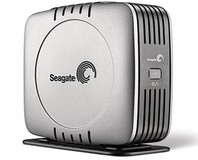
Seagate joins enterprise SSD market

With even stalwart supporter Seagate looking to solid-state tech, could the humble hard drive be entering its final days?

Despite CEO Bill Watkins' opinions on the long-term feasibility of solid-state storage for laptops, it appears that Seagate is going full steam ahead with its own SSD models anyway.

According to CNet, the company is looking to enter the SSD market as a serious competitor beginning next year. Rich Vignes, senior manager of market development at Seagate, states that “as solid-state comes online, we're embracing this new media type,” - a far cry from CEO Bill Watkins' comments back in March that he didn't see “the flash notebook selling.”

Initially building products aimed at enterprise-level customers, Seagate is unlikely to offer a large range of consumer-level SSDs until it feels it's got the business market down pat – after all, that's where the real money is. The main problem the company is likely to face – ironically, given Watkins' publicly-stated opinion of the tech – is getting the businesses to trust the relatively new technology of solid-state storage over the tried and true mechanical drive systems they have grown used to. To reach this goal, Vignes has said that Seagate will be working with the solid-state industry's standards body, JEDEC to implement some convincing benchmarks and metrics “as an industry standard” so that Seagate – and, by extension, other manufacturers of SSD – can back up their claims of increased mean time between failures with approved statistics.

Hoping that his company's expertise in the storage market will guide it through – describing the company's approach to SSDs as “existing market, new product” - Vignes has confirmed that, at least initially, the tech behind the drives will come from others more versed in the ins and outs of solid-state technology: “We're not going to make NAND [flash memory]. We are in discussion with all the premier NAND suppliers.

Would you buy a Seagate-branded SSD even if the internal technology was from a different company, or are you better off with a manufacturer who rolls their own units? Share your thoughts over in the forums.

Quote Flibblebot 10th October 2008, 13:17
Surely for SSD to really get into the mainstream, they have to get round the relatively short IO lifespans - especially if they're targetting the enterprise market.
Quote Firehed 10th October 2008, 14:02
Quote:
Originally Posted by Flibblebot
Forum link broken - missing closing ] in opening url tag.

Surely for SSD to really get into the mainstream, they have to get round the relatively short IO lifespans - especially if they're targetting the enterprise market.
With wear leveling, it's really not that big of an issue unless you're running a write-heavy database. Most estimates these days seem to put them at least on par with, if not exceeding mechanical spindles for MTBF.

Price, on the other hand... they really should be performing at the maximum throughput of the interface unless they're going to rig up something very tricky with a modular in-drive RAID5 kind of system *ahem patent pending coughcough* (as opposed to RAID0 across each of the numerous memory chips) but even still really should be there. The fact that's not even happening combined with a much higher $/GB ratio means that unless you absolutely need the seek times and not so much on sustained transfer, it's not a great solution for most applications.

Speaking of which, where the hell is SATA3-600? It was supposed to hit in 2008, and while I don't pay that much attention to PC hardware releases these days that would have caught my eye.
Quote wmonroy 10th October 2008, 16:09
Watkins' comments are not contradictory to Seagate's stated SSD strategy. He said SSD isn't ready to replace HDD as the storage device of choice for the laptop market, but that Seagate believes SSD could be a good fit for certain enterprise applications (i.e. Tier 0). Rich Vignes in the CNET story is talking about Seagate coming out with SSD solutions for the enterprise market. Same same.
WMonroy @ Seagate
Quote TreeDude 10th October 2008, 17:03
There are enterprise level SSDs which have long lifespans. FusionIO being the biggest and best there is right now.
Quote HourBeforeDawn 10th October 2008, 20:01
whatever happened to those hybrid hard drives that had some flash memory on them to store the OS and then the normal hard drive for everything else?
Quote leexgx 10th October 2008, 20:28
thay never realy worked that well Hybrid drives as most of them came with 256mb ram like hell that is going to be able to power down the hard disk needs to be 1/2gb min to work correctly
Log in

You are not logged in, please login with your forum account below. If you don't already have an account please register to start contributing.