MSI ECOlution - powered by Scottish Engineering.
Actively cooled heatsinks aren’t exactly new, but electricity is
so last year - what about powering those fans by the heat generated from the chip it’s trying to cool?
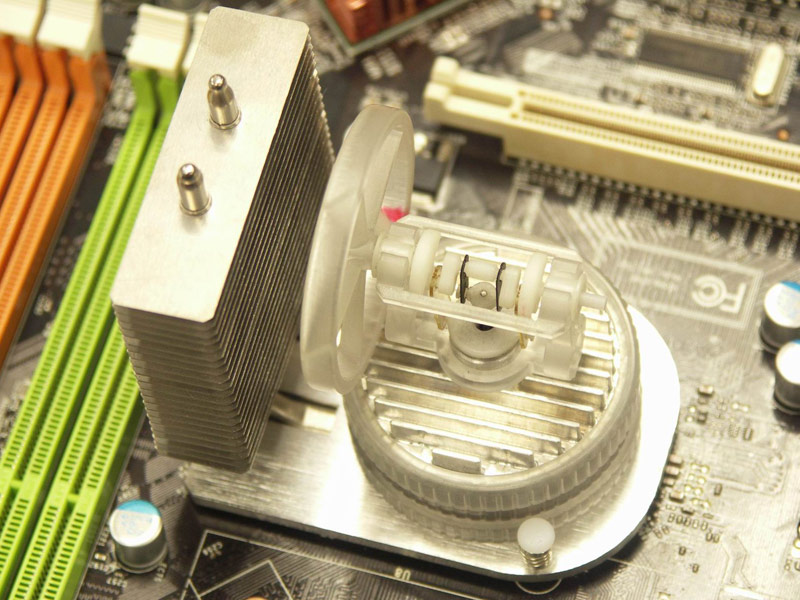
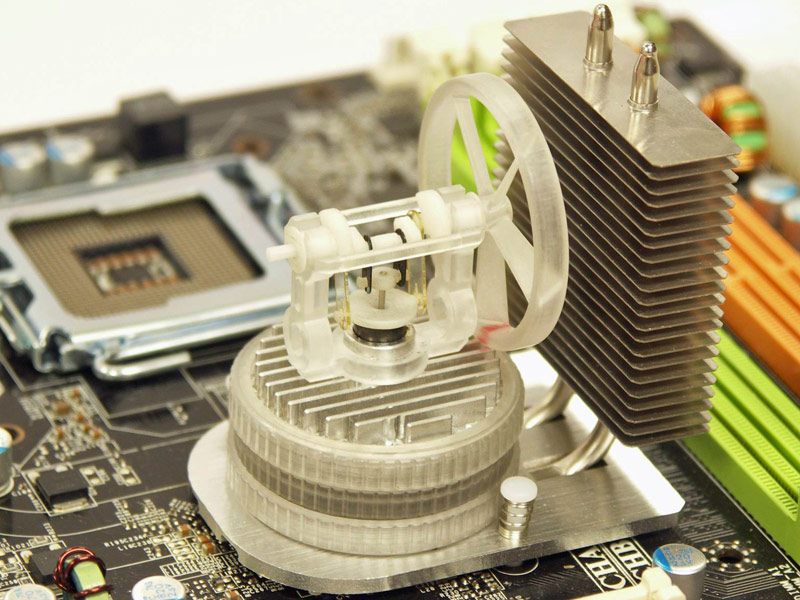
Well MSI has done exactly that with its new ECOlution heatsink – it features a "
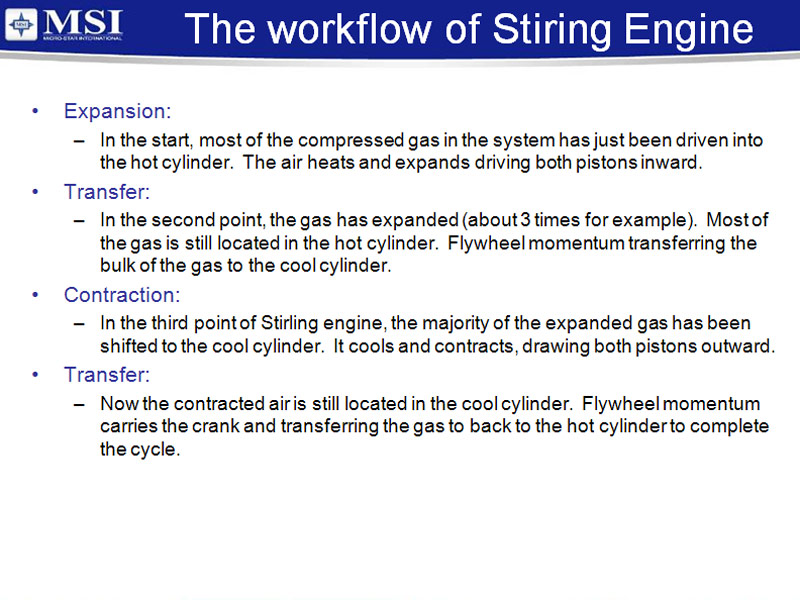
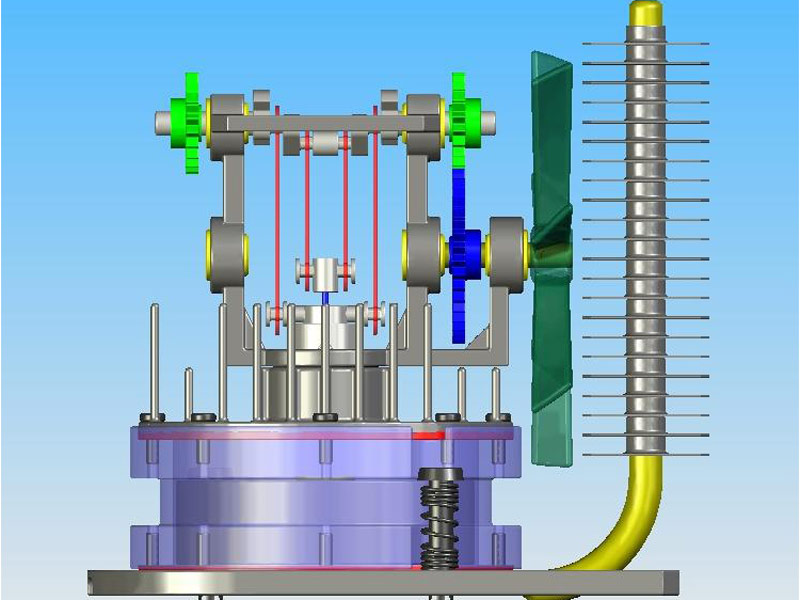
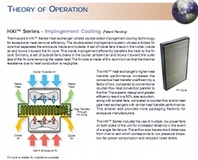
Stirling Engine" - an engineering masterpiece originally patented by Scottish engineer, Robert Sterling. It features a four process system that moves gas back and forth between hot and cold heat exchangers: the chipset and the fins, respectively.
The cycle pushes a cylinder up and down which is then translated into moving the blades of a fan – the whole unit is autonomous and self contained. It’s also self regulating because the hotter the chipset gets, the faster than works to cool it.
MSI claims the efficiency is around 70 percent, but it does require the chipset to reach about 60ºC before it pipes up and starts working.
It’s certainly an interesting technology and kudos to MSI for this awesome innovation!
We'll no doubt find out more during CeBIT next week but in the meantime, you're free to discuss this
in the forums.

If it does get shown at CeBIT, I'd love to see a video of it in action.
It is a pretty good idea though.
I've seen that Rich, like an animated 3d rendering? It look spretty funky and MSi have gotta be aknowledged for taking this on.
However, 60C before it kicks in? Ouch.
it even mentions the old single piston problem that you need to 'tap' it to actually get it moving should everything end up in line
It's inefficient (in terms of cooling), it have more parts that can fail and probably cost way more to produce.
It gets a very high score on coolness, though
Congrates to MSI for taking such a step. Its a great idea.
I haven't had time to read it yet, but that's an easy fix. Have a second engine inline with the first, both geared together, with the first one a quarter turn apart from the second one. Steampunk, indeed.
Would this mean that when the fan gets "turned" on, that it is also helping to cool the north bridge, since its converting heat energy into mechanical energy?
If so I guess the whole 60C thing wouldn't matter that much, as the fact that the fan is turning on is also greatly helping to cool the NB.
I wonder how much that costs. Plus if you want to save power, we're better off getting more efficient PSUs, CPUs, etc.
Regardless of whether or not it's practical, they get some credit for this!
Well, its not active because there is no additional power going to it.
No, it is active because there is air actively being pushed through the fins when the fan is working, as opposed to a passive one which relies on convection.
Actually technically you would consider it passive and active. As it is passive when there is not too much heat being created by chipset to run the thermal piston but is active when there is plenty of heat (60C or higher) causing the the fan to run due to thermal piston movement and keep the temperature down.
This is perfect for HTC setup where 60C is good enough heat level and can allow one to maintain that without much noise.
Sigh, yes, true.
Semi-active - because it does include a fan :P
As above, I can see this being useful for HTPC's or mabey some mATX boards.
It's application is still only going to be limited to certain chipsets. The P35 and X38 are very efficient and in many cases only reach 50c even running substantial overclocks. On those chipsets a passive cooler is more than sufficient and cheaper, this cooler is inevitably going to push up the price.
Again it's a nice idea but I think it's arrival is a little late, passive cooling has come on leaps and bounds and water cooling really is mainstream today. Anyone concerned with cooling will take another route.
Watercooling is a long way from mainstream, it is much more popular than it used to but still not mainstream.
I can see this being useful for HTCPs as others have said, you can keep your PC passively cooled and if it gets too hot the fan will kick in to keep the temps down. Depends a lot on how noisy it is though. The only thing I can see this being used for is an eco friendly PC, but fans don't take up that much of the power consumed by a PC do they?
And I guess heat pipes is a better solution. You will always need fans anyway.
I was looking at that one myself yesterday. I thought it was just my lack of English skills...
Stirling-esque engines used in power generation and such are of the most efficient to date and still only achieve 40-60% afaik...
Perhaps its 70% efficient at powering the mechanism, thather than cooling... or its really 7% and someone thought it was a typo in the draft and changed it without consulting the engineers...
Either way, its a nifty ikkle gimmick, and a triumph of form over function, how much does power a chipset fan use anyway, it's got to be insignificant compared to the hardware :P
anyhoo... looks like steampunk's in this year!
I will continue to use my hamster wheel powered fans, thank you.
Yea, I thought of something like this, except to power a CPU, but that was more of a theoretical thing, this is real engineering.
Unhook the fan. Hook it up to a generator, which is hooked up to a small heater / TEC instead of the chipset.
Free energy !
The energy produced is so minute though and with every conversion you lose efficiency.
:o
ive held sterling engines that run off the heat of the palm of your hand....
I've looked at the Stirling engine for similar uses previously but dismissed it as 'over engineered' for the task.
Maybe they got a uni student on placement to do it....
the point behind making it only work above a certain temperature is having passive cooling most of the time, its not a technical limitation.
Way to pop my bubble.
I know, but still.