EVGA GeForce GTX 1080 FTW Review
Manufacturer: EVGA
UK price (as reviewed): £619.99 (inc VAT)
US price (as reviewed): $679.99 (ex Tax)
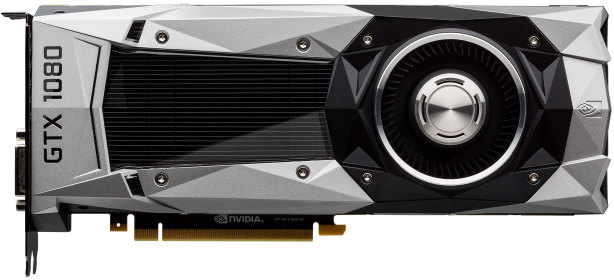 Click to enlarge
With the brand new Nvidia GeForce GTX 1080 GPU having launched a few weeks back, the market is now being flooded with partner cards from all the usual suspects – we saw plenty ourselves first-hand at Computex 2016. After a brief but unfortunately timed downtime in our GPU testing that saw us miss the initial GTX 1080 and GTX 1070 launches, we're back in business now with a new suite of tests and ready to cover as many 1000-series cards as we can lay our hands on in the coming weeks and months, as well as, of course, the AMD RX 480 when it launches later this month.
 Click to enlarge
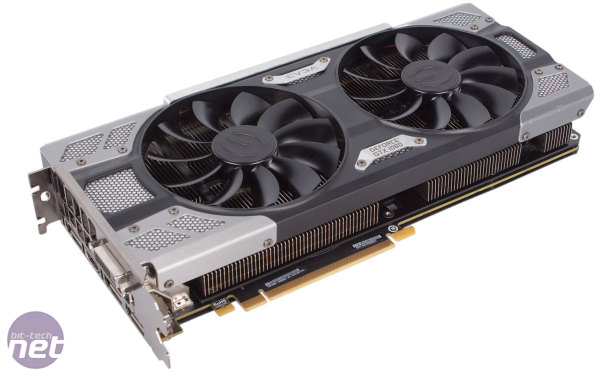
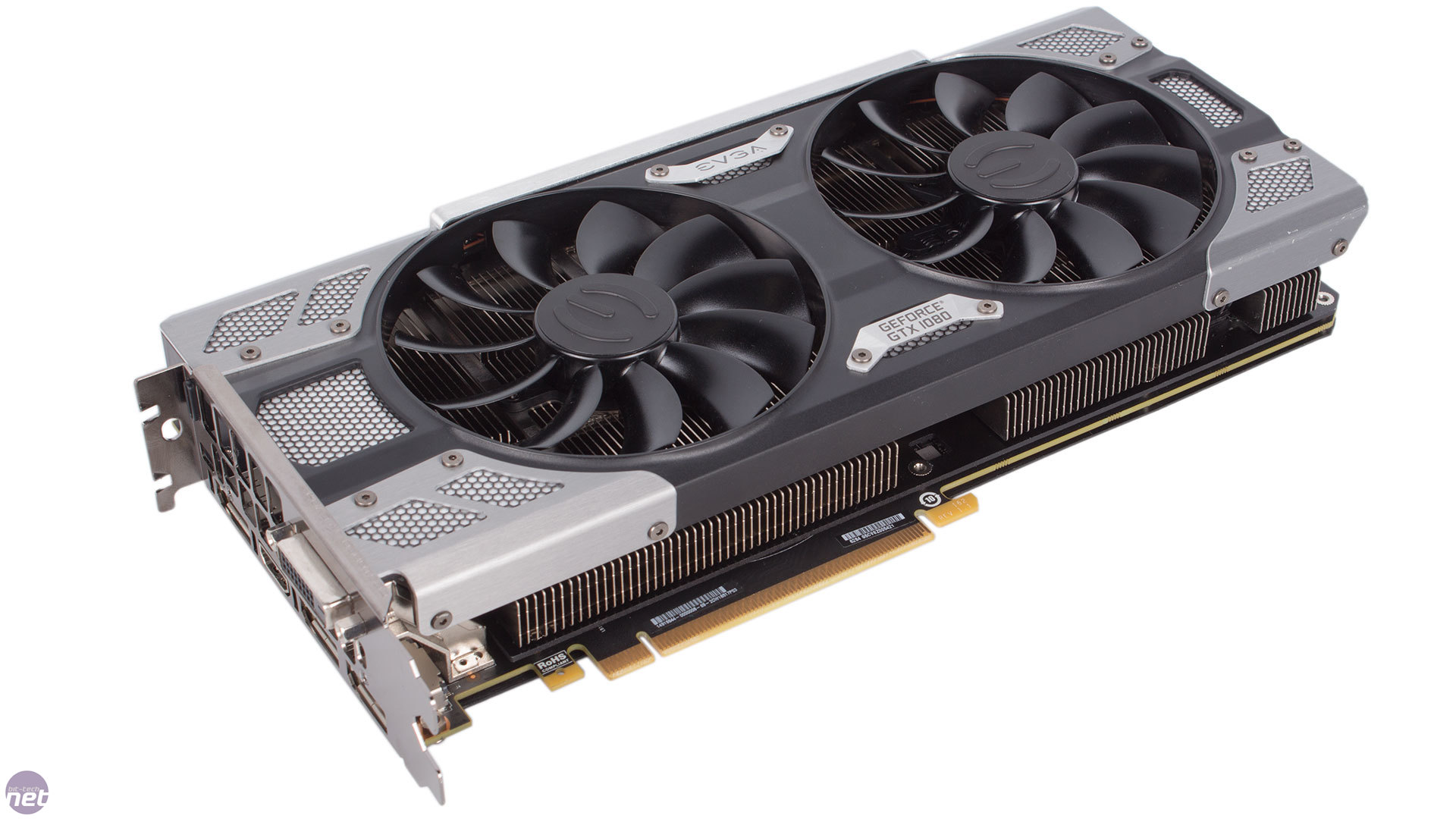
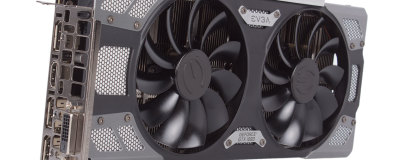
The first card to land on our desks was the EVGA GTX 1080 FTW. With a new ACX 3.0 cooling system, a custom PCB and a factory overclock, there's plenty to discuss, so if you're already clued up about Pascal or just want to see the numbers you can head straight to the
review proper. However, as this is our first Pascal/GTX 1080 review, we're first going to take a deep dive into the new architecture and the features it brings to the table.
Introducing the GTX 1080: Pascal for Consumers
The first Pascal graphics card was the Tesla P100 Accelerator, launched in April this year and designed for data centre applications. The GTX 1080, however, is the first consumer-oriented card, followed swiftly by the GTX 1070. It comes in as the new flagship at the head of Nvidia's consumer product stack.
| | Nvidia GeForce GTX 1080 8GB | Nvidia GeForce GTX Titan X 12GB | Nvidia GeForce GTX 980 Ti 6GB | Nvidia GeForce GTX 980 4GB |
| GPU |
| Architecture | Pascal | Maxwell | Maxwell | Maxwell |
| Codename | GP104 | GM200 | GM200 | GM204 |
| Base Clock | 1,607MHz | 1,000MHz | 1,000MHz | 1,126MHz |
| Boost Clock | 1,733MHz | 1,075MHz | 1,075MHz | 1,216MHz |
| Stream Processors | 2,560 | 3,072 | 2,816 | 2,048 |
| Layout | 4 GPCs, 20 SMs | 6 GPCs, 24 SMMs | 6 GPCs, 22 SMMs | 4 GPCs, 16 SMMs |
| Rasterisers | 4 | 6 | 6 | 4 |
| Tesselation Units | 20 | 24 | 22 | 16 |
| Texture Units | 160 | 192 | 176 | 128 |
| ROPs | 64 | 96 | 96 | 64 |
| FP64 Performance | 1/32 FP32 | 1/32 FP32 | 1/32 FP32 | 1/32 FP32 |
| Transistors | 7.2 billion | 8 billion | 8 billion | 5.2 billion |
| Die Size | 314mm2 | 601mm2 | 601mm2 | 398mm2 |
| Process | 16nm | 28nm | 28nm | 28nm |
| Memory |
| Amount | 8GB GDDR5X | 12GB GDDR5 | 6GB GDDR5 | 4GB GDDR5 |
| Frequency | 1.25GHz (10GHz effective) | 1.75GHz (7GHz effective) | 1.75GHz (7GHz effective) | 1.75GHz (7GHz effective) |
| Interface | 256-bit | 384-bit | 384-bit | 256-bit |
| Bandwidth | 320GB/sec | 336GB/sec | 336GB/sec | 224GB/sec |
| Card Specifications |
| Power Connectors | 1 x 8-pin | 1 x 6-pin, 1 x 8-pin PCI-E | 1 x 6-pin, 1 x 8-pin PCI-E | 2 x 6-pin PCI-E |
| Stock Card Length | 267mm | 267mm | 267mm | 267mm |
| TDP | 180W | 250W | 250W | 165W |
As mentioned, we'll be covering the chip in greater detail in the coming pages, but there are a few key, take-home messages. Pascal is, architecturally speaking, almost the same as Maxwell. The best way to think of it really is as a smaller and more refined version. It is produced on a
new, smaller process (TSMC 16nm FinFET), has been
physically optimised to achieve even higher clock speeds and comes with a new type of memory,
GDDR5X, which is itself effectively a heavily refined and faster version of GDDR5. The end result is a smaller, faster and more efficient GPU.
The addition of the
Simultaneous Multi-Projection (SMP) hardware block introduces a far more efficient means of generating multiple projections of the same scene, which is useful for applications such as Surround, curved monitors and VR. Meanwhile,
enhanced asynchronous compute and pixel-level preemption capabilities bring further efficiency gains in certain workloads. Other noteworthy features include
Fast Sync, an
updated approach to SLI, new video/display capabilities and improved audio and physics processing in VR.
Ultimately, Nvidia claims that the GTX 1080 is 70 percent faster than the GTX 980 for standard gaming, and 170 percent better for VR applications, as well as 50 percent more efficient. It's even said to be quicker than the mighty GTX Titan X, potentially doubling its performance (in VR, that is) and offering up to three times its efficiency.











Want to comment? Please log in.