A new cooling technology developed by General Electric - yes,
the Minigun company - based on electric cooling elements originally developed for use in jet engines promises to provide extremely compact, efficient cooling for future electronic devices.
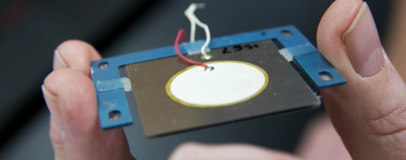
Dubbed Dual Piezoelectric Cooling Jets, or DCJ, the system works as a system of of bellows providing high-velocity jets of air to cool components down far more efficiently than just convection alone. So far, so like the high-tech wizardry known as a 'fan' - but DCJ coolers are half the thickness and use half the energy while operating in almost complete silence.
'
DCJ was developed as an innovative way to dramatically reduce the amount of pressure losses and loading characteristics in aircraft engines and power generation in gas and wind turbines,' explained Peter de Bock, lead research in the electronics cooling arm of GE's Global Research division, of the technology. '
Over the past 18 months we have addressed many challenges adapting this technology in areas of acoustics, vibration, and power consumption such that the DCJ can now be considered as an optimal cooling solution for ultra-thin consumer electronics products.'
Current DCJ coolers measure just 4mm thick, less than half that of the thinnest cooling fans, while drawing under half the power of fan-based coolers. GE also claims the design is inherently more reliable than complex fan assemblies, resulting in a longer device lifespan.
'
With new tablet and netbook roadmaps moving to platforms measuring less than 6mm high, it is clear that consumers are demanding thinner and more powerful electronic devices,' claimed Chris Giovanniello, the man at GE responsible for convincing OEMs and ODMs to license the technology for use in next-generation gadgets. '
GE's patented DCJ technology not only frees up precious space for system designers, but it consumes significantly less power, allowing as much as 30 minutes of extra battery life. Best of all, DCJ can be made so quiet that users won't even know it’s running. Thermal management is becoming a big problem for many companies trying to miniaturise their electronics, and as a result we are getting strong demand to evaluate the DCJ technology in many markets, from consumer electronics, to automotive, to telecom and industrial sectors.'
GE claims to have the technology ready for production, and has already licensed it to Fujikura, one of the largest providers of thermal management systems to telecommunications, automotive, energy and electronics manufacturers. The company is also offering demonstration kits to OEMs who want to try the technology for themselves, ahead of placing a nice juicy order.
If you're wondering just how the heck the system works, GE has kindly provided a demonstration video for your delectation and edification:











Want to comment? Please log in.