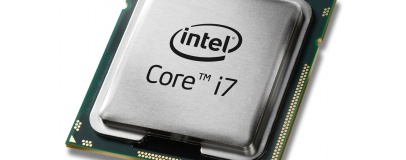
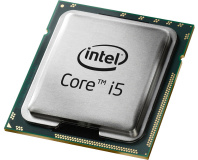
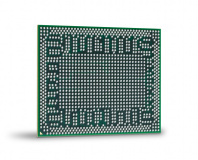
Intel has promised that its processors will, 'for the foreseeable future,' include both LGA and BGA package types.
AMD's statement that it will continue to support the enthusiast market with socket-friendly processor packaging appears to have tipped Intel's hand, with the chip giant finally breaking silence on the matter and pledging its own support to the market.
Following the leak of a roadmap for Intel's future processor families which showed only ball-grid array (BGA) packaging and no land-grid array (LGA) chips - meaning the roadmapped parts would need to be permanently soldered onto a motherboard - rumours spread that
Intel was abandoning the user-replaceable CPU market in favour of embedded-style non-replaceable parts.
AMD was quick to jump on said rumours, issuing a statement that assured chip buyers that
AMD wouldn't be abandoning socketed processors any time soon, cleverly positioning the company as the enthusiast-friendly alternative to mean old Intel and its locked-down BGA-only product plans.
Those plans, of course, were unconfirmed: the leaked roadmap may well have represented only a part of Intel's future product plans, or - and as seems likely - a separate branch of mobile-friendly parts which will be replaced with BGA and LGA parts once more when Intel's tick-tock development cycle passes by once more. Intel didn't help calm the storm by sticking to its traditional refusal to comment on what the company likes to dismiss as '
industry rumour and speculation,' the traditional line that comes when queries about unannounced products are sent to the company's press office.
Intel has had to do something, however, and do something it has: the company has ended its stony silence on the matter and in doing so broken with a long-standing refusal to comment on products that have not yet been announced. Speaking to
Maximum PC, the company denied claims that LGA sockets were on the out. '
Intel remains committed to the growing desktop enthusiast and channel markets,' Intel's Daniel Snyder told the site,
and will continue to offer socketed parts in the LGA package for the foreseeable future for our customers and the enthusiast DIY market.'
Snyder went on to explain that he would not be commenting on '
long-term product roadmap plans,' leaving paranoiacs to wonder whether the rumoured BGA-only Broadwell parts are far enough in the future to escape Intel's promise to produce LGA processors - but, for now, it looks like this rumour can be put to bed.

32 Comments
Discuss in the forums ReplyMeans I can't mix and match CPUs with mobos. If BGA CPUs hit enthusiast desktop, it would very likely end up with with 3 or so CPU/motherboards per cycle. Using current Ivy Bridge + Asus motherboard equivalents, here's what I would expect:
3570K + Z77 equivalent as the "cheap" option
3820K + sabertooth as "medium" option
3960X + ROG as top-of-the line option
No in-betweens becomes near-impossible....
broadwell is far enough away to be covered by the facet of
foreseeable future - 18 months is ` long term`. that an broadwell will be moving to MCP , making it incompatable to Haswell sockets anyway
Beyond that, who knows (Intel probably doesn't have any concrete plans on packing, contact count, etc much past Broadwell/Silverwell).
I think you've hit the nail on the head, all they mean at the moment is the next cpu architecture wont be BGA (though I wouldn't be surprised if some cpu/mobo combos did turn up).
I've always liked AMD, but haven't had a CPU from them for years, as they just cant compete at the moment.I just wish AMD could find a niche, like gaming processors, or low TDP CPU's (wishful thinking I know). They can't compete atm in almost any market and them relying on intel to go BGA only will mean intel wont just to spite them.
In 18months Intel will have chips that are capable of hitting Apples power requirements for its next products. Intel could easily offer them a better deal than what Samsung are doing at the present minute, Not sure if i was Samsung id be entirely happy with that comming to pass.
We could easily see the next big battle between Apple and Samsung been Intel on one side and Arm on the other. With Apple and Intels Resources would anyone really bet agaist them producing a chip that could blow everything away in the mobile space ( Theres already mobile cpus that are hitting insane performance figures produced by intel. They are rumored to be making a 10 watt chip this year if they get that to 5 watt ( the average smartphone cpu is 5 watts) they could snatch a tonne of business.
But by the time they've got that to five watt, ARM based processors will be at 2.5W (or twice as powerfull and still 5W), at which point Intel will begin redoveloping theirs to 2.5W...
It's probably cheaper too, configurations that are created "specifically" for a certain purpose. Plus in any case, it's to cash in on the rather lucrative server business anyhow.
Indeed I think without a massive change in their business model (which might be coming up considering they seem now to be focusing more on mobile chips) Intel will almost always lag behind arm in terms of development, just as AMD play catchup to intel in the desktop market (not very well mind you), intel play catch up to arm in the mobile department.
model a is 2.5w and model b is 3.5w - allready being done
samsung galaxy Y uses the same soc as the pi , so 2.5w is allready in use;
intel coming in at 10w have a huge way to go
Not according to ark.intel.com . All current server chips I can be bothred looking up use LGA something (1155,1356,1366,1567,2011). There are a few CPUs that use BGA, but nothing on mainstream desktop/server is BGA.
EDIT: Ivy Bridge isn't in anything but the lowest-end servers and workstations.... Everyone is still using Sandy Bridge/Sandy Bridge-E on midrange/high-end servers. No idea where you get your info from....
http://ark.intel.com/products/family/59138
seems i can be bothered to check server chips
FCLGA1155 = LGA1155 and FCLGA2011 = LGA2011.
EDIT: Intel calls a BGA part BGA*, like so: http://ark.intel.com/products/37264/
EDIT2: FCLGA = Flip-Chip Land Grid Array. Flip-Chip referring to how the die is flipped with the die's contact at the bottom (unlike in the old days when the connections were on the top of the die)
again , intel calls embedded option - embedded....
Optional, not main. And secondly, some BGA parts are not embeddable, like the SU9600 I linked earlier, so the point is moot anyways.
the option for BGA is allready available.
Not in mainstream servers. No good sysadmin that I know of wants BGA. Some niche servers like those used in control systems do, but that's a small market and has remained relatively stable for years at this point but practically all rackservers and datacenters with their own fully custom machines use non-BGA simply because its much easier to swap out a CPU compared to swapping out an entire motherboard.
EDIT: BGA has always been available, very few situations want to deal with the messiness.
My point , which i have supplied intel links for , is that BGA is allready available for server xeon chips.
Most mainstream servers run such custom motherboards that the ability to pre supply them with cpus is mute. not talking workstation here. We are talking 16 + cpus on a mobo.
BGA will work well in the following markets.
Consumer dell style boxes
Laptops ( Apple and its Ilk )
Smartphones
tablets
Low to mid range Servers ( the ones most companys run or employ others to run, if your company has 100 employees it likely has a low server.) We are not talking national security style servers here.
So a pretty wide ranging market there. ( like 70% of the total market for cpus id guess) We poor enthusiasts are 0.8% or below lol.
The ones missing are all run on custom boards with custom software. ( Think Banking, GCHQ, CIA )
Already happening. Not much room to saturate anymore. Some laptop lines will remain highly modular (Latitude/Precision, Thinkpad T/W/X, EliteBook) since they are generally bought by the hundreds by large companies. RMA each is a pita when you can just swap out faulty parts immediately and RMA the parts/buy new parts in your own time/schedule.
Those are actually those most likely to want flexible CPU choice: You may be using it as a backup server, so you want a massive RAID array but not much CPU power or bandwidth, or you may be using it as a more "general purpose" multifunction box providing one off-site backup and serving webpages (yay VMs!) or you may simply have a few hundred of these cheap boxes in your GPU farm and want a fast CPU to keep up with things. Al in all, servers need flexibility, something not possible with soldered parts.
EDIT: words. All the words.
Well, with BGA in the enthusiast market... you won't really have a choice...
Show me now were BGA is in the mainstream enthusiast market now and confirmed for the future?
This is a nothing topic brought to the forefront by AMD wanting to sound ahead of the game who reacted to a "rumour" and have been caught 'red' faced.
'Intel remains committed to the growing desktop enthusiast and channel markets,' Intel's Daniel Snyder told the site, and will continue to offer socketed parts in the LGA package for the foreseeable future for our customers and the enthusiast DIY market.'
Just to add to this, there is no point whatsoever trying to assign any meaning to "the foreseeable future", it might mean 2 years it might mean 15. Conjecture will get you nowhere.
What I would say is that the chances of Intel ever ditching the discrete market completely are minimal, they'd be marginalising part of their customer base which is rarely a good business move.
Too late, I'd say. The A6 processors are Apple's own design. They just spent god knows how much time and money doing a whole lot of hand layout on the A6. They hold an ARM Architecture license - a whole lot of companies hold the other ARM license (and I can't recall what it's called) - essentially, a license to manufacture ARM's designs. The license Apple holds allows them to use the ARM instruction set. The actual design of the processor is up to the licensee (although I'm sure ARM offers design consultation for a price, as well.)
I wouldn't be entirely surprised if Jobs greatly resented leaving that much control in the hands of an outside vendor - Intel, in this case. I have to wonder if Apple would go sniffing around AMD should worse come to worst for the green team (not that Intel would allow it, since they hold refusal rights to AMD's x86 license.)
The other downside to both sides would be the pissing match over profits - Apple and Intel are both known to make good-to-great margins on hardware. Even as amazed as I am at some Apple hardware prices (at least, it'd be a cold day in hell before I dropped $1700 on a 13" laptop), there's a finite limit to how high you can push the price of iDevices. Especially with there being real competition from Android vendors (and hopefully Windows Phone, someday) - Apple hasn't exactly been setting the world on fire with the latest iOS devices.
Also, and I am no grammar nazi by any stretch, but in your other comment - the point is moot, not mute. The point isn't silent, it's irrelevant. Grammatically, I consider that mistake as grave a sin as 'irregardless'.