Gigabyte's testing has shown that Intel's HD4000 graphics technology, combined with a board featuring dual-Thunderbolt ports, can successfully drive a 4K Ultra HD display.
Gigabyte has released details of testing to prove the high-resolution chops of its dual Mini DisplayPort motherboards, hoping that those investing in the next-generation Ultra HD TV standard will be interested in picking up a board to drive their displays.
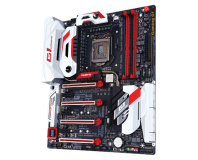
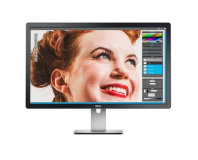
The testing saw Gigabyte team its GA-Z77MX-D3H TH motherboard, packed with Intel's Thunderbolt high-speed peripheral interconnect technology, with an Eizo FDH3601 4K-resolution monitor - a high-performance, high-resolution display designed for use in medical imaging and air traffic control applications. Using nothing more than an off-the-shelf Intel Core i7-3770K processor and its integrated Intel HD4000 graphics capabilities, the company was able to prove that its board can drive a 4K display.
The trick comes in the dual Thunderbolt ports, which double up as Mini DisplayPort 1.1-compatible graphics outputs. Although each port is only capable of driving displays at 2K resolution, paired together and working in tandem the ports are able to drive a 4K high-resolution display.
For those at the cutting edge of home entertainment, that could spell a very tempting home theatre system. This past year has seen the release of several 4K-resolution TV sets, along with the official release of the Ultra HD standard. Promising four times the pixel density of a similarly-sized High Definition TV, Ultra HD TVs are currently priced well out of the reach of most consumers' pockets - but, as with HDTVs in the past, prices will fall.
Before the technology reaches a critical mass, however, companies are going to have to do something about the lack of 4K-resolution content. With current-generation Blu-ray discs topping out at 1080p, Ultra HD content is hard to come by - and that's a stumbling block when you're trying to convince punters to part with tens of thousands of pounds on a 4K-resolution projector or TV. Sony has recently announced plans to ship an Ultra HD content delivery system with its compatible TVs, but for companies that don't also own major Hollywood studios things aren't so simple.
With the ability to drive an Ultra HD display using on-board graphics, however, Gigabyte's Thunderbolt-equipped motherboards could well prove the answer. With the GA-Z77MX-D3H TH proving its chops in testing, and the GA-Z77X-UP4 TH and GA-Z77X-UP5 TH claimed to offer the same compatibility, the company could have stolen a march on its rivals when it comes to high-resolution displays.
One thing Gigabyte hasn't shared, however, is performance information: driving a high-resolution for simple 2D graphics is one thing, but playing back full-motion video or rendering 3D scenes is quite another.

20 Comments
Discuss in the forums ReplyFirst I've heard of it as well! Chops = mouth/mouth area.
What people?
But why bring up the retina macbook (Which one?) as an example of how weak integrated graphics are when one of the machines is basically an 'ultrabook' and the other is in a different league spec wise?
My retina macbook is smooth no matter what I'm doing, and I'm driving 10 million pixels of display (That's 1.7 million more than a 4K display for those who are counting). I can certainly tell you that your "Nothing is smooth" if I "Play a video or do something else" is factually incorrect.
How can this be? Because it has a dedicated GPU, like so many other machines. And shock horror a Kepler class GPU is a pretty capable chunk of silcone and even able to perform the impossible of "Smooth scrolling while watching a video".
Of course Intel integrated graphics are going to be choppy when pushed too far, and it's for that reason why any decent spec laptop will have a discrete GPU as well... even Macs.
But I'll give you a nod that you have a point about Intel graphics when driving a high res screen. If I force my retina to use the integrated graphics (Using an app or hack) and change my res to 1920x1200 then OSX will actually be working at a resolution of 3840x2400 and scaling it down to 2880x1800
You're still wrong that 'nothing is smooth' when playing a video or doing something else, but yes the integrated graphics are not as competent at driving and rescaling a 4k screen resolution than the dedicated GPU.
Intel GPU plays nice up to 1920x1200, anything higher the Intel GPU has trouble, and needs to work at max performance and as soon as you try to do something fancy, like play an HD video, and do something else, like move window or Windows flip 3D or something that uses the GPU in some fashion, it will be quiet choppy. While, an Nvidia or AMD GPU, will have no problem, even a low end model, like a GT 640, or equivalent from AMD, and possibly lower models too.
36k U.S is not fantasy price :P Then again, the EIZO monitor does display 278 trillion colors, and not 1.67 million.
Some of the Olympics was filmed in an even higher resolution, 8K at 60fps. I was fortunate enough to see it at the bbc studios.
Dusts off 3 year old U3011
2560*1600=4.096.000
But having at a lower price is great news, but hardly a "breakthrough"."
Personally, I think the manufacturers would be wise to hold off on even talking about 4K for another year or two. Otherwise they'll get a backlash - "I just bought the digital hi-def TV and now it's already outdated etc etc" Sort of like I saw with Blu-Ray - I still talk to people at work that are annoyed by Blu-Ray, having 'just' (in their minds, anyway) bought everything on DVD, now the studios think they should pay again for Blu-Ray?
Bleeding-edgers are different, of course, and there's probably a fair number here on bit. I'm talking house-in-the-suburbs, couple-of-kids-and-a-dog, reality-tv-watching sorts, who have zero understanding of technology and paid Best Buy or whoever $100 to come plug their TV in for them.