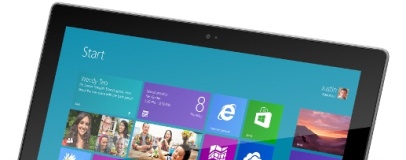
Microsoft's Surface tablets are off to a rocky start, with slow sales, build quality issues, bug reports and even a couple of lawsuits to contend with.
Microsoft's Surface tablets, its first attempt at creating an ARM-based tablet, have come under fire since launch for allegedly poor build quality, a lack of usable space, and Wi-Fi connectivity issues.
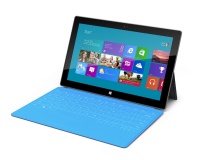
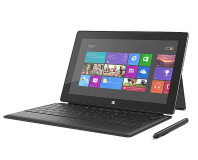
The Surface tablets, built by Microsoft and running the cut-down Windows RT operating system on ARM architecture system-on-chip processors, launched to a great fanfare alongside Windows 8. Due to be followed by Surface Pro devices, which replace the ARM chips with Intel x86 processors and Windows RT with Windows 8, the tablets are Microsoft's first real foray into the tablet market as a hardware vendor.
It's true that Surface boasts some clever features - the Touch Cover, for example, adds a touch-sensitive membrane keyboard to the inner surface which allows the device to be used like a laptop - but early adopters are complaining of issues with their new devices.
A thread on the
Microsoft Community site points to multiple issues with connecting the device to Wi-Fi networks, with numerous users stating that the connection is unreliable and requires the device to be rebooted when the link is lost. Other users have found their Touch Cover keyboards
splitting open after a single day of use.
Microsoft is also being targeted legally over the Surface. Papers filed at the Superior Court of Los Angeles earlier this week by laywer Andrew Sokolowski, an unhappy Surface customer, see Microsoft accused of misleading buyers with claims of 32GB storage capacity while taking up almost half that space in operating system files and pre-installed applications. Motorola, too, is getting in the act, extending a patent infringement lawsuit brought against Microsoft for the Xbox 360 games console to cover the Surface too and demanding 2.25 per cent of revenue generated from the device.
Even Microsoft's chief executive, Steve Ballmer, admits that things aren't going according to plan. Speaking to
la Parisien, Ballmer stated that sales for the tablets '
are starting modestly,' while pressure from the company's own partners - including HP, which has
publicly derided Surface, and Asus, which has undercut Microsoft's pricing with its own
VivoTab RT tablet - is mounting.
In short: Microsoft's big tablet gamble is proving difficult for the company, but it could still pull things out of the bag - providing it patches the software flaws and fixes the splitting issue. Oh, and takes a second look at the iPad-matching pricing structure. And figures out a way to keep its software customers on-side...

199 Comments
Discuss in the forums ReplyI think MS were a bit quick to push out the Surface and Windows RT though - it sounds as though it could have spent a few more months in development - especially if the OS is taking up somewhere in the region of 12-15Gb (I'm assuming the installed apps don't take up too much space)
The capacity lawsuit is just silly. I hope that the judge will just dismiss it, else from now on, you'll see all OEMs computer say how much used space is taken on computer, and other silly info. Like McDonald peanut bag, which has a large label saying pretty much: This bag of peanuts, which is clearly identified as peanuts, contains peanuts. Or like Hot Coffee is hot warnings. The user can still return the tablet if he is not happy. Yet he decided to try and make a few bucks on Microsoft.
The WiFi issue seams to be related with compatibility with routers. When I got my laptop 4 years ago with the Intel wireless card, I had a similar issue. Worked perfectly at home, but didn't with the new school wireless N network, 4 years ago. I had connections problems, similar to what is being described about the Surface. I called Dell, and a tech came over the next day to replace the wireless card with the same, but a newer revision (I had Dell next business day onsite service), and voila, no more problems.
My guess is that a new revision of the wireless card was released and it doesn't play nice with some routers (probably early draft N ones, would be my guess). That would be just bad luck for Microsoft.
As for HP Todd Bradley, comments. I guess, I think he never used any of it's products. Because HP systems not only breaks after a year, but the user experience is abysmal at best. Have anyone saw their touch screen all in one. You can't even scroll somewhat smoothly on it with it's custom interface layout. What a joke. And like Acer, they have nothing to show. So again, big words, but they are far worse.
I respectfully disagree. I know you're not getting the full advertised space from practically anything, I believe most tablets and smartphones eat like 20-30 % of available space and it's perfectly normal and universally acknowledged. But being able to utilize only 50% of the advertised capacity has a strong smell of fraudulent bullshit on it tbh.
I don't think its silly at all. Frankly this industry is full of rubbish specs. The hard drive industry states their capacity as multiple of 1000Megabytes and the operating systems formats them into a capacity of multiples 1024 Megabytes so you loose a chunk of your storage space from advertised. Networking equipment, well frankly I just don't know where that segment gets their specs from, certainly not from reality. Low end power supplies can over state their true wattage potential. Broadband company rarely tell the truth about what speed you'll be getting. BS marketing on silly technicalities needs to be beaten into bloody pulp and wiped off the face to the planet.
I will concede that the idea of advertising a 32GB system and having half of that taken up by the system is not the most egregious example of this kind of BS marketing, but I still lump it in their with the rest.
PCs have always been quoted as such though (with the addition that in storage 500GB != 500x1024x1024x1024B but 500x1000x1000x1000B and so this is also somewhat false) - this laptop has a 500GB harddrive, which is actually 460 ish, which has 25GB of Windows and 45GB of random OEM added crap, leaving 390GB. It's the way it seems to be at the moment, and so picking on Microsoft and no-one else seems a little strange. Especially so when 32GB on Android is really 25GB, but this varies all the time with some using more, others less. It's a very grey area, and somewhat unfair to pick on one vendor.
Without content the general consumer could not care less for a tablet and that's been proven time and again by the sales everyone but apple has achieved.
I've always wondered how Apple have managed to falsely advertise their devices as having certain capacities. With iOS6 taking up a chunk of the available ram, you lose not far off 1GB of space. On a 64GB device perhaps that's not as noticeable but on a 16GB iPad it means a fair amount less songs or two or three less films - even a gig's-worth of apps can be a fair amount.
making money is one thing, but shafting it to everyone is another... IMO
With new innovative products, you get the odd moan from other brand fanboys. Microsoft need applauding for giving the world a better alternative to the iPad.
Although I have trouble deciphering your post. I think I agree with you on the xbox thing. People left right and centre were having red rings of death. Making peripherals is one thing. But when it comes to high complexity integrated devices such as the xbox, microsoft left a lot to be desired in the quality department.
I do think that Microsoft rushed a bit with Windows 8/WP8/Modern UI. The product feels finished to specification, but no additional features were added, and little further optimisation done. Given a bit of time and a few patches, I reckon we'll see a great product, but for now, there's something missing. Evidence of this can be easily seen with Modern UI app support - only C++ and C# development, despite having pushed F# for some years now, a lack of "nice to haves" (no serial protocol support in modern UI?), and this is just from the developer side.
apologies, i was about to go into a meeting and just typed what was coming out of my fingers...
as for snips, i am not a fanboy, i work with a mac, and use a pc at home, have an xbox and ps3, and with all this, microsoft products have always been last for the most cases in quality. its not an opinion if cases of complaints and frustration comes to light in the public eye, but fact.
My boss is using one to test at work and frankly it's not good for us. It won't even synch with exchange because of policies in place nor access the remote portals (e.g. Juniper). The answer around seems to be that the RT simply is not a corporate device but then neither is the iPad and they work absolutely fine with our Exchange and remote access portals.
Problem here, for me at least, is that MS is trying to get away with delivering ~50% less storage capacity than advertised, instead of the "regular" 20% were used to. This needs to stop before other manufacturers start to think they can get away with it too.
I respectfully suggest you look into the facts.
A 32GB iPad has approximately 28GB of usable space.
A 32GB Surface has approximately 16GB of usable space.
A 16GB iPad has approximately 14GB of usable space.
So looking at price and usable space alone, for the same outlay you get 16GB of space vs 14GB... but Microsoft say 32GB vs 16GB which is 2:1 when it's actually 1.14:1. The surface still works out better (on this score) but not by as much as MS would let you believe.
Yet, I don't see people freaking about Nvidia GPUs, especially when for many their GPU cost more than the surface, whether it's the GPU in their PC, or their expensive laptop.
I am glad that Steven Sinofsky has been fired, clearly he rushed the Surface release. I mean Office was supposed to be a later release, he pushed an immediate release, where you can see that Office is far from being done porting it. Remember when Valve ported Half Life on Linux, they got ~12fps at first, but now it's fine? This is the same. Office was ported, but some serious optimization was needed, and instead of waiting, it was rushed out. What should have happen, is that Microsoft give away Surface RT to developers, so that they can test their software out, so that you don't have games like cut the rope that can play fine on a microwave, is choppy on the Surface RT, this would give time for Microsoft to finish it's Metro app to start giving a good impression to people, and finish off Office.
-> Microsoft is aiming the XBox as an entertainment system, and casual audience the most.. you can see this with the current state of the XBox 360. You'll see a small performance bump, which will translate to WiiU like graphics in terms of polygon count, and simialr texture sizes, but a bit better visuals as they only render on 1 screen. The rest will be invested in PVR like features. While it will have it's Halo games, I think it will be like what Nintendo did with the Wii. have hardcore games, but mostly games targeted casual games. I mean look at their past few E3, their casual gamer segment gets bigger and bigger, and so it's entertainment... while it's hard core gamer segment is getting MUCH smaller, showing 3-4 games.. and about the same ones every E3 (COD, Halo, and 2 FPS/Adventure third party games). Oh and I forgot the obligatory sports game which is on all console and PC, let's ignore that.
-> Sony PS4, NO WAY they'll do a massive loss console. It didn't work with the PSP, didn't work with the PS3, and didn't work with the PSVista. Yet, by not aiming fancy specs and ridiculous price system, they fair very well. See PS2 (GameCube was more powerful, yet didn't fair well). Sony is no financial situation to sale a console at a loss. So I expect a late launch, and not only that, a minor bump in specs. Perhaps this time, most games will be in 1080p, or 720p with AA. As Sony focus is on gaming only, and rendering on 1 screen, the graphics will better than the WiiU and the next XBox, however, not much above next XBox, it will be very close.
I agree. While the Surface RT isn't perfect, and has a rough start, this is the first time Microsoft is doing this serious and a huge worldwide scale (unlike the Zune which was U.S only). You are bound to have issues. And to be honest, I don't think anyone here could have done any better. And it's still MILES better than what OEMs have ever done.
All Microsoft has to do is:
-> release a firmware update for the wireless card to support more routers (this is something Microsoft has to push with the wireless manufacture, although, Microsoft might need to make a revision 2 of the Surface with a newer revision of the wireless card in it to solve this problem. So for the user, an exchange should solve the problem, once it's corrected.
-> updates on WinRT to improve performance.. already they have just release a bunch of update for this, which does this, and improve start time of apps.
-> Finish optimizing Office and release it
-> And finally, have a serious talk with the manufacture of their touch cover (lawsuit?, and/or do affairs with someone else, if no arrangement and compensation could be made?)
In others, nothing that can't be fixes within a few months.
It was a VERY smart move for Microsoft to hold the Surface Pro and see how the Surface RT does. This has minimized the mess greatly.
Look, I am not saying that Microsoft could have not a better job at minimizing the OS size by doing some clean up work. For all we know, it might be Office and all Windows built-in utilities that need libraries and .NET which needs also other libraries, which needs also other libraries and so on and so forth, which makes the OS big, and I don't think anyone here even with the know how, would even attempt to clean this mess up. Yes it should be scraped and restart from scratch, which is what Microsoft will probably do with Windows 9 RT version. But for now, this is what it is.
If you are not happy you can:
-> Not buy it
-> Return the device if you already bought it
-> File a complain to the appropriate governmental agency and the Better Business Bureau.
In this case, the guy clearly wants to make money.
It gets worse as any update to the OS gets stored, not simply what is applied. Plus hardlinks take up space according to the OS, even though pyhsical space in Flash memory isn't used (all previously versions of windows have this issue as well, but generally less of an issue that you have a 15GB Windows folder, when in reality it is only 7-8GB, when you have a 120GB SSD, or 500GB harddrive, or what not), also IIRC updates to programs also leave full backups on the device of previous versions. Not sure in WART does dUpdates like iOS does now, but even then, if it is keeping previous versions in some form to be able to backout, simply installing a few GB of programs and a few updates later to OS and apps could easily eat the little that was left of a 32GB tablet.
Frankly, beyond issues with WART itself, the storage and update methods seem to be an absolute cluster F. I have to agree, having roughly 50% of claimed space used by the OS and "required" files before you have any user accessible space is rather disinquenous. Both my iPhone 5 and iPad 2 are 16GB models and IIRC when completely bare have roughly 14.2GB of user accessible storage space. A 32GB surface on the other hand (or WART in general) has something like 15-16GB of user accessible storage space...barely more than an iOS or most Android 16GB devices have available to the user. I am fine that WART is a lot bigger for the OS and some of the included things (like Office RT) eat up a lot of storage...but they need a much better way to market it if their 32GB WART devices are the equivelent of 16GB iOS/Android devices for user storage. Or the fact that a 64GB WART is closer to a 32GB iOS/Android device than it is a 64GB iOS/Android device (more like a 48GB if such a thing existed).
The fact that Win 8 RT also seems to SUCK when it comes to space utilization AFTER you account for the OS, recovery partitition and Office RT also means realistically you are going to have a lot less effective use of the space that is left in the long run as well.
Oh, and with that microSD card slot...great that it has it, sucks that you CANNOT incorporate anything on it in to your libraries on the device without some "hackage". I mean, really, wtf is the point then?
Quality is just something that can change person to person. The surface has got mixed reviews and now the general public has decided they are not very intrested in it. If sales of this device were apple like then the other win 8 rt manufactured would not of delayed or canceled there product launch.( at least 5 rt products have been delayed, major developer support is very low.)
Alot of people on this forum and others assumed windows 8 would bring devs by the boatload for 400 mil users. That has not happened the general feeling doing the rounds on blogs of the major devs is pack of consumer intrest has delayed any dev work for the win 8 platform.
Tablets were out before the IPad all were a sales disasister, can any tablet but apple really claim they have made money on the sale of the device. ( nexus 7 and kindle fire been sold at a loss) dou't any other tablet has seen break even.
If I was thinking of making a tablet I'd probably not bother as unless your called apple you will not see a profit. ( and in business nothing else matters)
Yes everyone makes mistakes etc etc. but if I were them I would have made the QA on this thing military standard. They needed to make sure that no stories like this ended up in the BT front page. If something like this happened on the Ipad 4 no-biggie, it would be glossed over by their new "retina" display or ability to facetime via your dog's collar blah blah or some other stupid crap. If this device fails to do anything perfectly there are plenty of people stood waiting to say HA SEE! M$ CANT MAKE ANYTHING AS GOOD AS THE IPAD!!!!!!111!!11!!EXCLAMATION!!!11!!! APPLE RULEZ
Which is pretty much exactly my point
Disagree tbh, its a convenience device so it needs to be convenient and to a large extent that means not pissing about with firmware or driver updates. Obviously its not going to make a dent in Ipad sales but I'm not supporting it like a football team here. Its a product so the real question is whether microsoft can make any money not whether they can beat the Ipad.
Why not? If you buy a PC, the specs list the size of the whole harddisk, not subtracting all the software that is installed on it. Anyone knows that software is going to take up some of that harddisk space, and accepts that as a fact.
However, on Windows RT, updates are only kept for a few days. Then the OS assumes everything works well for you, and cleans it up. So the size is fairly controlled.
-> Retina display on MacBook Pro 13inch with Intel GPU is chopy. the Intel graphic solution can't keep up, making the entire experience impossible to use >> No problems. It will be fix in a path.. probably... we have no info on this, and Apple is ignoring our calls... but its all good. It's Apple. 10/10!
-> Apple uses cheapo batteries that swollen and break system and calls it user fault, and not over it by warranty >> It's ok, it's Apple. 10/10
-> MacBook Air hinge breaks easily. >> It's ok, it's Apple 10/10
-> Choppy interface at the main menu, and not very polished >> It's ok it's Google. 9/10... no Apple logo.
-> What's this? A Microsoft or RIM device? Oh My FREAKING PINEAPPLE! the changeable default background is more blue this time!!!! It SUCKS OMG I have headaches non stop, I can't use the system, I am blind now because of it, it gave cancer, it's terrible. -500/10
I don't know how Microsoft can fix this (same for RIM). Yes, polishing their product to the extreme works.. it sure helped Win7. But I still think it's not enough. It's like an psychological allergy that people have with the brand names.
I agree. Some people sees the Surface as not selling well, but it is selling well. Microsoft didn't even expect to have this many sales, and have trouble filling orders. Its not a huge success in the sense that it will beat the competition, it's a success FOR Microsoft. So it's a success but not a success.
All it means to Microsoft, is that the Surface will not be a Zune. And that they have the confident to push into the tablet market. I am sure Microsoft didn't expect to even pass 3-5 million mark worldwide through the entire life of the Surface. I mean it's only available online for the great majority of people, and only on SOME Microsoft stores (US only).
Rim currently dominates 2 markets 10-18 year old market ( The market that cant own a contract phone legally)
Business market ( There contracts dont expire till later next year as long as bb10 offers the items they need i cant see a widespread change been made)
Rims biggest issue is trying to make too many phones. If Apple offered to buy the BBM Service from them they would be setup for a good few years. ( I would be shocked if Apple has not considered buying a telephone provider like Sprint to compete with the tv companies on more equal terms)
Microsoft controls a desktop os market and that about it.
There hardware is another story, Mostly failures with poor quality control that has let down a good product.
Zune was a failure to compete with an Ipod. ( Never released outside of USA)( Sales were poor and it struggled to break even )
Surface rt sales would indicate another failure. ( Will it break even current sales suggest no )
the orginal xbox was pounded into the ground by the playstation ( Due to high price, Unrealiable DVD Drive. ( It never broke even and sales were poor)
Xbox 360 had a very high failure rate on release ( RROD)( I personally went through 4 consoles and i have friends who had 3 or 4 themselves) ( 2nd highest selling console of this generation, dominates in america has average sales in europe. ( Nintendo wii is top something close to 120mil units at last check))
Not exactly been hugely successful with alot outside of the xbox 360 which has now got above 60mil sales.
Microsofts biggest issue to alot of people i know is there Image, the 360s failure rates were widely published, Windows vista did not help. 42% of the windows population is still on Windows xp which is currently 12 years old.
Windows 7 in the passed 3 years has slowly repaired a degree of the damage that has been caused due to terrible quality control.
People who buy Apple dont care goodbytes thats what seperates them from other buyers, Most people see them as sheep who will buy anything that Apple make. For Apple to have that brand loyalty is something no other company out there has anything like and never will.
Most people are not loyal to microsoft and use it because they have little to no choice in the matter.
To compete with Apple you either must undercut them alot ( Look at nexus 7 sales (been sold at a loss) ) or produce a high quality product that people actually want and half the software to back it up with ( Samsung Galaxy S3). Take Apple and Samsung together they have all the profit in the smartphone sector, Apple has all the profit in the tablet sector.
In the next year i personally expect to see Nokia and Rim sold off for there parts ( Or patents as the case is ) To samsung and Apple respectively, Both have struggled in the face of a total change of user needs and have not adapted to it. Nokia still sells the 2nd most phones in the world it just makes £0 off the sales.
Expect to see the
Surface RT 2 next year with new and improved Touchpad, Wireless capabilitys and extra storage space. You read it here first. ( If its not released then Microsoft have surrendered the tablet market)
Really? None of my HP systems have any problems at all, some of which are much older than a year with nothing needing repair.
As has been mentioned a few times in this thread, the whole megabytes/mebibytes confusion seems to have come into the light a bit more now. To set it straight - a MB (megabyte) is 1,000,000 bytes, or 1000x1000 bytes. A MiB (mebibyte) is 1,048,576 bytes, or 1024x1024 bytes. the HDD industry posts their figures as the decimal figures (MB, GB, TB) as those numbers are larger than their binary counterparts (MiB, GiB, TiB), which presents their hard drives as 'larger' to the general public, which equals more sales. This is not wrong in any sense.
What is wrong, however, is software incorrectly reporting the size. Ubuntu, Debian and probably all Linux distributions report HDD size using binary figures, but also the binary suffixes (MiB, GiB, TiB). Unfortunately Windows also uses binary figures, but uses the decimal suffixes (MB, GB, TB), which results in the confusion. For example, in Windows my C: drive is reported as 51,568,963,584 bytes, which is somehow rounded to 48.0GB - an obvious misrepresentation. 48.0GiB, however, is correct - which is what Linux reports.
If they are consumer products, then where manufacture errors, you you barely used them.
-> Windows creates restore points
-> Windows 8 makes an image backup of itself at setup on your local computer (they are ways to update it, so that when you hit the re-install button on the Control Panel, it restores it back to that last state you made once you installed Windows. OEMs uses it save a state after the drivers (and probably after the junk put in))
-> Windows uses WOW64 technology. Where it's Windows On Windows 64-bit, where you have Windows 32-bit ON Windows 64-bit, hence the 2 program files folders, with duplicated potential programs that a 32-bit software might use embeded itself, such as Windows Media Player (also for codec reasons), IE (also for plugin reasons), and the rest. This is how Microsoft
got 100% compatibility with 32-bit software under 64-bit software (note: I said 32-bit.. not 16-bit)
-> You have all the drivers built-in in the OS. And that list is extremely long. But this is how people can already have network, wireless, and everything or nearly everything up and ready after Windows is installed. This was much appreciated in Vista, and this is why it continues with 7 and now 8.
And when a 32GB SSD is actually the same price as a 500GB HDD, then why not use one? The cheapest 3.5" hard drive I could find on Scan was the Hitachi Deskstar 500GB (only SATA II, but a SATA III version is only a few pence more expensive) for just over £40, while a 32GB Sandisk is under £40, and a 60GB OCZ Agility is £46 (note: we were building the Windows machines a while back when a 60GB SSDs were aroung £60, but 32GB SSDs were £40).
Linux doesn't care about support legacy side, Already getting a program to work found on the net, is a bit tricky at times, where it's picky about its distribution. Windows doesn't have this. Assuming its in 32-bit, and follows Microsoft guideline to the letter, programs from Windows NT4 still works on Windows 8. This means: very old files needs to be kept. If you open system32 folder or SysWOW64, and run each .exe's, you'll even some really old Windows panel dated back to Win95. Microsoft can't afford to drop anything. Already when they drop 16-bit support, with 64-bit Windows. you would think after all these years no one used them, but nope. Huge mess, even here. Personally I would have never imagine anyone still playing DOS games, but still they are. And they are other similar factors coming into play. You can drop the size of Windows, by opening the Feature panel, and uncheck all the items. Oh yes, plus you have space needed for the setup to install and uninstall Windows features, plus the space these features takes.
-> HDD's are large and bulky for a tablet
-> HDD's are noisy
-> HDD's don't like when you move it while it works (such as moving with a tablet and depositing a bit roughly on a table)
-> HDD's are more prone to failure (see above)... this means you need to have a panel to access it to replace it... this adds even more thickness.
Small SSD is better than HDD of any size for a tablet purpose.
Bytes, Kilobytes and Megabytes have been around a lot longer than when IEC created the mebibyte term a little over a decade ago. Yes mebi maybe technically correct 'now' but if people aren't use it...
Just because a organisation (Even the IEC) redefines the common meaning of a word doesn't mean the world follows it. Everyone should understand that the term Megabyte can refer to base 10 or base 2, but it should be 'assumed' that it's referring to base 10.
Ever heard anyone talk about their HDDs in tebibytes? Or do they use terabytes? How many megs is a download? or how many mebs?
Yes base ten naming is how it should be done if everyone changed, but hardly anyone is using the terms.
This has gone way off topic though
Windows 7 does carry some bloat if you dont boot the restore points down to a smaller number and remove hibernate your looking at,
Whatever your ram is for hiber + 10% of the drive in restore points. + swap file. for most thats about 15gb of disk space just in 3 things that most say are essential ( I personally dont do hiber and have restore points down to the lowest it will go.) Then again ive also removed windows media player and all its crap that goes with it. ( media center and dvd maker ect )
Saves a few gbs. My windows 7 folder is currently a 12gb folder so pretty small, how people end up using 30gb id love to know.
Can it get to the ~350MB of Debian? Surely Drivers and Restore Points/Backups can take up that much space? In my experience, Debian includes most of the drivers I need anyway, so that isn't a problem.
2 years is lucky. When I was working at retail for a summer job a few years ago... I can tell you, we had SOOOOOOOO MANY HP computer for repair. HP and Acer none stop. It was interesting because at meet with a person that worked at another big retail chain some time ago, and he had the same thing. Acer and HP, every day, and had piles of them. Retail store loves to sale these systems, as they bring money with all the repairs.
4h a day isn't much. I use my laptop from 7-8 hours a day 5 days a week, for the past 4 years, and sometimes I even greatly OC my GPU.
I won't comment further I already made my point above and explained. Open Features panel looks what Windows has built-in (even uninstalled, the setup it still there, and for most they are not a few MB, but rather large things), and have look at the services panel to get some ideas of all the other feature that you personally don't use, but is needed and useful for others, which Linux doesn't have built-in.
Can't say I agree. I would except maybe %20-25 tops of that space taken up by the OS, but not half.
And on your HP comment, dear god I hate that brand. I used to work in pc repair and sales and tried to steer people away from HP and at least go with the Toshiba's that we had in stock. Some of the HP laptops we had would actually brick on Windows update. They sent our store some i7 laptops and they all came back because as soon as the customer updated it, it was bricked. I don't mean a fresh windows install would fix them, I mean they were hardcore bricked and wouldn't boot past the HP splash screen.
But it's not just the OS. It's the OS plus a full Office suite. And if you're unhappy, all you have to do is return the unit for a refund. You don't have to sue --that's just being an asshole.
I should also sue about every mainstream targeting headphone and speaker manufacture as it can't produce all the frequencies mentioned properly.
I should also sue chalk manufacture, as when you write on the board, you have a large amount of chalk not going on the board, but goes down on the floor. Look at all the mess it does!!! There is no warning on this on the box.
Oh an permanent markers, because they aren't really permanent.
If Microsoft said 32GB of storage, and they actually put a 16GB chip only. NOOOOOWWW we are talking. But that is not the case.
I think you will have to explain this, because the last time I checked properly designed GUIs use the same elements just repeated, like buttons or text areas etc. which means you actually only store one copy of each control. Therefore a GUI really shouldn't take that much disk space. As for the 30GB thing - I was actually talking about a clean Windows 7 with updates, because a fresh Windows 7 installation without updates is practically asking for a compromised system.
.NET is part of the disk space problem - if it were designed properly, each version would build on the last and add new functions where necessary, rather than being complete overhauls. This stands true for a rather large core of Windows - multiple libraries, with the same name but a different version to support applications compiled with those different versions. A properly designed library would continue to support those applications as the functions that the application uses are still there - just there are new ones to complement the old ones. And besides, why should a code library with some GUI elements take up several GB? Again, bloat.
If you are installing Linux applications 'from the net' (I take this to mean from download pages using a web browser) then I am afraid you are doing it wrong. In this day and age Linux is sufficiently developed to actually have package managers (which Windows still lacks...) that take care of all dependencies for you. In the rare occasion that you require a program that is not available from a repository, then it is very likely that the said application was last modified in 2002, and there are newer alternatives.
As for the keeping of old executables and libraries - this is completely fine. Executables and libraries do not use up that much disk space, so you can keep..... oh wait. Forgot, this is Windows - .NET and all that. Never mind.
And this is the unfortunate reason why we have so much confusion. HDD manufacturers rightly use base 10, RAM manufacturers wrongly use base 10, and Windows just wrongly uses base 10 for everything.
1- Every update keeps a backup of the old one
2- Service Pack takes space
You can clear this, if you know you'll never uninstall an update and assured that your system is perfect.
http://cdn.wpcentral.com/sites/wpcentral.com/files/styles/large/public/field/image/2012/11/adduplexwindows8tablets.png
http://cdn.wpcentral.com/sites/wpcentral.com/files/styles/large/public/field/image/2012/11/adduplexwin8manufacturers.png
http://blog.adduplex.com/2012/11/device-stats-surface-and-nokia-dominate.html
I give windows 8 6 months at the most before Microsoft try and bury it again just like they did with Vista,.
I gave up on Microsoft a long time agao and will never forgive them for dumping Vista on the public.
OK windows 7 saved them but they have just made all the same mistakes again and learnt nothing from the past.
I am sick of living in a world where the copr company takes it out on the customer so that they can make an extra buck.
What ever happened to customer care, putting the customer first, this is why Apple win because the Custiomer comes first and what the customer needs come first before the [pocket of the Corparate company.
The nails are scratching at Microsofts Coffin, its only a matter of time, Microsoft have to go back to the old days when they put the Clients wants and needs first, only then will they save themselves from complete ruin.
Am I right in thinking that Windows RT is just Windows 8 but compiled to run on an ARM processor with a few tweaks? If this is the case then I have no problem with it taking up a larger chunk of space and it not being stripped down to offer less functionality to increase space on offer.
On my Windows 8 desktop the Windows folder is 14.9 gigs and on my Surface it is 6.57 gigs.
and why didn't he do the same with apple ipad/iphone
You're looking at a marketing issue from a technical perspective. We all know that a default OS install takes up a lot of room, and even if we're a bit surprised it's as much as 'up to' 16GB, we all expected it.
But not everyone makes that connection. Microsoft are advertising a 32GB device that only has 16GB available for use. That's misleading marketing that is. Yes it's got 32GB of flash but that doesn't change that it's misleading to only talk about the total capacity rather than the usable capacity.
You wouldn't sell a house as being 2000 square feet and then expect people to accept it when they see it's half that when you take into account the walls. There is an expectation that the liveable volume is used once you take away the 'non heatable areas' such as walls.
"Microsoft Surface 32GB (Default of 16GB for user data)" etc.
The listed reasons in the thread just seem like PR babble trying to defend a device that is not selling. The zune had similar issues on release if i remember correctly.
Nexus 7 has bigger faults it never got a front page post about them ( Screens falling apart due to poor quality control is alot bigger than a lack of some hard disk space that 99% of fokes will never notice)
In the end of the day if the surface had sold 1million units or even 500k microsoft would be out there telling us we have sold this many units just as they do with windows 8 and every windows before it.
Microsoft likes to build its windows hype machine. The fact that has not happened means Surface sales are really really poor. Even on this tech website from the main foke that post i only know 3-4 people who have one. Compare that to a nexus 7 or Ipad where every other person seems to have one.
Nexus 7 and Kindle fire are doing well in the low end market, Whilst the Ipad takes the profit end of the market, To compete with either requires a quality product and content to go with it. Microsofts main content is music, most Films on there store and tv shows do not get a quick release if at all.
The surface has sold poor for 2 reasons and 2 reasons only
Price - Dont care that it comes with office it costs alot of cash to buy and for most consumers in the current market its not a device they can afford to buy without thinking if they do need it. ( 99% of people do not need a tablet, Apple has sold a content device not a tablet whatever they may call it. )
A shop to sell it in - This is the biggest flaw there is 1 microsoft store in the uk its in london i am not driving 600 miles round trip just to test the surface it would cost me more in fuel than it would to just order one and send it back if i dont like it. If it was below £200 in cost most would take a chance the fact its closer to £500 with keyboard means its a huge risk for most consumers.
The general consumer is a hands on type of people thats the main reason comet is going bankrupt everyone goes in and tests the tvs then buys online, I dont know anyone who has said im buying a microsoft surface or even thinking about it. Very few will consider it till its in more pc shops in the uk market and the USA market for that matter.
Let's look at a random laptop advert:
http://www.argos.co.uk/static/Product/partNumber/5086328.htm#pdpFullProductInformation
What is the advertised HDD space? How much of that is left after the bundled OS and Office install? It doesn't say. Misleading?
Sure there are some flaws, and the OS isn't the most intuitive, but the features it has are excellent. (SD card, USB and windows integration are my favourite). Having to install from the microsoft store and being forced to use Bing and MS explorer is a bit annoying, especially when it seems like these are conscious decisions to limit the product. (Please let me have Chrome!)
I think most of the disappointment online is from the fact that it isn't quite as good as it could have been.
Still glad I got it over the Ipad.
Let's do that. Thank you for getting some exact numbers, I was too lazy to dig any of them up.
Sorry you just completely lost me there. I only know that Joe Average won't be too happy getting only 50% out of the storage capacity he thought buying. Are you saying that since 32GB surface costs the same as 16GB iPad but comes with 2GB more usable space it's all cool?
Not sure about that either. In EU you can file a complaint to your national consumer protection authority about dubious/false advertising, if they don't pick it up by themselves. I'm not sure whether US even have one of these authorities - seems to me the more tradional way of handling things there is to sue the living bejezuz out of everything and let the court sort it out.
Goodbytes, whilst usually agree with a lot you say, I have to disagree with you here.
The peanut and McDonalds warning labels was the correct way to rules things if you know these cases. Peanuts are not nuts but peas and it was really standard law to cover all so yes some silly examples did show up. The McDonalds coffee thing was about serving temperatures and drinking temperatures when relating to fast food which should be able to be drunk straight away and the temperature was considered even to high for this.
The reason I wanted to post here however is because this is very similar to an issue that was solved a long time ago, that of packaging weight on food. If you have ever noticed on food packaging the letter 'e' next to the weight. This means excluding packaging. That means you cannot buy a 30g packet of crisps that only have 5g of crisps and 25g of packaging.
Why should a similar rule not be imposed here as this type of advertising is misleading to the layman.
In the same way car manufacturers cannot only advertise fuel efficiency figures for optimum conditions (i.e. 56mph on a slight downhill slope) but have to provide 3 different indicators of inefficiency.
Could not be more incorrect, misleading claims are illegal.
Once again :
Where do you see Free/Available space ? I see Storage. Does the tablet has 32GB storage ? Yes.
Don't believe me ?
http://www.ifixit.com/Teardown/Microsoft+Surface+Teardown/11275/2
Step 14.
Samsung KLMBG4GE4A 32 GB NAND Flash (left)
So, does it have 32GB storage ? Yes.
http://www.apple.com/mac-mini/specs.html
Does it has 500GB storage ? Yes. Does it has 500GB free space ? No.
You may dislike it, but the fact is that technical specifications and product pages are not lying, neither misleading.
If Microsoft would have said it comes with 32GB free space, then he would have a basis for lawsuit. But in this case, the whole lawsuit will be thrown out at first court instance with no rights to appeal.
Using your logic it would be perfectly ok for Microsoft to deliver 32GB device with the OS taking it up 100%, after all, it would still have the 32GB of storage, no matter none of it would be free/usable.
Contrary to a popular belief, there are judges with down-to-earth attitudes and common sense, so I'm interested to see how the actual lawsuit will pan out.
Makes two of us then, I see. At least I've been making an attempt at basic argumentation so far instead of calling names ;)
Before the thread devolves to an all-out flamewar, good day to you gentlemen.
Actually, there were products with much, much worse ratio than Surface. For example Nexus One - Storage 512 MB (190 MB application storage). Or HTC Hero - Storage 512 MB, 165 for applications.
The fact is, all this "lawyer" is doing is disputing the industry-wide standardized meaning of the word "Storage", which for everyone else means how much storage space is installed in the device, not how much of that storage space is free after the system is installed on it.
And here is where what the customer can reasonably expect vs reality comes in. It is reasonable to expect a OS to take up some room. Is it reasonable to expect it to take up 50% of the advertised space, no.
Also no rights to appeal - you sound like a Daily Mail reader, high on opinion, low on facts/knowledge.
Goodbytes. You make a good point. Maybe the lawsuit is misdirected but the principle is correct, even if he is only after money for himself.
Legal definitions exist for a reason but are usually only defined by law after a dispute because someone decided to take the piss.
I left this thread when I noticed that the whole Windows bloat thing a page back between me and GoodBytes was turning into a flamewar. Good day to you all as well.
Er, no. Goodbytes and I argue that:
- PCs and laptops are conventionally advertised with size of HDD, without mentioning how much storage the OS and bundled software takes up and how much is left.
- Storage =! free space.
Your argument is that nevertheless, people may reasonably interpret storage as free space. We argue that neither Microsoft nor any other manufacturer has any control over how people choose to interpret technical specs. You argue that regardless, people may reasonably interpret storage as free space. Kind of an impasse here, no?And to argue that calling you "being stubborn" is namecalling... really.
This was a non issue in the pc days when even if your system took up 32GB you had hundreds and hundreds of GB left. It is now more of an issue since space seems to be limited overall to 64GB on these type of devices.
Any company can control how people interpret their specs, but generally choose to put some sort of spin on them in order to present the product in the best light. Any company can advertise the base system usage as well the overall storage, that is a very simple way for a company to control how people interpret technical specs(or better yet free space plus system space). By not providing that information is also another way a company can control how people interpret technical specs.
Coca Cola put the calorific information on a bottle of coke as 2x250ml servings as opposed to 1x500ml serving. Thus making it seem like at first glance that its half as bad for you as it really is. Companies the world over deliberately spin specs, such as they are technically true but may not conform to how those spec actually apply to real usage. I mean this sort of smudging of data is prevelant in nearly any industry which requires some sort of technical declaration. As I said this storage space example is not the worst example of this kind of spin and smudging of specs but anything that goes against the trend is good in my books.
When these devices eventually get the same type of storage as we enjoy on current day desktops and laptops then this will once again become a non issue.
Even before I start typing, I already know I'm gonna regret this since anything good rarely comes out of internet arguments. But to hell with it.
We agree on conventional advertised sizes of storage, and that the system is to an extent, inherently flawed. I also recognize it would be difficult and counter-productive to use actual free, usable space, as there are lots of factors which contribute to this, those not always being constant from device to device.
I also argue that we as typical consumers have come to have certain expectations about how much usable space we are getting from a device. I can tell from experience I was somewhat disappointed when I got my first smarthphone, the iPhone 3GS 16GB and found out it only had something like 14.1GB usable space. But that's around 12%, something you give a sad face once and not think about again. (You can tell I wasn't too tech savvy back then). I also have Corsair SSD with 128GB claimed storage, which turns out something like 119GB formatted if my memory serves correct. The point here is the deviation in these instances is something like 10-15%, conservatively. I've been quoting 20-30% in my previous posts just to play it safe. I'm arguing most people expect they usually get something like 80-90% usable space at minimum out of a given device.
Now imagine the outrage if the aforementioned Mac Mini would, out of the blue, come with 500GB 5400rpm HDD which would only have 250GB usable space. Percent-wise this would be exactly the same situation.
I'm not saying MS is inherently doing anything differently than other manufacturers, only that this 50% thing is really pushing it too far and exploiting the general goodwill on the subject. They will need some sort of slap to the wrist, as would any other manufacturer trying to pull similar stunt off. I fear this might set a dangerous precedent, leading to more manufacturers coming up with less and less accurate specs in the future.
I really dislike participating in heated arguments in foreign language, I know I'm coming forth with more simplistic arguments than I'd like because I'm not as fluent in producing english content as I'd like. I hate wasting mental cycles and thought processes on something as simple as translation. As an exercise of frustration, precious few activity comes even close.
Sorry if I overreacted. But I'd like you to remember, not everyone here speaks english natively, so I'm slave to my cultural background and upbringing. Stubborn translates literally to itsepäinen in finnish, and it has a distinct derogatory flavor to it. Were you to call me one in person, it just might earn a punch in the face ;) Also, calling someone stubborn just because they disagree with you isn't very productive, now is it?
They did, this is why the news broke off. If Microsoft kept quiet, all this conversation, which is probably occurring in about any tech forum, won't even exists. I think Microsoft shot themselves in the foot by being truthful with it's users.
So you see, good things do come out from internet arguments. :)
It is. It also help you develop some self-constraint, and hopefully postpones the inevitable demency ;)
I still hate how the need to keep my sentences simple makes me sound less astute, just to keep it safe grammar-wise.
Or I'd suffer the ire of the Grammar Nazis
Your English is fine. Anyway, the last place to worry about grammar is on the internet.
Well I don't know about your first language, but English has some strong words. 2 line of text in English can easily represent a paragraph in French. In French class when the teach says to write a 2 page essay, it's more of a paragraph of actual content, and the rest filler, to translate what you mean. However, in English class.. 2 page feels like a term paper, as you actually need to start pulling a whole set of ideas to fill 2 pages. :) I am exaggerating a bit, of course, but that's how it feels.
Anyway, you English is fine. It's just a forum, not some important document to write. :)
I don't really ever entertain the tablet market personally. To me it seems most of the people that buy into them are the kind who crave gadgets but have no real purpose for really needing or using them.
As for the Surface, Microsoft has a fairly poor track record with hardware - so build quality issues to me at least comes as no surprise. iOS works so much better than anything else on the market in it's quadrant. It's the only reason I own an iPhone, and it's the only Apple product I'll ever own.
I think the top post although vague is pretty bang on. Tablets and aesthetics go hand in hand, and frankly Apple has this area nailed down too. Not just in quality but in design also. It's what they do, and I think that even if the Surface was a perfectly flawless and well built device, it would still struggle in an already niche market.
You don't need a fancy 2000$ gamer computer to surf the web, type documents, listen/watch to music/video, and check your e-mail, which is what most people do.
Why desktop PC sales are down? Because most people have old Pentium 4's or something similarly running XP. It's fine for web and checking e-mail, and even Skyping. So, why change a perfectly working computer? And You don't need to look far for those. Check out most parents computer or your grand father or grand mother (assuming they have a computer). Look at libraries, and so on. And the younger generation simply uses their their phone, or get a tablet. And not the noisy beige box they have on a desk, which they turn on for the occasional long e-mail to type. People are shifting.
I think, in a few years, everything will be on the cellphone, which you attach inside a tablet format screen, or to some dock station to your TV or laptop or desktop monitor with keyboard and mouse. 1 device for everything. Exactly like the Motorola Atrix. Sadly it didn't work, due to the super high cost, and interface not ready yet, as it's based on Android. But these are just a question of time before they are solved and a right balance is found.
You are still going to have your servers, workstations and desktop PC's.. but those will go more into the niche market and stay there.
Anyway, right now, tablet is a big market, and this is the way forward, and this is what people are voting to be with their wallets.
Now this is a joke of the month. I guess you never used Microsoft keyboards, mouses, game controllers, joysticks, remotes...
Reality ladies and gentlemen, you should try it instead of living in the stick your head in the ground anti-Microsoft community ever present here.
I've had a trouble free experience so far. Go and try it yourselves, no wait...you can't....they've all SOLD OUT!
Anyway, I was commenting on an attitude vis a vis the discussion, not a personality trait.
It's ridiculous ain't it... ?? It is all out of sheer laziness that figures like these became acceptable.
People using 1000 becoming so common that even manufactures know that marketing can just lie about capacity on the basis that people either a) don't know any better or b) know they can't do anything about it.
They also don't understand what a kilobyte means in terms of storage, or a megabyte, or a gigabyte. How many songs, pictures or documents is that? How large is your music collection in gigabytes (no peeking)?
It's all a bit academical. Most people just want to know: how much of my stuff can I store before I run out? And most people never run out.
Look at the lawsuits between Microsoft and the eu government, utterly pointless yet ms is paying 2bil + in fines.
Don't think much of this is doing anything to potential sales, apple gets more bad press a week than Microsoft has had in a year and it has not suffered.
General consensus if the paying public wants your product they will buy it, if not they vote with there wallet. ( which is a key reason why tablet sales are not a huge profit earner unless your called apple, have my douts amazon can continue to afford loss leader tablets it lost alot of money last quater)
My oppinion in 2-3 years time
Kindle and nexus 7 and surface will no longer exist. People will have got over the whole tablet craze and apple will be only company left selling a one in the market. Happened to MP3 player market nothing to say it won't happen again.
End of the day the kindle fire is costing amazon a fortune, similar thing with the nexus 7 and google. Can't keep loosing money in the hope that people will buy items from your store when if you take what people say on this forum as true, very few people who own the nexus 7 have spent any real money on apps, or actual content.
Even apple bearly makes money on content, so I'm not sure how google or amazon plans to do the same.
Was this meant as a joke ?
1) Kindle Fire and Nexus 7 8GB were made at cost, maybe with some minimal loss in case of Kindle. Nexus 7 16-32GB were made with minimal profit.
2) Money on content... Are you kidding me ? Let me do the math for you.
Apple, Q2/2012 - $1.9 billion in revenue. 30% of that goes directly to apple. That is 570 million US dollars. In one quarter of year. Above 2 billion US dollars per year. Yeah, barely makes money on content. Google mobile business revenue is $8 billion per year - sure, big chunk of that comes from mobile ads, but it is irrelevant from where the money comes.
I ask, because people who measure how it actually costs, don't figure in engineering cost, marketing, HR, R&D, etc.
We know that the WiiU gamepad controller cost Nintendo ~100$ U.S to produce. And it doesn't have a processor, capacitive touch screen, large high capacity battery, fancy webcam, nor a super high resolution screen (480p screen is used)
The reason why these devices are made are to tie you in their ecosystem. Would you switch to other platform if you have money invested in their ecosystem ? Doubt it. That is the reason MS has created surface and pushed Store apps on us - to tie you in their ecosystem.
Apple pays out 1.5billion dollars for content faug. ( and thats just last year, This year will be higher.) Apples app store is not a huge money earner if you have read there figures closely. up till 2011 it was loosing nigh on 500million a year, Once content costs and server costs were added to the bill of materials. Apples app store has never pulled in the huge money most think it should having sold 25billion applications, music, videos, tv shows ect.
so yeah great they have 2billion cash a year from it but they are paying out around 1.5bil in that.
Most Wall street analists have said that if the iphone and ipad sales fell enough apple would struggle to support the Itunes store with the content costs it currently has.
Amazon has a net loss of 244mill dollars for the last quater. So i know for a fact they are loosing money.
Have you not relised nobody outside of apple has posted even any sales figures, If they were brilliant they would be posted for shareholders to celebrate on.
If mobile ads stop been profitable and they have come down since last year alot then what does google make again? 1 mobile add is worth less per click than 1 website add which was confirmed by google when they had to explain why there add revenues had dropped. They had gained in mobile adds and lost out on website adds.
Amazon admited themselves kindle fire is sold at a loss this is not nonesence this was released to shareholders by amazon CEO who said its sold at a loss as they hope to make cash on content.
Nexus 7 is sold to google at cost, Google then adds in marketing, sales distribution, and the gift voucher its giving away still which adds up to a loss as well. As they are hoping to make it all back on application and mobile adds.
Ill be very surprised if the nexus 7 or kindle fire has made break even for amazon or google respectively. ( no released numbers have ever seen light of day nor are we likely to see them.)
Use your eyes, Luke. $1.9 billion is the revenue per quarter. 70% of that is paid to the content owners (around 1400 million), 30% stays at Apple (around 500 million). Over 2 billion (500 million x 4) is what stays at Apple after they paid out the content owners. Are you trying to tell me
they spend over 2 billion us dollars on servers ?
Read the reason why. It is not due Kindle Fire and it is not due bad content sales. Half of their loss is due bad investment and the rest is due investing their money in expansion instead of trying to maximize dividends. Amazon is still a "startup" in this sense.
Wrong. Amazon said they are selling it at cost. There is a huge difference between "at cost" and "at loss".
1) Apple have stated their profit from iTunes is minimal (and the source for this is their own investment calls) - any money they make is put back in to the rather extensive costs of running their iCloud data centres, content charges and so forth. They make the money on selling you an iPhone, iPad or iPod.
2) Google are selling the Nexus at just above break-even, but when R&D is factored in, marketing and so forth, the net effect is a break even. Amazon on the other hand will sell you a Fire for a loss, relying on your content purchases to make money - something that isn't doing much good for their bottom line.
How long can these guys continue to do this is the real question. Some day they're going to have to turn a profit off these devices and stores, else you end up like Sony, with near-junk credit rating.
Please provide me an information about Amazon selling the device at loss. I have a statement of their CEO about them selling it at cost, what you guys have ?
http://www.reuters.com/article/2012/10/12/us-amazon-kindle-idUSBRE89B01K20121012
iTunes revenues were at 1.16 billion per quarter at the time. Versus 1.8-1.9 billion now. Unless Apple costs doubled, then their profits increased a lot. Sure, iTunes revenues are only 4% of their whole revenue, but that is not surprising at hardware company. No one is saying it has to be their current cash cow, but you can bet they are not losing money on the hardware itself. The point is to get you in THEIR product ecosystem and not have investments in the opponents ecosystem(s), because that means your upgrade path will be inside their ecosystem. You can already see that when people are unwilling to swap from iOS to Android or WP7/WP8 because they have bought apps for iOS and vice versa.
That is the whole point of MS trying to get in the tablet market, with a help of desktop PC's where you get interested in their ecosystem and then you will probably choose the known system (Windows 8) instead of iOS or Android for your tablet. And when you upgrade, you will probably choose Windows again,... Same for other systems.
iTunes costs have indeed gone up - Apple launched iCloud (which is free), and have extensively invested in data centres (and still are - this one cost 1bn to build, and will have large running costs). Your 1.16 versus 1.8bn figures sound huge, but when you knock the 70% off for content holders we're still talking relatively small amounts of money (348m to 540m). Simply put, it's always percentages, and as more stuff gets sold, more investment needs to be put in place on the backend to handle the load - and then you throw in a free cloud storage/sync for every iOS device on top.
As for the argument here, I'm not bothered. Literally just saying that despite huge volumes, content isn't a sure fire way to make money, as Apple prove (and Amazon, due to leaking money)
Thats exactly the reason why BS marketing specs shouldn't be used. Because people are expecting one thing and getting another. While the BS marketing is always technically correct, it can be misleading. Which is certainly the case with hard drives. People like ourselves with technical knowledge know that the formatted space on a hard drive will be smaller than whats written on the box. We also know that system takes up space on a tablet and smartphone so we expect the available space to be smaller. Other people don't realise that. In other words we have the capability to see through the specs and interpret them correctly, most people don't and thats why the specs should be stated simply, openly and correctly.
Of course they are correct they are always correct. No one is going to publish incorrect specs. That's against the law. No one is going to publish transparent specs either unfortunately.
Space: Total Space plus usable space (or just usable space)
Hard drives: 1024MB per GB as per the O/S (500GB hard drive is stated as a 488GB)
Or perhaps we should tell every average user to **** off and print all the specs in a binary representation of ASCII and let them take responsibility for figuring out what they actually mean.
You can't obviously break specs down to a point where you essentially give the user an education on technology. Just because there is a possibility that they may not understand is not an excuse to blur the specs. Being straight forward with your technical declaration makes life easier for all users be it tech enthusiast or not.
Also even their storage space.. if you think the Surface is bad.. oh boy don't look at the WiiU.
The WiiU Basic has 8GB storage. You have 3GB of usable space. That is less than HALF! And unlike Microsoft, Nintendo didn't say any about it, EXCEPT in a video exclusively in Japaneses, hidden in youTube. Yet people line up to get it, and no one has any problem with it. You can attach any external HDD via USB or USB flash drive or SD card to expend the system memory. Do you see people taking to court Nintendo?
So why it is a special case for Microsoft with it's Surface?
Its not. The problem is industry wide.
So why is Microsoft taken to court? Microsoft follows the industry standard. Weather it's right or wrong that is the standard now.
You can't take an entire industry to court either.
Same thing as when Apple took Samsung to court for standard android features.
Anyway, kind of unavoidable that Windows RT takes up more space on the Surface tablet than lets say ios on the iPad, Windows RT is after all a slightly trimmed own version of a desktop os as where android / apple tablets run on operating systems originating from mobile phones.
I agree that suing one company isn't going to bring about change. The reason I approve of the law suit and the reason the guy is bringing it to court are more than likely two different reasons. The law suit is trivial at best. I don't think suing anyone brings about change. It is something that needs to be done in a sort of EU regulation kind of way.
Pages of discussion and no one comments on the WiFi problems and the cover/keyboard quality problems?
As for the space, the user will start losing free space once updates start eating the available space. And lets not forget that when updating metro apps the more recent olders versiona are left on the drive, taking space. The need for a pagefile and a swapfile dont help either.
The whole thing is a First World Problem, and he is just out to make a name and a buck.
We did. You missed it.
The iPhone 5 has wifi problems. And the case chips easily. And there is purple blow-out on the camera in bright light, and some of the batteries rattle. The Nexus 7 had screen separation and light leak issues. Every new gadget has its childhood illnesses.
And it was concluded that the Surface touch cover is limited problem. So it's bad batch, or QA issue with the manufacturer who wanted to do a quick buck by ignoring QA process, which Microsoft probably already rectified. Microsoft is offering free replacements, no question asked, and the cover has a year warranty.
WiFi issue sounds like a specific router compatibility issue, as I had exactly, but like exactly the same issue with my wireless card in my laptop when my university updated their wireless to N. This was solved with a replacement of the wireless card where a Dell tech came and did it in front of me. The Surface issue can probably be fixed in a revision of the wireless card or firmware. So a replacement is done or firmware update will be released. Nothing that can't be fixed.
No. Apple took Samsung to court over standard iOS features. Features that (like it or not) were written down in a patent that was granted to Apple.
The US Patent System sucks. The marking spin on mobile device capacities and capabilities suck.
But it's a free(isn) world. The uneducated sheeple among us can buy the devices that have been pitched to appeal to them, and the rest of us can dig a bit deeper and buy whatever we darn well please.
Just never tell the sheeple of the world to wake up... it doesn't end well if you do:
http://xkcd.com/1013/
You misunderstood me completely.
I compared that random guy taking microsoft to court over something everyone does to apple taking samsung to court over something everyone does (every android phone has "bounceback" for example), I made no comment in either direction about the validity of the patent / claim about capacity, just about them picking one company to sue over something everyone does.
Where I said android standard feature it was meant in the following way: every android based device has that feature. Which has squat to do with Apple having a patent on it or not and if the patent should be valid or not.
Essentially a rewording of my post so you may understand it a bit better: Both that guy suing microsoft and apple suing samsung sued the "wrong" way.
Apple should have sued google instead, that guy should not sue microsoft but try to get a more general change as in try to force everyone to advertise available capacity.
Microsoft are the main people draining andriod phone makers cash, they make more per andriod phone sold than any other company outside of Samsung.
And Microsoft never sued google for the cash just went after the weaker links who could not afford huge court battles.
Google if it hopes to keep pushing andriod on an actual smartphone not these andriod enabled devices that would never browse the web. Needs to take a more active roll in defending its key companies before Microsoft and apple force bankrupt a few of them.
Just like how Microsoft will likely be forced to prop up Nokia next year.
Big year for the phone and tablet industry, somebody but Samsung / apple needs to show some profits or come end of 2013 smartphone tablet war will be done and dusted. I'd imagine Samsung and apple are pretty happy with there current positions in both sectors.
Dou't Nokia, htc,Sony, Motorola or rim feel to secure at the moment. Of the companies listed everyone lost 100mil + a far cry from the 30-40billion apple and Samsung have made.
Then please explain me the inclusion of Samsung Galaxy Nexus, as it has 0 (read zero) non-Google Android features.
Yes, sales ban was lifted. But it is still part of the lawsuit.
http://www.microsoft.com/Surface/en-US/storage
:)
The only thing I've noticed that it will not install/update Apps from the App store (they stay "pending") if a previously released OS update has not yet been installed. Simply install it first, and then the Apps follow suit.
its the same for the surface pro.. its a laptop with the ability to be a tablet.
I dont care what uneducated people complain about, if you are looking to buy a WINDOWS device, you should already know that windows is a hefty OS and takes up space, if you did not know this then go buy an iPad and prance around like a sheep.
Its a bit different, as for a start you only get 64/128gb to start with anyway.
You say that you don't know what uneducated people are talking about, these are exactly the people who will moan, and rightly so. The 64GB one shouldn't be sold as that as there is no way to recover that space, and will clarify the difference between say a 64gb ipad (roughly 63GB) and a 64GB surface.
Here is my installed programs, beside Windows 8
-> Office 2010
-> Visual Studio 2010 Ultimate
-> Flash CS3 (the authoring platform)
-> Dreamweaver
-> Microsoft WebMatrix
-> PhotoShop CS3
-> PaintShop Pro 7
-> Gimp
-> Microsoft Mathematics
-> Zune
-> MySQL WorkBench
-> OneNote 2013
-> Project 2013
-> Visio 2013
-> Windows Media Center add-on
-> And the usual software: Firefox, VLC, FileZilla, CCleaner, etc.
-> About 850MB of Modern UI apps (31 apps)
-> 2.5GB of projects
-> 1.2GB of personal data (music, document, video, etc.)
No tweak or hacks. Everything default. I have 52GB free. Plenty of space for more music, videos, and games.
This is a non-issue for anyone who is even halfway competent at using computers.
The space used by OS will just increase with more OS updates.
Why does Apple not offer a dock with my iPhone? Why does HP not offer a USB cable with their printer? Because manufactuers will include nothing in the box that they don't absolutely have to --they pass the cost on to the customer.
This is nothing new. Laptops have almost always required you to burn your own recovery disks/CD-ROM from a partition on the laptop (you then delete the partition if you want) rather than just including a quid's worth of media. This is exactly the same. You can move your recovery partition to a USB stick or SD card with a few clicks. You can handle a few clicks, can't you?
And updates take up a tiny ammount of space, often just overwriting the files that they replace.
People who use tablets generally don't like to use computers. They're complicated. Tablets are very user-friendly. In trade-off they can be a bit restricted in their capabilities.
As technology progresses, tablets will become more powerful and do things that full-fat computers can do now. Microsoft is developing its OS for that day, right now. But in the meantime if you want to have proper PC power, you will be stuck with its limitations: hot chips, shorter battery life, increased storage needs for the OS.
The Surface RT is primarily a tablet with laptop features. It is not a laptop PC, so you shouldn't expect the same things as you do of a laptop PC. That doesn't mean it has only cons; it has considerable pros as well. But they are tablet pros, not laptop PC pros.
The Surface Pro is primarily a laptop with tablet features. It is not a tablet, so you shouldn't expect the same things as you do of an iPad. That doesn't mean it has only cons; it has considerable pros as well. But they are laptop PC pros, not tablet pros.
Most tablet users don't appreciate this because they don't like to use computers. So their expectations of a PC may be the same as of an iPad. You and I know that they are different and each have their own pros and cons, but they don't. What really pisses me off, however, is that the IT "experts" who write in computer mags criticising the Surfaces are making the same mistake (and often contradict themselves as they compare the two devices), and they should know better.
One day soon the technology will converge so that there is no real difference in capabilities and features between a tablet and a PC. By that time, Microsoft will have a polished OS that will be perfectly balanced for such devices.
Microsoft already has an O/S that can do things that full fat computers do. So, job done I suppose.
Microsoft CLEARLY state on the Surface website how much space is usable. So Microsoft is going 1 step beyond everyone else, and they are being bashed for this. I am sure that if Microsoft didn't say anything, all this conversation would not exist, and no one would have noticed. The same way no one notice this kind of stuff.
But full-fat computers are changing. They are not going to be boxes on desktops with keyboards and monitors anymore. They are evolving to have the power of a PC, but the user-friendliness of iPads.
And even friendlier than that. Machines you can talk to. That answer back. That think for you, make choices for you and pre-empt your needs and wants. That will be so embedded and taken for granted in our lives that we will only notice their absence, not their presence.
So the GUI has to change suit.
You can argue that it is a more complicated tablet and more functional than other tablets, but it still a tablet.
iPads and Androids offer much more free space relative to the SSD size than Microsofts Surfaces. Windows is just too fat compared to iOS and Android.
iPads 32GB comes with 28GB of free space. Surface Pro 64GB comes with 23GB of free space. Half the SSD, more 5GB free.
Nexus 10 32GB comes with 27 GB of free space. Surface RT 32GB comes with 16GB of free space. Same SSD size, way more free space.
I cant even begin to understand how can you claim "everybody else is lying". These are facts, not opinions.
My TF300 didn't give me access to full 32Gb space either and my missus' iPad 3 16gb is even worse in that its now chocabloc with stuff and she can't even expand it.
She can't. Sorry for being a grammar nazi, but this is a case where a typo/incorrect usage of word completely changes the meaning.
And impar, it's easy - you don't like the product, you won't buy it. Complaining that Windows is big won't change anything in the fact, that Windows is big, recovery partition is big.
Sure, MS could have gone Apple way - if your device bricks itself, you have to download the whole flash image using iTunes and reflash your device. But somehow i doubt that at 10GB+ recovery size it is a reasonable thing to do.
No worries, I meant to type can't :D
...but they are also much more limited OS's. Remember the hullabaloo when the iPad first came out in 2010, when people complained that it was not a 'real' computer with 'real' OS?
Neither iPad or Android talk to NAS. Neither talk to printers or any other standard USB peripherals. When you brick them, you have to hook them to a PC to recover them. They are very well-balanced devices, but they are not the jack-of-all-trades that PCs are. Windows is a full-fat OS and you pay for that in space. Even then it is very easy to reclaim about 23Gb in space by moving your recovery partition and limiting your restore points to the most recent ones (Apple OSX stores its own preferably on the Airport NAS/router).
And the Surface RT comes with a full Office suite. Don't see that level of out-of-the-box functionality on an iPad or Nexus.
When the Surface RT has been compared against the Chromebook or iPad for work scenarios, it has come out ahead. Ironically the Surface RT has come to this race naked, with a (much-dismissed) 'zero ecosystem' and has been pitted against devices that have 100.000+ apps on the market to boost their functionality. And it still beats them on productivity. Has to say something.
If sales talk
Microsofts rt has been a poor seller worse than most andriod tablets. It also has a high return rate for whatever reason.
However good the OS is on the tablet side it still lacks major developer support and sales below 1million will not help it get devs on its side.
Also not seen 1 in the open yet in a cafe or on a bus see a lot of iPads nexus 7s but no windows tablets.
Surface pro will likely sell better than the rt has but surface pro and surface rt are 2 different OS with totally different applications.
The rumours going around the net is that we will not see a surface rt 2 as it has not broke even which was the least Microsoft expected.
Whilst we will see a surface with haswell on it under the pro monicker.
Microsoft to me need to get it into computer stores instead of just 1-2 shops. They need to advertise the system to the masses, they need to get critical dev support. And they need to release a halo or gears of war exclusive game for the system. All of these things would help sales.
It's in john Lewis only in the uk that's a total of 26 shops.
Competing tablets are in basically every store and sold in every online outlet.
It's not been advertised in the uk no more on tv or elsewhere most of the windows 8 posters have been removed from pc world Ect. The general public does not even know it exists anymore.
Reminds me alot of rims playbook which was widely advertised suffered similar low sales and high return rate and quickly disappeared from the market.
Surface is a poor seller because it is next to impossible to buy one outside few selected major markets.
Metro applications are the same, only a limited subset of Metro applications won't run on RT.
This one we can agree on. For now, the only option for a non-US/Canadian person to get a good Windows 8 tablet is Acer Iconia W700. There is nothing else with reasonable pricing (read sub-1000e) with acceptable performance (read non-Atom) and higher than laughable 1366x768 resolution.
Seriously the only reasonably priced W8 tablets right now are Acer Iconia W700 (700/900€) and Asus Vivotab (480€). Everything else is priced out of market (Samsung, HP, Fujitsu, Dell) or unavailable/unreachable (Surface Pro, Dell).
The iPad 1 sold only 1 million units in its first month. This is considering it had no competition, was expertly marketed and launched in Apple shops all over the world and had already created familiarity and a positively disposed audience through the iPhone and iPod Touch. In comparison to that, the Surface RT has been doing quite well.
The iPad 1 at launch was mostly dismissed as a big iphone, had very little apps and the market for tablets was basically non existent. Now millions of tablets are sold every year (corrected) . Its much easier for a company to sell a tablet now.
There is 100 million iPads sold. Total. Since the first one. Hell, even in case of PCs there are sold only 400 million units per year. The expectation is to sell 100 million tablets this year in total, not every month, quarter sales are around 25 million.
Ahh sorry, getting my figures mixed up :D
Either way a lot more tablets are being sold now that when the ipad launched.
Not necessarily, because there is some really good competition out there from the iPad, which already has a massive ecosystem. Why risk something new when you can go with what you know?
If they have 100million fans then Apple must be laughing all the way to the bank.
Most of the other tablets have failed for 3-4 major reasons.
Lack of dedicated tablet applications ( Major problem on Andriod for a while till late last year)
Too expensive ( Rims playbook, Surface RT spring to mind both cost alot to develop and have both not broke even. Rims playbook took the company towards the brink and cost alot of people there jobs.)
Lack of advertisement ( Most tablets are not advertised, Microsoft Surface advertisement is none existant after the initial 2months that it had, Microsoft is blaming OEMs for tablet sales numbers not been good, That to me says Microsoft does not want to put the effort into getting the tablets to be a success)
Not many stores stock the things ( Outside of Apples Ipad the Tablets that are on offer in HMV and PC world are both Cheap and rubbish and not really selling at all. Rims playbook was sold in pc world but it never sold anyway, Only John lewis in the uk in stocking the Surface which makes it a very difficult buy for many)
Apple has done most of the above correct since the launch of the orginal Ipad. It is still expensive in the eyes of many but all Apple products are.
Tablet market this year is expected to be between 170 mil and 180 mil units. Apple is expected to sell 100mil of this.
No high end tablet has succeeded at all. The nexus 7 and kindle fire both sell because they are cheaper products and the Ipad is more than the person wanted to pay in the first place.
At the high end of the market you have 2-3 tablets trying to take down an Ipad and between the 3 of them they have sales below 5mil units. ( nexus 10inch, Samsungs tablet, Surface RT)
We will not see a Surface RT 2 is the current rumours around the internet as the orginal one has not broken even. ( when your product fails to break even its a failure) The dev costs where very high for the surface + high initial advertisement costs, And also the pop up stores that they had. There break even is estimated to be 2-3million units sold by most sites. ( they have estimated to have sold 600k to 900k units)
The tablet was a good idea waiting to happen since 1997, when the internet became a mainstream thing. The technology was just not ready. Apple was the first to really make an effort into developing a well-balanced, purposeful device. The iPhone was in fact an offspring of the iPad (then at prototype stage), quickly responding to the sudden surge in the mobile telephone market, not the other way around.
Other tablets have struggled against this head start. Android was unrefined for years; then it was as expensive as an iPad which, frankly, was not enough reason for people to switch from an established, and through the iPhone proven and familiar ecosystem.
Apple also already had its own distribution system through websites and physical shops. It already had an established supply and manufacture chain. It already had a media distribution infrastructure. Google had an information infrastructure, but no manufacturing infrastructure and no shops. Microsoft has the software cornered, but little manufacturing and few shops. And whereas Jobs was a ****ing visionary and an autocrat who could make Apple move in the right direction at a moment's notice, all other companies are lumbering behemots by comparison. Especially Microsoft which is rife with in-fighting teams and committees, and Balmer is an administrator, not a visionary leader. It is still debating whether to release Outlook on Surface RT while they have already produced it. In Apple, Jobs would have either said "Nay" or "Make it so" and it would have been done.
As for the RT commercials: polls have shown them to make more impact on the consumer than the latest IPad ads (yeah, I was surprised too). Apparently there is a retro-backlash: teenagers now think Microsoft is cooler than Apple.
Will there be an RT2? Depends on whether Microsoft still wants it just to be a proof of concept to spur on OEMs, or whether it wants to follow Apple. Give it six months, and we'll start to see how it is really received.
As for me, it has only served to lower my opinion of IT writers and the general audience, who obviously cannot get their heads around a convertible, dual-role tablet and keep their objective judgement free of stupid tribal allegiances to companies which, in the end, only care about our money.
Does anyone make a really really waterproof tablet? I mean like IPX 7 or 8 rated? Like fully immerse it in cold salt water for a few minutes and knock it around a bit and have it keep working?
The one time I feel like I wish I had some sort of tablet is to run Google Earth on when I'm out kayaking. Being able to have a GPS / moving map display that was more than 3 inches across and that I could set actual waypoints with text labels on while I'm in the boat or out stomping around on an island somewhere would be nice.
The funny thing is that Microsoft had confirmed the free space (83 for the 128).
Equally I have no great love of or allegiance to Microsoft, despite the fact that I have been using their software out of necessity ever since I first powered on MS-DOS in the late 80's.
However, as a lover of technology and innovation I can't help be impressed that Microsoft are trying their hardest to move the tablet game into the post iPad era. The Surface (particularly the Pro) is the first tablet I have read about which is genuinely trying to achieve new things, and this has to be applauded whether they succeed in this first iteration or not.
Power to the early adopters, your experiences and frustrations will not be in vain.
Oh and to all those making the storage space argument, you sound like broken records. The amount of space that Windows takes up has never been an issue before tablets came along. Should small SSDs be sold with a sticker on them warning about how much free space is likely to be left should the user be installing Windows? Since this is the most likely scenario for a small SSD? Were PCs with small hard drives 10 years ago advertised taking the pre-installed software into account? No and no.
Dont forget that in the article I linked above the author is making the concession of comparing the Surface Pro with a MacBook Air, not with an iPad or Android tablet.
But I have now and I wasn't aiming my comments at anyone in particular. It was definitely correct for the author to compare it to another desktop OS though.
As he should.
The problem that a lot of people seem to be struggling with is that either Surface cannot be quite compared to anything. The Surface is neither straightforward tablet nor netbook; it is a hybrid capable of acting as both. You can use it as tablet using the Metro interface, and you can use it as notebook using the desktop interface.
Any comments on how it is an incomplete or ill-conceived device is like people bleating in 2010 that the iPad was an incomplete or ill-conceived device because it lacked a keyboard. As Shirty implies: like the iPad was a paradigm shift, so is the Surface.
True :)
http://www.neowin.net/news/lines-form-around-the-us-for-the-surface-pro-launch
Doesn't help that Apple has somehow gained, or possibly even engineered, an "Apple does no wrong" stigma about them, I can't help but feel that most of the lawsuits and issues directed at Microsoft for the Surface are simply because it's Microsoft.
Were it Asus or even Apple making effectively a laptop in a Tablet Form-Factor; There'd be mountains of praise being lumped upon them for such ingenious thinking, but simply because it's Microsoft; They're being hated for it.
Regarding the Disk Space Debate; It's the typical childish reaction, when you're told you're getting one thing, then get another. Throw all the toys out of the pram and scream out at the person responsible. People love to sink their teeth into huge companies, feeling like they're the Underdog, facing down a big, evil corporation.
I do agree that it's a bit pants that half the disk-space is taken up, even if actions can be taken to remedy the issue, but that's an issue that anyone would've thought up if they'd actually stopped for a second and thought about it; it would've made sense.
Next plan for being a douche: Tell people how to completely format the drive, removing the recovery partition and windows. They could then stop bitching that they didn't have the space. Wouldn't be able to use it, but still; They'd have it all!
I took a punt as I have done with android and IOS in the past, w8 is weak on the app side but on the other side I have full x86 application and device compatibility Blimey just being able to print docs sent to me and have them come out as expected is a boon is just one of the little things immediately appreciable.
Much prefer this to alternatives and really hope MS gains traction with it and Intel etc can get the good chips down in power etc, so I can upgrade to something with more grunt but compact and lightweight, of course it's unlikely I'll see an i7 and 680 in the package similar to my W510 anytime soon but its what we all really want, and for about a fiver must snap out of my dream world.:D
Yeah, yeah, yeah. When the RT did not sell well, its lousy distribution and availability weren't considered a factor. Now the Pro sells out, it suddenly is. Much bias going on?
But it is improving, the Surface RT will finally start its sales over here tomorrow, February 14th 2013.
Anyway, I installed today's firmware update and it dos what it says on the tin. Sound is now much louder without having to invoke sound enhancements; app switching is snappier and Office now loads within three seconds rather than the six or more it used to take.
Cannot comment on the rest as I never experienced problems with WiFi or updates.
To be honest I'm more interested the fact the RT didn't sell out as I still maintain that "Sold Out" is an obligatory orchestration when releasing a popular tech product.
Either way, I can hardly fault it, and (or maybe because) I'm a power-user. I considered carefully my needs vs. what the device could do and found the best match of all devices out there right now.
Browser now is snappier too. Jailbreak still works. Good update.
Personally waiting on a haswell surface pro as are many.
What's not mentioned is also the Surface Pro already sold 400,000 of them,
http://www.theverge.com/2013/3/14/4105722/microsoft-surface-sales-1-5-million-rumor
The apps are slowly getting better. Meanwhile the latest Windows RT firmware update allows Flash on all websites. It works very well (without battery drain).
Jailbreak still works fine.
*Note: iPad is not relevant in this comparison, it is a single product versus many various tablet and other form factor units from various manufacturers, to be fair you would have to compare all Windows 8 tablet/hybrid/convertible/touch laptops versus iPad.
Most major laptop manufactures have not released windows 8 touch products.
People are saying only as they were expected to hit 5mil by now, instead of a 5% share its 1% share and 5mil is now total for the year instead of for the quarter some pretty big markdowns.
Surface pro has done well I'd of brought one but I can't well done Microsoft.
I am also seeing some interesting all-in-one touch screen PCs emerging, the most interesting of which is the Asus ET2300 and the Lenovo IdeaCentre A720. Still a bit rough around the edges, which tells me that they were brought out in a rush, but I expect the next generation to be a lot better.
Thats what I would of thought. Its all relative. The article doesn't compare sales of equivalent competing units though and I couldn't be arsed trying to find out or otherwise verify the above just to see if the author used the term "only" correctly.