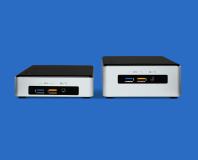
Intel has released additional details on its Next Unit of Computing (NUC) project, ultra-compact bare-bones systems the company plans to release commercially before the end of the year.
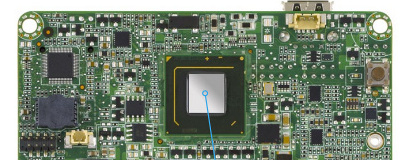
Based around the company's latest Ivy Bridge processors, the NUC bare-bones systems include an integral dual-core 1.8GHz Core-i3 processor with integrated Intel HD4000 graphics, support for up to 8GB of DDR3 memory and a choice of SATA or MSATA storage - or both.
Depending on model, the system also includes one or two HDMI outputs - for dual-display computing - along with three USB 2.0 ports, a high-speed Thunderbolt connector, and gigabit Ethernet. The board, designed to fit in the included casing, measures a mere 100mm on each side and 50mm high, making it one of the tiniest Core-i3 computers ever seen on the market.
The device is a clear answer to the success of the Raspberry Pi, the low-cost ARM-based educational computer which has been proving almost impossible for retailers to keep in stock. With more users turning to the device - and, by extension, the ARM architecture - for tinkering, Intel needs to do something to get enthusiasts back on side. The NUC could well be that something, although its high price tag - expected to start at $300 with no RAM or storage (around £189 excluding taxes) - means it's not quite in the same impulse purchase category as a $35 Raspberry Pi.
The impending release of NUC, which on the surface offers the same functionality as a traditional PC but with significantly degraded upgradability, is another facet of the company's concerns regarding ARM's march into the data centre and onto the desktop. With the company's market cap having been recently eclipsed by that of Qualcomm, one of Intel's biggest rivals in the mobile space and an ARM licensee, those concerns are proving ever more obvious.
Thus far, Intel hasn't offered a UK release date or pricing for the NUC bare-bones systems, but more details are available on the
official microsite.









Want to comment? Please log in.