Despite the plummeting costs of solid-state drives (SSDs,) storage giant Western Digital claims there is still a market for hybrid drives - which is just as well, given the company's plans to launch just such devices next year.
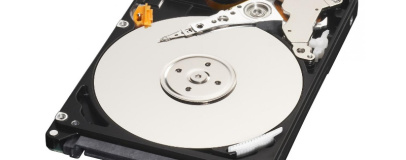
Hybrid drives, developed back when solid-state storage capacities were either measured in single-digit gigabytes or simply out of reach of most consumers' budgets, combine a traditional spinning-platter hard drive with a small portion of high-speed NAND flash. Files which are frequently accessed are invisibly migrated to the flash area, providing near-instantaneous loading and allowing the spinning platters to switch off and save power.
It's a clever idea, but one that the industry has largely ignored: Seagate's Momentus XT hybrid drives have been popular, but the small size of the flash area - typically around 4GB - were popular for a time, but with the cost of 240GB and larger SSDs now dipping below the £100 mark and software solutions offering many of the same advantages with a dedicated small SSD may have met their match.
Western Digital, naturally, disagrees. 'All major PC [original equipment manufacturers] have shown strong interest in our 5mm and 7mm hybrid designs as an alternative to solid-state and dual drive configurations,' president Stephen Milligan told press and analysts during his company's most recent earnings call. 'In the first half of calendar 2013, we will be supplying small samples and gearing up for the volume kind of activity in the back half of 2013.'
WD's hybrid drives promise to beat rival devices from Toshiba and Seagate on price and performance, using new algorithms to minimise NAND wear and swap out the usual single-level cell (SLC) flash for cheaper multi-level cell (MLC) components. Pricing for the parts, however, has yet to be disclosed.
During the call, WD also confirmed $4 billion in revenue for its latest financial quarter, from 62.5 million hard drives shifted to its customers. That's a serious improvement over the same quarter last year, which saw the company earn $2.7 billion in revenue on shipments of 57.8 million units - suggesting that the slowdown affecting other technology companies including Intel and AMD isn't hurting the storage sector too badly.









Want to comment? Please log in.