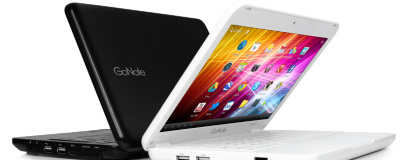
UK-based Ergo Electronics has announced that it is planning to single-handedly reinvent the ailing netbook market with the GoNote GNT10, a 10-inch Android-powered device aimed firmly at students.
Based on the Chinese Rockchip RK2918 ARM Cortex-A8-based CPU running at 1.2GHz, backed with 1GB of RAM and 8GB of internal storage - expandable to 32GB using a microSD card slot - the netbook's specifications have more in common with Ergo's tablets than a typical laptop. This impression is redoubled with a glance at the 1024x600 display, which includes a two-finger resistive touch-screen layer in addition to the traditional touch-pad beneath the chiclet-style keyboard.
The impression of the GNT10 being a tablet with a non-removable keyboard is cemented with the news that the device is powered by Google's Android 4.0 'Ice Cream Sandwich' operating system - software normally associated with tablets and smartphones.
That said, there are features of the GNT10 which bring it above and beyond the usual tablet fare: as well as integral 802.11b/g/n Wi-Fi networking, the netbook includes an integral RJ45 port for wired networking along with four USB 2.0 ports for peripherals or storage devices.
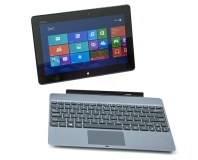
All that could account for nothing, however, thanks to the device's form-factor: unlike a convertible tablet like the Asus Transformer or Ergo's own GoTab Epic GBT97, there's no way to comfortably hold the GoNote in your hand while using the touch-screen. As a result, it's a device which will only appeal to those who always have a desk available at which to work - and who don't mind controlling touch-centric apps with their arm outstretched.
The GoNote also misses several key features of most legitimate tablets: the resistive screen will be more awkward to use than the more common capacitive type, there's no integrated GPS capabilities - although this can be added over USB - and there's no support for film and TV rental through Google Play. The final nail in the coffin for the GoNote is the battery life: at a claimed six hours during web browsing, the GoNote is outclassed by rival tablets which offer eight hours and upwards - the Asus Transformer series, for example, offer around sixteen hours of continuous usage when connected to the battery-equipped keyboard base.
The price could be the GoNote's single saving grace: at £149, it's significantly cheaper than most keyboard-equipped tablets and on a par with the lower end of the ailing netbook market. With Android instead of Windows, however, it could be a tough sell at any price.
More details are available on the
GoNote microsite.









Want to comment? Please log in.