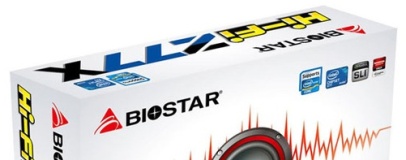
Biostar's Hi-Fi Z77X motherboard includes Puro Hi-Fi technology for, the company claims, audiophile-grade sound capabilities.
Motherboard maker Biostar has unveiled its latest creation, aimed at audiophiles and home-theatre PC (HTPC) enthusiasts: the Hi-Fi Z77X.
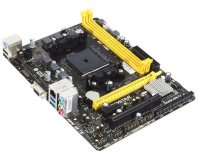
Based, as the name suggests, on Intel's Z77 chipset, the Hi-Fi Z77X ATX board supports all the usual Socket 1155 CPUs and includes native SuperSpeed USB 3.0 and dual-channel memory running at up to DDR3-2600 with 'overclocking mode' enabled. HDMI, DVI and VGA connections are included on-board for Intel CPUs with built-in graphics processors, while three PCI Express x16 slots - with one operating at x4, sadly - and three PCI Express 1x slots add extra connectivity. Gamers, meanwhile, will be pleased to hear that both Nvidia's SLI and AMD's CrossFire-X are supported.
As well as the aforementioned video outputs, the IO panel includes a single PS2 connector and four USB connections for mouse and keyboard, two USB 3.0 SuperSpeed ports, a gigabit Ethernet port, and six 3.5mm jacks for the on-board audio - and it's this latter feature that Biostar is focusing on with the Hi-Fi Z77X.
According to Biostar's product bumph, the board includes Puro Hi-Fi Technology: an integrated independent audio power design with built-in amplifier. Combined with a multi-layer PCB engineered specifically to block noise and 'non-polarised electrolysis electric audio capacitors' and 'hi-fi metal oxide film resistors' - so says Biostar, anyway - on each individual audio circuit, the result is a quality previously unavailable from on-board motherboard audio.
The system supports 192kHz 24-bit sample playback, and has analogue connections to a 7.1-speaker setup - offering, Biostar claims, '
real Blu-ray grade high-definition sound.' Combined with THX certification, it's a feature list that could have audiophiles sitting up and taking notice.
There is one strange lack in the motherboard's feature set, however: with Biostar focusing on home theatre and audiophile builds, it seems odd that the board only includes analogue audio outputs - there's no sign of an optical or coaxial S/PDIF port, meaning true audiophiles will need to break out the oxygen-free copper cable, ferrite chokes and other noise-reducing paraphernalia in order to link the Hi-Fi Z77X to their existing sound setup. The use of a full-size ATX form factor is also questionable: those using the Biostar Hi-Fi Z77X for a home theatre system would likely be better off with a mATX or even ITX board.
Pricing for the Hi-Fi Z77X has yet to be confirmed, with more details available on
Biostar's website.

25 Comments
Discuss in the forums Reply...or of RCA sockets, always a disappointment that so few sound cards (Other than professional cards I can only think of one) are equipped with them. However,h it does have a HDMI socket, and presumably, as an audiophile product, it will be capable of outputting 7.1 to an AV amplifier, thereby negating the need for their fancy on-board amp and etcetera...
Or am I just being sceptical?
And yes, if you're talking SP/DIF passthrough or HDMI it doesn't matter anyway...
N-Key Rollover.
In all seriousness, I find this an admirable effort, but BioStar aren't exactly known for their amazingly awesome motherobards. They're good in a pinch, but that's about it.
That said, I miss the old days of wacky colored mobos.
Cheaper manufacturing. You have now one large audio chipset maker: Realtek and the two competing companies being C-Media and parts of Creative.
Given that there's only about 3 well known audio chipset makers (C-media being the most advanced and ironically the least well known) it's no surprise we haven't advanced far yet.
Audiophiles go for an external DAC.
And even the higher-end Realtek doesn't exactly make me feel warmly towards it.
But, it being Biostar, it's likely to be fairly cheap. Too bad that applies in both senses of the word.
I could actually see a (very) niche market for something like this, but in mini-ITX - put it in a tiny case with a single SSD (or mSATA, even better) and screw all the audiophile BS - just make sure the board you build it on has HDMI or S/PDIF and bam! Cheap, simple build you can charge Monster Cable prices for. Damn, if I could get OS X for it, I could probably sell one to my boss (who trolled both the IT manager and myself by leaving "Mac for the Enterprise" marketing fluff on our desks - fluff which had come out of the packaging for the MBP he'd bought his wife.)
?
We now have SupremeFX III and IV that mirror or better Biostar's solution:
http://rog.asus.com/131512012/maximus-v-motherboards/what-is-supremefx-iv/ - 300Ohm headphone amp, 110dB SNR, ELNA caps, complete signal isolation, 1500uF buffer cap.
Not to forget that our M5F also comes with the option of ThunderFX (114dB SNR, 300Ohm headphone amp), and we also have 'ThunderBolt' (audio/LAN combo card) on selected models last year too.
Only the Extreme boards have basic audio as they aren't built for gaming; they are designed for OC or those people with budgets way beyond needing onboard audio.
Anyone remember VIA's attempts? Or god forbid some of RealTek's intial efforts? Yeesh.
I use a PS2 keyboard...
To be fair you're also building a ZM81. You didn't really leave the 80s did you?
;)
IT isn't special, Gareth...you are :p
oh wait....
I mixed these two and apparently made a new device
Because it's the keyboard I have. :)
I was under the impression SP/DIF audio was the raw uncompressed bitstream?