Was it the poor sales of the Flyer or the company's desire to use Sense UI that caused Microsoft to refuse HTC a Windows RT licence?
Hopes that Microsoft's Windows RT - the operating system previously known as Windows 8 for ARM - would be a brave new frontier for the mobile-centric architecture are looking shaky, with smartphone giant HTC finding itself locked out of the platform for having the temerity to want to customise the user experience.
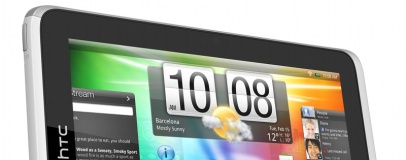
HTC's current crop of devices, which include smartphones and tablets, use a unified user interface developed by the company called Sense UI. This user interface makes HTC's devices stand out from the crowd, and is a technique used by many manufacturers: Samsung's popular Galaxy product range, for example, uses a customised user interface known as TouchWiz.
HTC had planned to create a Windows RT tablet which would include a customised home screen designed to be instantly familiar to anyone who had used a Sense UI-based device in the past. So far, so regular.
Microsoft's response, however, is ever-so-slightly irregular: the company has cut HTC off from Windows RT entirely, refusing to allow it to launch a device based on the operating system at all.
The decision to cut HTC out of the market is a surprising one, given the companies' long history: Microsoft and HTC worked closely together on what was known as Windows Mobile, with HTC launching the first Windows Mobile smartphone at a time when the company was unknown other than as an original design manufacturer (ODM) for other brands.
The partnership proved profitable for both: with HTC's help, Microsoft saw Windows Mobile become a major player in the smartphone market; with Windows Mobile as a near-unique selling point, HTC in turn became a household name to rival Nokia and Samsung.
By cutting the company out of Windows RT development in this manner, Microsoft is sending a clear signal: Windows RT devices will follow the Microsoft-mandated guidelines, or they won't exist at all.
There are hints, however, that Microsoft had other concerns about HTC's involvement aside from its desire for customisation:
Bloomberg quotes unnamed sources familiar with the deal as stating that Microsoft based its decision on concerns that HTC is a relative newcomer to the tablet game - having launched its first tablet device, the Android-based HTC Flyer, in May last year - and doesn't sell enough devices in general.
That's a handy excuse - and could even ring true, thanks to poor sales of the surprisingly expensive Flyer - but HTC's latest financial guidance still claims it will clear almost £2 billion in sales for the second quarter of the year, while its latest HTC One X handset is proving a popular alternative to Samsung's Galaxy S3.
HTC may be permitted to produce a Windows RT product in the second wave, but it won't be there at launch - and with sources claiming that
just five devices will be available at release it's looking increasingly like Windows RT is going to prove little threat to the existing tablet market.

28 Comments
Discuss in the forums ReplyMicrosoft are doing us a public service here.
hmmmm i think these might be of interest then:
http://www.slashgear.com/amd-trinity-windows-8-hybrid-hands-on-06232464/
http://www.slashgear.com/acers-trinity-powered-iconia-tab-hands-on-06232483/
http://news.softpedia.com/news/AMD-Trinity-Windows-8-Tablet-Spotted-273973.shtml
http://www.engadget.com/2012/06/06/amd-shows-off-its-first-windows-8-concept-tablet-at-computex-201/
What you've linked to are Windows 8 tablets. If you'd care to read the article - in fact, if you'd just like to glance at the title - you'd see that we're discussing Windows RT tablets.
AMD is not launching a single Windows RT tablet. It can't: it doesn't have an ARM SoC. Go ahead, search for it: if you can find an AMD device running Windows RT, I'll give you my next six paycheques.
Windows RT != Windows 8. That's why it's called Windows RT, and not Windows 8. It's a *version* of Windows 8, sure, but one with significantly stricter licensing restrictions and no retail release. It also only runs on ARM architecture chips, meaning that it absolutely will not run under any circumstances (processor emulation via something like qemu aside) on any AMD processor.
Clearer now?
try being polite occasionally
God you lot are a sensitive bunch, aren't you? Sarcastic maybe, but rude? Lighten up princesses.
No, it didn't. Read like a man in need of a coffee break though.
Nice chap..have a dollop of rep. :)
I agree. I've gotten into disagreements with Gareth more than once and I don't find him rude, when he easily could have been. If you say something wrong, expect to be corrected, don't whine about it.
(Where is the handlebar mustachio'd smiley when you need one?)
Fight......Fight............Fight
Windows for ReTards won't run any x86 code, won't have majority of existing x86 code ported over in sptite of M$'s efforts (.Net and other related retarded utils/compilers which slow down software immensely just to maintain compatibily with some lame portable framework) and won't look any better than a steaming pile of dog poop thanks to morons who came up with the metrosexual GUI and the daltonist-unfriendly color scheme (I bet the author of this piece of **** was color blind but couldn't get himself to acknowledge the fact ... so I woukdn't be too surprised to learn that he was an undercover fag as well).
Either way, I wish all the fails to retards at M$, they deserve them ! Phucking morons ...
Thank you for your balanced and informed opinion.
This isn't supposed to be a desktop version of Windows, its competition is Android and iOS, and against them it may well turn out quite well.
Sent from Bittech Android app
It does say in the article they are on about their Sense UI which basically changes the whole user interface, and frankly doesn't look as good as the Metro UI anyway. Also, I can see why Microsoft didn't want them making a tablet, I've tried the HTC flier and it is really bad, and Microsoft need a manufacturer that can make a tablet with their OS the rival Apple (Samsung I guess).
C2xCqNshyTs
There is no way to customize Windows 8 in any other way than this - adding your own tiles linking to your own apps.
Absolutely not, if it's good enough, you only need one device. That's exactly how Apple did it with the original iPad.
You don't hear anyone saying "Oh looks like Apple won't make much impact on the tablet market with only one launch device for iOS..".
Increased quantities of devices also allows for targeting different markets: not everyone wants, or can afford, to splash out £500 on a top-of-the-line iPad. Should they be excluded from the market altogether? No. Better they are given the option of a cut-down sub-£100 device which is not as good but also nowhere near as expensive.
We have thousands of different makes and models of cars, and the reason certainly isn't because the Bugatti Veyron isn't "good enough." It's because not everyone needs nor wants a Bugatti Veyron: some people want the ability to carry lots of cargo, and will sacrifice speed and looks accordingly; some people want improved fuel economy; some people simply want something they can afford without robbing a bank.
Choice is key: without it, the consumer always suffers.
EDIT: Incidentally, Apple didn't launch a single iPad: it launched three. There was the (relatively) cheap iPad 16GB, then the mid-range iPad 32GB, and finally the range-topping iPad 64GB. Even within that extremely limited ecosystem, Apple was offering customers choice. It's offering customers even more choice now: it still produces and sells the iPad 2, despite having replaced it with the 'new iPad,' as a cheaper alternative to the latest model.