To demonstrate its commitment to low-power computing, Intel CEO Paul Otellini challenged the Intel Labs to create a demo of just how far Intel can push technology at the moment. He added, ‘
the ultimate goal is the most power-efficient devices known to man.’ The result was a CPU capable of running Windows that was powered by tiny solar cell.
An Intel engineer was brought onto the IDF 2011 stage to show off an demo involving a nodding cat wearing overlarge headphones (actually, probably just headphones – it was a small cat).
The engineer told us that ‘
what I’m showing here is technology that one day will make its way into future ultrabooks and a whole bunch of other devices… we’ve been experimenting with low-voltage circuits.
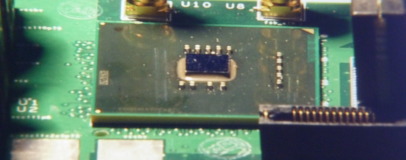
‘What we have here is a microprocessor – it’s an experimental prototype – which is capable of operating near to the threshold voltage of the transistors and is still capable of running Windows.’
The engineer then revealed what was powering the CPU in the system: ‘
the processor consumes so little power that we here have it running off a small solar cell which is only about the size of a postage stamp.
When the engineer moved his hand between the lamp above the solar cell and the cell itself, the cat animation stopped, showing that the system had locked up due to a lack of power to the processor. We sould point out that it was only the CPU of the low-power system that was powered by the solar cell, but the feat was impressive nonetheless.
Alas, the project was merely being used as a demonstration of what Intel can do with low-voltage circuits – don’t expect solar-powered laptops anytime soon – but as mentioned, the low power technology contained in the processor is very likely to find its way into an ultrabook or tablet within the next couple of years.
Disappointed that we probably won’t have solar-powered tablets anytime soon, or amazed that a tiny solar cell can power a Windows-capable processor in 2011? Let us know in
the forum.










Want to comment? Please log in.