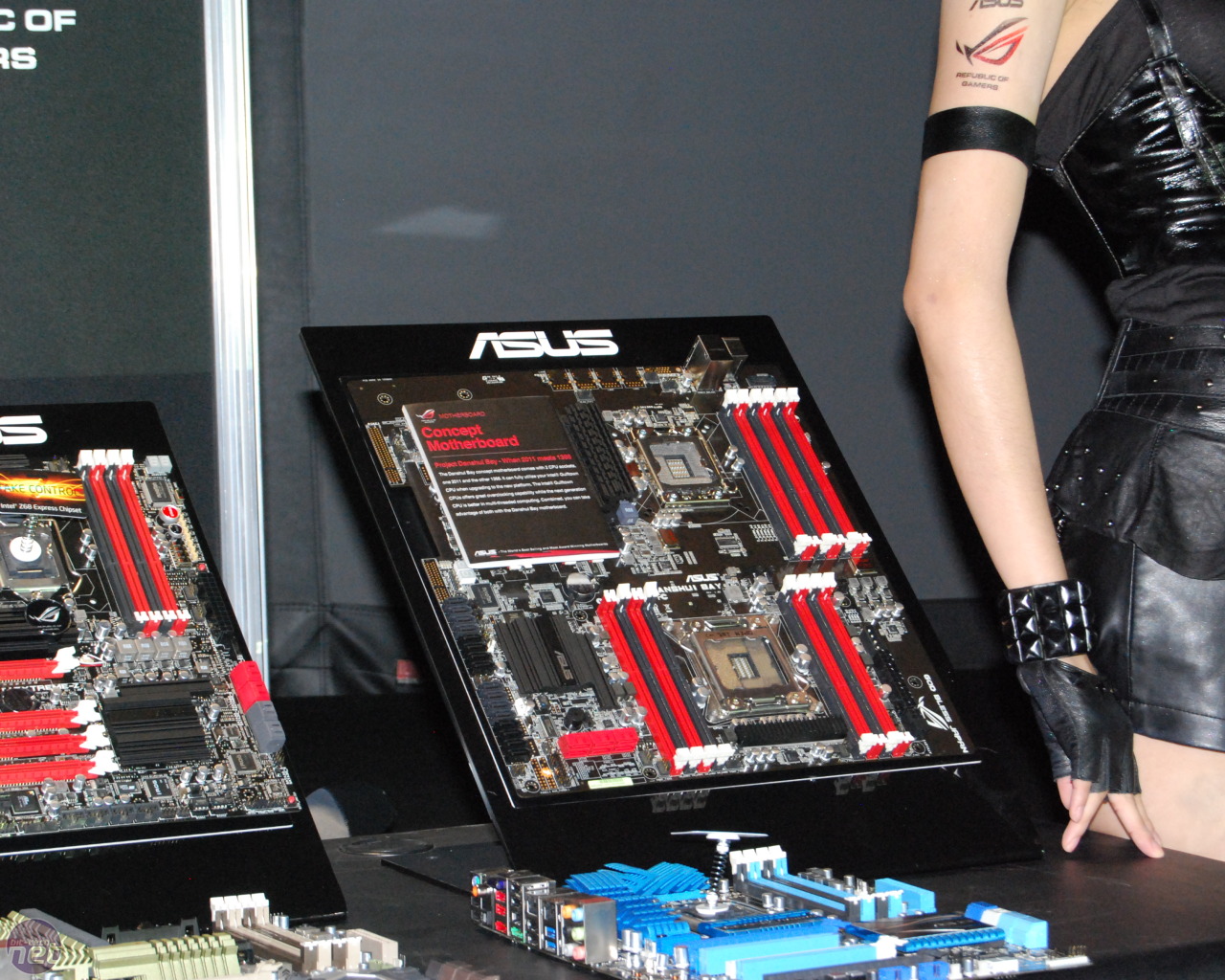
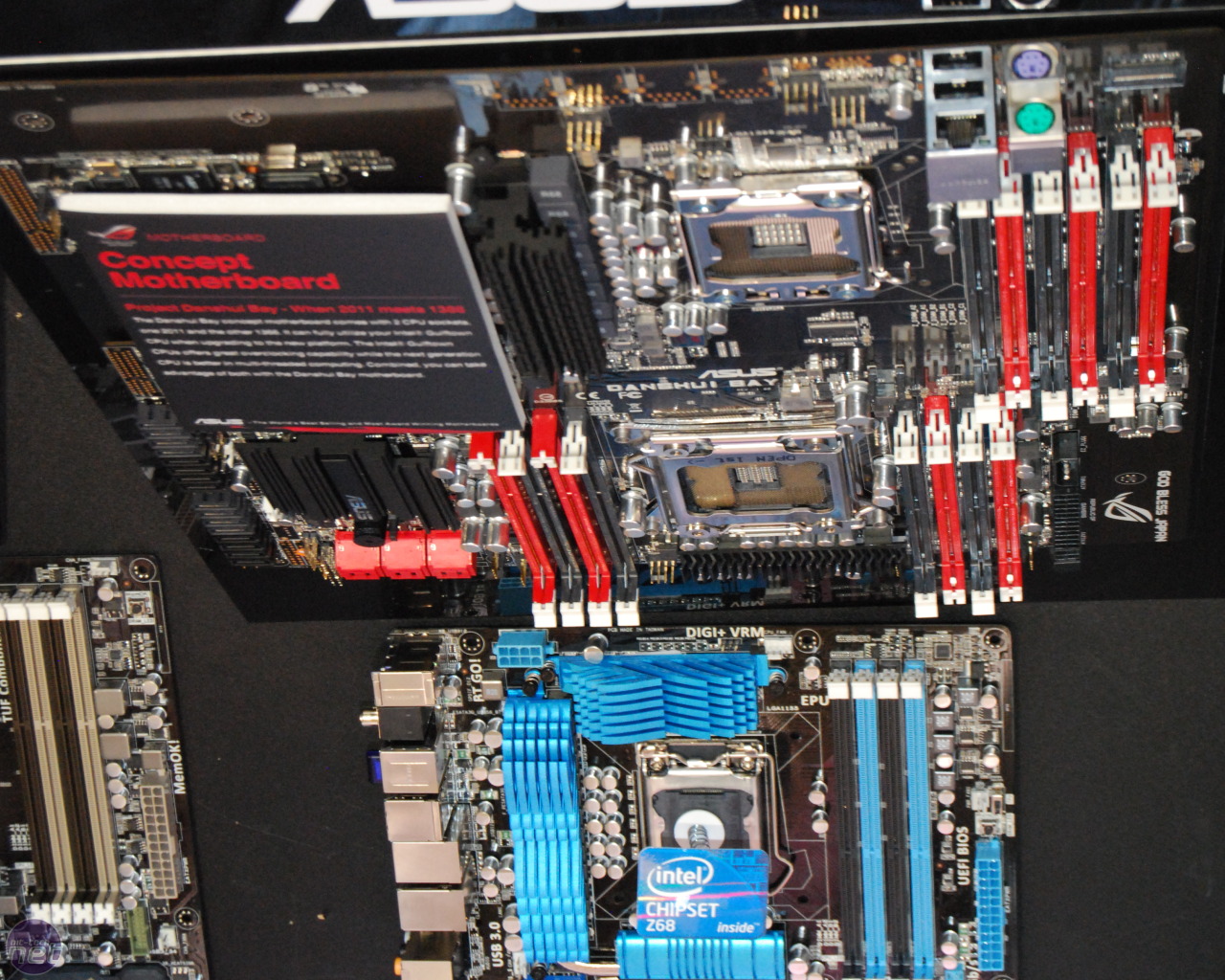
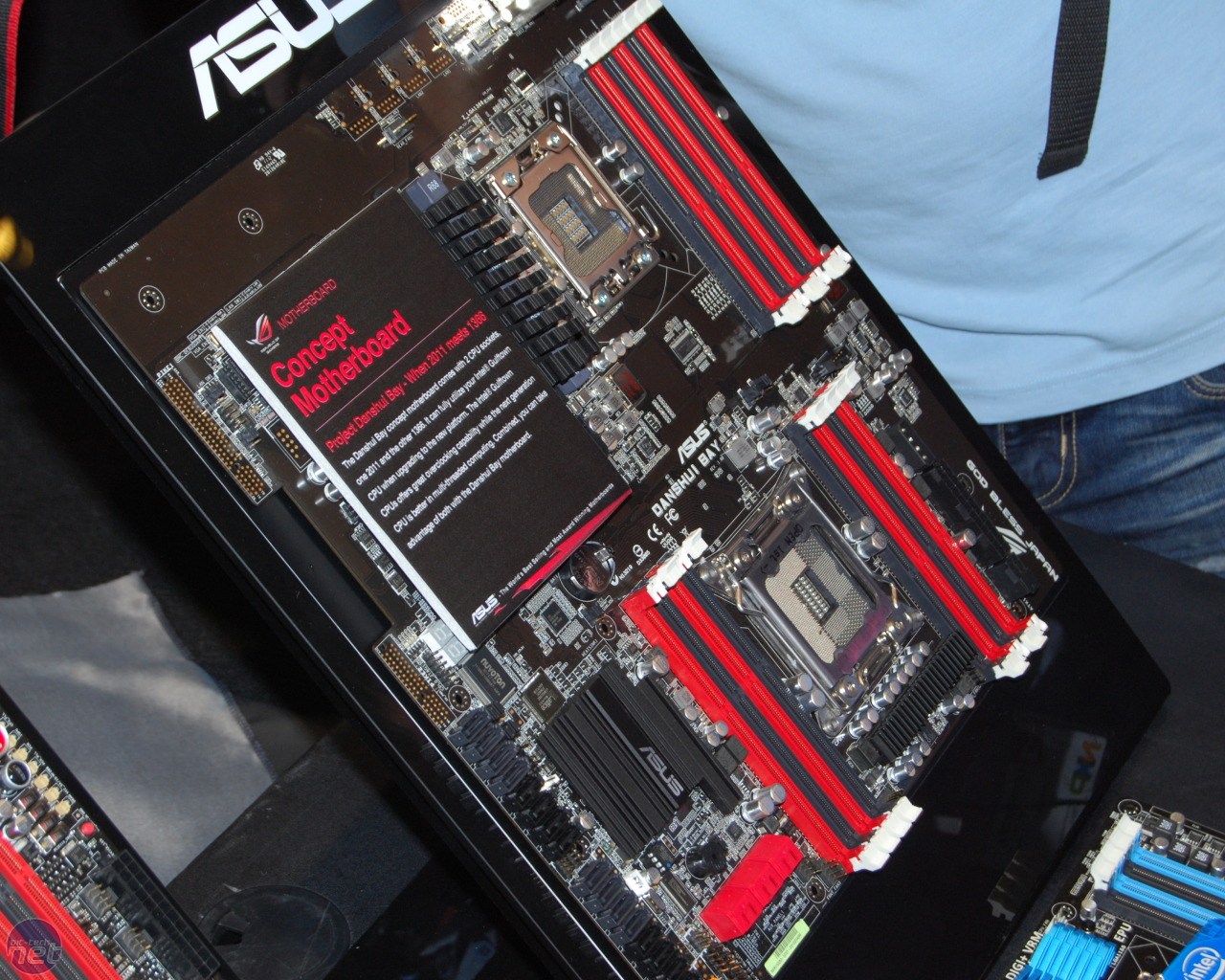
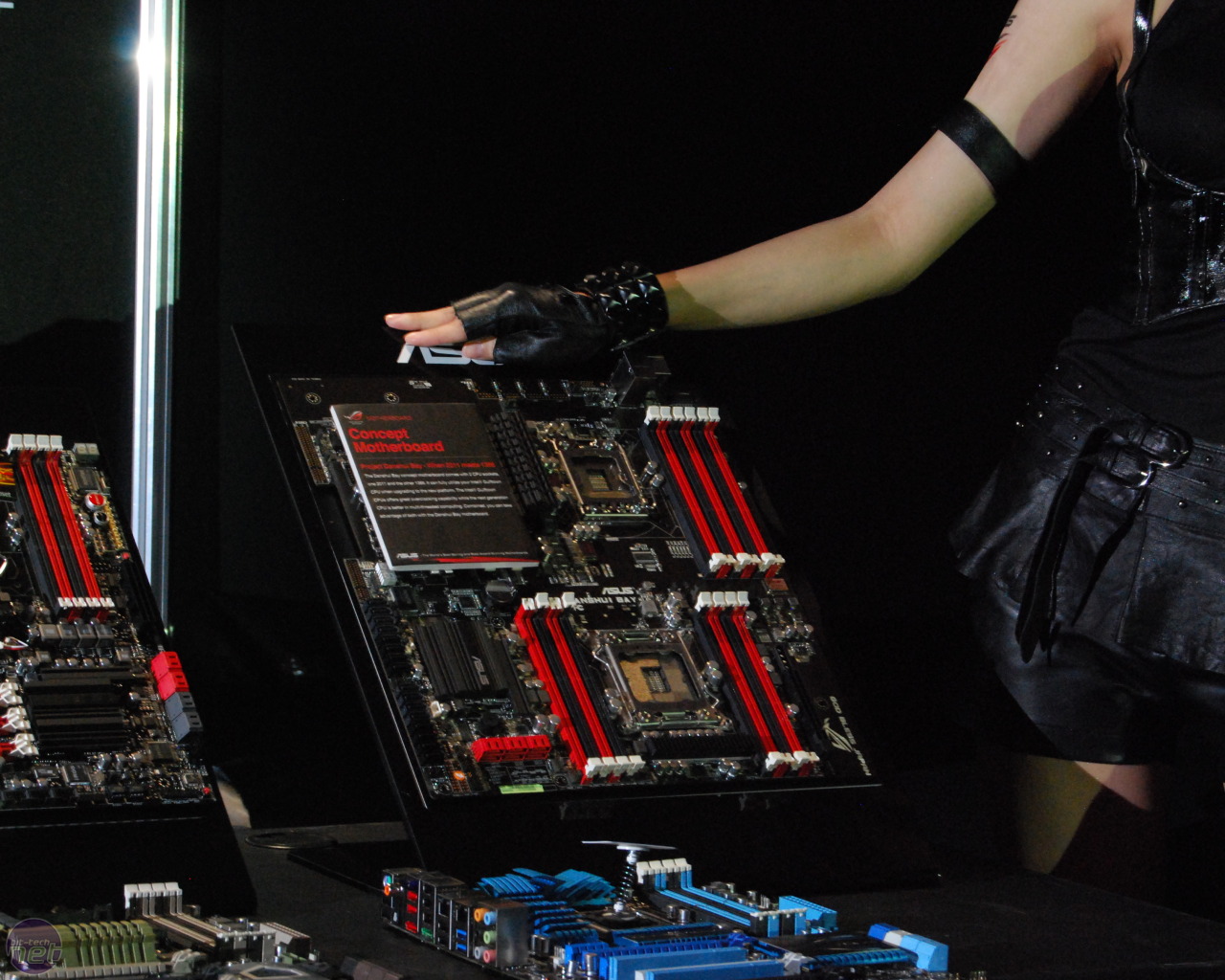
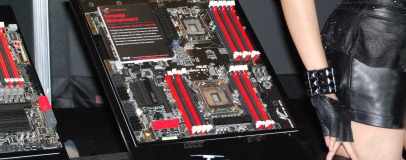
The Danshui Bay motherboard has one LGA1366 socket and one LGA2011 socket.,
Asus has bagged the prize for day one craziness at
Computex 2011 by showing a motherboard that features an LGA1366 and an LGA2011 processor socket.
It has to be said that the motherboard, currently codenamed Danshui Bay, is only currently a concept design and is therefore unlikely to see a full manufacturing run any time soon.
The idea of a dual-socket motherboard is intriguing though, as it would of course allow consumers a more defined upgrade path in the future. Intel would also likely be supportive of the board as it essentially ensures that anyone who buys it will be buying Intel CPUs for a long while to come.
We can only guess at what price this ginormous board would be likely to retail for as having two different chipsets on a motherboard is likely to drive price up quite a bit. The board also features a ridiculous amount of SATA ports, which seems to indicate that the X79 chipset (which services the LGA2011 socket) is chock full of SATA ports.
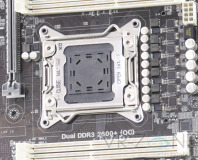
You'll also notice that the LGA2011 socket is serviced by eight memory sockets, four either side of the CPU socket. This all but confirms that LGA2011 CPUs will come complete with a quad-channel memory controller, something which we suggested may be the fact way back at the end of last year.
Is this something that you would buy? Is tying yourself into future upgrades something that you are willing to do? Let us know your thoughts in
the forum.

29 Comments
Discuss in the forums ReplyI am of course talking about the Republic of Gamers tattoo on that person's arm.
edit: hmm so x68 is indeed for 2011.
So many chipsets, crisscrossed references between ranges. Thank you intel, as if your confusing CPU name scheme wasn't enough already.
edit2: actually I've just read X68 might get skipped alltogether in favour of Z79?
I got confused as well...
Everywhere else i've seen mentions the X79 Chipset for LGA2011...
Can someone explain ?
Now if they were to build a dual lga2011 board, that could be interesting.
How does it compare sizewise to the SR-2 board?
This looks to be the latest in a long line of miserable failures that were designed to "make upgrading easy" - i.e. the DDR2 and DDR3 boards, the AGP and PCIe boards, and the 775 + 939 dual socket board. They 'kinda' worked, but couldn't do either thing as well as the correct mobo, plus they cost as much as both.
For someone who has a 1366 rig already, and plans to upgrade to 2011, this is a terrible idea. It would be cheaper for them to just wait for 2011 to come out and buy a 2011 motherboard, and continue using their 1366 motherboard.
*waits for* But can it run Crysis?
Kthxbai :)
@ Slothy - Same socket? No.
@ Chicken - No. New coolers.
@ cbd - Dual 2011 will come in time, although exclusively workstation.
The two CPUs talk to each other via QPI, and the 2011 CPU then provides the PCI-E or talks to the X79 to provide the SATA etc
If it's the later then it's a bit pointless, as I'm sure this board will comand a huge price premium at the moment.
you're assuming the board is the 'right' way up... the rear IO or at the top of the photo, putting the PCI-E slots under the big 'ASUS Concept Motherboard' label
You shouldn't think that way.
Using 1 bank per channel is considered better for system stability and ram also stays much cooler.
X79 = LGA 2011
X68 = Effectively a cross between P67 and H67, you have the option to use the built in HD Gfx 2000 or 3000 with Quick Sync, and you have a new feature, SSD caching. LGA 1155 of course
Wrong
X79 is for 2011
X68 is for 2011
Z68 is the hybrid P67/H67