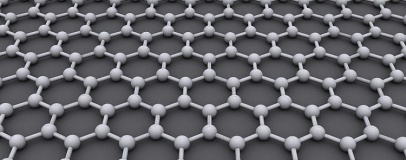
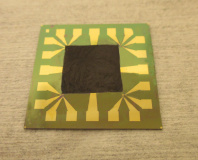
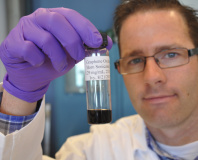
This image by AlexanderAlUS shows a graphene sheet, which could now be cheaper to produce.
Scientists claim that a new method for creating materials in sheets that are just one-atom-thick could lead to breakthroughs in data and energy storage technologies, meaning bigger storage devices and longer-lasting batteries.
According to coverage of the discovery over on
Reuters, quoting a report published in journal Science, the technique makes it significantly easier to create one-atom-thick sheets of different materials, including graphene sheets made from carbon.
Work has been done in the past on creating graphene, but the material - which is just one-atom-thick and around a hundred times stronger than steel - remains expensive and difficult to produce; something the researchers believe they may have solved.
The new method is claimed to be low-cost, while also resulting in extremely high yields of usable materials, but isn't just limited to producing sheets from carbon. Instead, the researchers claim they can use the technology to create single-atom sheets from a variety of elements, drastically changing their electrical and thermoelectric properties and potentially unlocking useful new materials.
While graphene in its current state may not completely replace silicon the semiconductor industry,
according to IBM, this latest work could help find the materials and technologies that mean faster, longer-lasting electronic circuits in the future.
Are you pleased to see researchers coming up with potential new materials in this way, or will you only get excited when the technology gets commercialised? Share your thoughts over in the
forums.

19 Comments
Discuss in the forums ReplyLOL
dunx
If they can build something useful with this technology, then it might catch up some real interest and get more funds to improve the technology.
Money is not spend too much these days on science that has no practical value.
Someone needs to look up on Graphene.
Coincidentally that's also where the image from the article came from.
first thing i noticed bit spinny lol
You're right. Graphene is just a single sheet of Graphite... or, in other words, Graphite is just lots of sheets of Graphene layered on-top of one another.
WHOA
Charles Babbage's designs were considered grand and complex at the time; he never actually managed to build the Difference Engine in his own lifetime. Mostly, this was due to the enormous cost associated with it - it's an extraordinarily complicated piece of mechanics. However, modern computers all use the same fundamental design concepts as the mechanical Difference Engine: separate storage for program memory and data, separate I/O unit, instruction-based operation, conditional "jumps", etc.
Nobody else continued Babbage's work after his death, including the more advanced Analytical Engine he designed, because it was too complicated and expensive (he was also considered to be somewhat eccentric). It took 170 years before a fully functioning Difference Engine was actually built (completed in around 1990) - built to Babbage's original designs and 19th Century manufacturing tolerances. You know what? The damn thing works and is 100% accurate. It can run computations with more digits than the average pocket calculator can handle.
If we'd had that kind of computational power readily available 170 years ago, just try to imagine how much more advanced our computing technology would be now. Bear in mind that computers have only really been in widespread use for around 50-70 years, and look how far they have come: from ENIAC to Sandy Bridge processors.
*That* is why we fund pure science research, even if it has no immediate practical uses.