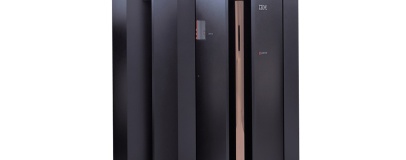
IBM's Z-series mainframes can really pack a punch, thanks to the new z196 5.2GHz CPU.
IBM has released details of what it claims is the fastest single CPU in the world, which clocks in at 5.2GHz - but Intel et al needn't worry just yet, as the company isn't exactly aiming for mass-market adoption.
The Z196, which
PC Magazine reports was announced by IBM at the Hot Chip conference earlier this week, is designed for use in the company's Z-series mainframes - which tend to cost several hundred thousand pounds and are the playthings of major government departments and oil companies, rather than the sort of thing on which you'll be installing
Crysis.
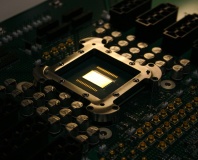
The processor is a CISC design with RISC elements based on a 45nm PD SOI process, and features a 64KB L1 instruction cache, a 128KB L1 data cache, and 1.5MB L2 cache per core alongside a shared 24MB L3 eDRAM cache - and the option to configure a 196MB shared L4 cache, too. Interestingly, IBM has also fitted a pair of cryptographic co-processors to the design, which allows the Z196 carry out encryption and decryption operations in hardware without loading the main cores.
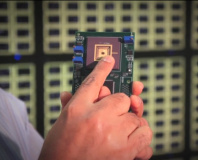
The processors are designed to be fitted to a Multi-Chip Module, or MCM, along with a storage control chip, which allows for communication between modules - with each module featuring six Z196 processors and up to 24 active processing cores. As you can fit four such modules to each mainframe, it's unlikely that anyone will be complaining about the lack of power available.
Well, unless we're talking mains power: each individual MCM - and there can be four in each system, remember - is rated to draw around 1.8KW at full load, meaning a top-end mainframe based around the Z196 could draw up to 7.2KW just for the
processors.
In short, yes, IBM has the processor performance crown - but unless you're
seriously well connected, you're probably never going to get to play with one.
Are you pleased to see that IBM can still give Intel a run for its money in the HPC stakes, or is any processor that has such a small target market by definition a failure - no matter how well it performs? Share your thoughts over
in the forums.

26 Comments
Discuss in the forums ReplyThey look so nice!
Fixed! ;)
well if you can get a windows emulator running on it.. it could probably run Crysis in "software" although I guess its been a long time since a game has had that option
POWER is also a pretty nice architecture to write software for, especially in comparison with x86/x64. It does have a lot features which would be kind of overkill or useless for a desktop system, though :)
Also, there are cheaper versions of the POWER 7 available, where cheap means 'only a few multiples of $1,000' :p
Err, correct me if I'm wrong, but AFAIK this isn't POWER 7. Or indeed POWER at all. It's the Z-Machine, a completely different architecture specifically made for these mainframes. IBM really are mad enough to maintain *two* of their own chip architectures and build small-run, high-cost chips for both...
Although it shares stuff with the current POWER chips, like the eDRAM cache.
You really don't.
Z-Series machines are massive, heavy, power hungry and I'd be impressed if you managed to get through an IPL, let alone do anything on one :D
Few years at the top?
Aaand besides, it's far from AMD 7.x record...
I think it needs to be pointed out that THIS is just about as exciting as it gets on these machines.
Despite what IBM would have you believe with the shiny enclosures - Z/Series is not, and never will be sexy
Yeah, you're right: http://en.wikipedia.org/wiki/IBM_z196_%28microprocessor%29
I honestly didn't know they actually had a second architecture on active duty
Yeah, but they're pretty! Just because I'd never be able to turn it on, lift it, move it, or use it is irrelevant >.>
http://upload.wikimedia.org/wikipedia/en/9/94/ZOS_welcome_screen.png
Which one of those options actually runs a program?
As for the chips, even selling the hardware at the massive prices they do IBM probably don't make a huge profit. However the software charging model on mainframes is generally on the basis of either the max CPU speed or CPU seconds used (MIPS). If you have one of these beasts running licenced software IBM, CA and the other big mainframe software people basically have the business on a massive WoW style subscription plan.
And I'm getting tired of people saying it's poorly coded when they have no idea if that's the case. Crytek made it pretty clear they wanted to make a game that would scale just as well on future hardware as it did on older hardware. I can't understand PC enthusiasts bashing the only game in the past 5 years that's actually required an upgrade.