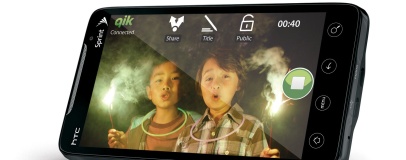
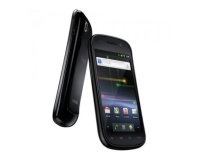
HTC's Glacier - thought to be dual-core - should beat its current Evo 4G by a comfortable margin.
HTC looks to be working on its fastest Android-based handset yet - but it has chosen possibly the worst name to emphasise speed
ever: the HTC Glacier.
The latest handset, apparently named for the extremely slow-moving ice sheets, was first noticed by
AlienBabelTech on the GLBenchmark site - and the scores tell their own story, with the as-yet unannounced Glacier beating HTC's current leading handset the Evo 4G by a comfortable margin, scoring up to three times higher in some cases.
The theory as to the device's speed is the presence of a dual-core ARM chip - the first to be used in an Android handset. Most likely Qualcomm's dual-core 1.2GHz Snapdragon processor, the presence of two physical processing cores would explain the extremely high benchmark scores.
Interestingly - and disappointingly for HTC if the figures truly are the result of testing on the company's next-generation handset - the scores posted are only slightly higher than the Samsung Galaxy S - which has a 1GHz Hummingbird ARM-based processor at its heart.
The scores were posted to the benchmark site, and have since been removed, by T-Mobile employee Mike Bibick - leading
DailyTech to suggest that the device represents T-Mobile's rumoured Project Emerald dual-core smartphone.
Neither HTC nor T-Mobile is confirming - or, for that matter, denying - the rumours of a dual-core device, but it's a logical place to take the technology: with core clock speeds not progressing very far past the 1.2GHz mark, adding additional processing cores is certainly the way to go in order to improve performance - but it remains to be seen what effect this has on the Glacier's battery life.
Are you excited by the prospect of a dual-core Android handset, or merely disappointed that it appears to have been beaten by a theoretically slower chip even before it's launched? Share your thoughts over in
the forums.

23 Comments
Discuss in the forums ReplyGlacier = Cool
1st gen Snapdragon has a pretty crap gpu core in it which is why the galaxy s scores so much better, the cpu cores are pretty comparable but the gpu is far superior in the samsung
if these benches are true then it looks like qualcomm have finally updated the gpu core but doesnt really tell us much about how the cpu has changed
edit: also even the current CPUs in smartphones are really very slow, i cant find it now but one of the anandtech smartphone articles did a wifi speed test and the iphone was cpu limited to about 15Mbit while hte snapdragon android phones did a lot better they still couldnt max out a wifi link purely due to not having enough cpu power
thats without even doing anything with the data, throw in having to actual render the page/video/whatever you're downloading...
dual core snapdragons will almost certainly be built on a smaller process and so will use less power, theres also the 'faster cpus finish doing stuff more quickly and go back to sleep' theory which should help them out
tbh i wouldnt expect the battery life to be any worse with new a dual core snapdragon
unless they spent ages redesining there os then you would not be able to affectively use the second core
look at xp for example it is not as efficent at using dual,quad or hexacore processors as say windows vista or 7
if they did a benchmark and disabled one of the phisical cores then it would give a much mroe realistic benchmark compared to other phones
lolz
still think it should come with an 2000mha bat as that make it last 2 or 3 days (or day and half with fringe rinning
The idea is that during standby or just texting/talking, the second core is just turned off.
When the phone needs to multi-task, the second core can be turned on.
Granted, it's not saying that a 1GHz dual core is more energy efficient than a 1GHz single core, it's saying that increasing the core count will improve battery life instead of increasing the clock rate for a desired level of performance.
There is not as much legacy software that needs to be incorporated into Android. Dual core phones have been rumored for awhile, so I'm sure they're making changes to optimize it for dual core. Android is a much more compact OS than Windows, and doesn't have to be written in a way that software from 1995 will still run on it. Remember, this isn't like gaming where you want one program to use all available cores. The idea is more multi-tasking oriented, so you can use different apps at the same time.
Technology wise, I hate my country
I hear that Australia is even worse though... so look on the bright side :-)
My iPhone 4 is also very snappy. How much speed do you actually need on a mobile device --especially when browsing on 3G broadband speeds? Are you likely to download HD movies much? Do that rendering in SolidWorks for iPhone?
The CPU on the iPhone 4 and current Android devices is fine as it is. No good having speed you don't need sucking juice you can't afford.
They do if you turn off the 15W bulb when you don't need it.