AMD's concerns are that there are many competing standards for 3D, but it likes the idea in principle.
At a sneak peak of AMD's new range of laptop components, Acer and AMD agreed that it was too early to back 3D at the moment. Both companies blamed the conflicting standards for their lack of commitment to any particular technology. However, Acer did say that 3D was one of the four key technologies that it was looking at for its continued growth – the company overtook HP in the number of laptops sold in the first three months of this year to become the number one laptop manufacturer in terms of units sold. Other technologies under the Acer microscope include HD (and, more specifically, bringing HD capabilities to everything that it makes), Touch and increased battery life.
Gianpierro Morbello, Marketing and Branding Corporate Vide President Acer Group, said that "
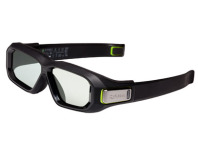
3D is going to be another important technology, and we as Acer will use that. What is important from our point of view is to make sure that each of these products can talk to each other." He used the example that we're seeing at the moment, with some companies (notably Nvidia, Samsung and Panasonic) using active, switching glasses while the cinemas and other entertainment technology companies are using passive polarised lenses for thie 3D glasses. The two technologies are incompatible, and Acer doesn't want to dive and support one standard only for the other to win as this would leave Acer customers dissatisified.
AMD took the same line, with Nigel Dessau, Senior Vice President and Chief Marketing Officer, also pointing at the conflicting standards surrounding 3D. This is somewhat odd, as we've seen official AMD/TI demos of 3D using passive glasses. However, Dessau clearly said, "
the point was made that we're still early in the standards wars, so what none of us wants to do is stand up and say we're the only standard, because that's never going to work." Dessau cited collaboration with partners as the best way to bring a single standard to 3D that everyone can support. This if fair enough – just look at Toshiba and HD-DVD.
However, the next statement was curious. "
When you go to see Avatar, you wear a pair of plastic glasses that cost $3 while the cinema has spent hundreds of thousands of dollars on a [3D] projector. At home it's going to work probably the other way – you'll buy more expensive glasses but it [3D] will be able to run on cheaper PCs." This sounds like AMD/ATI might get behind Nvidia's 3D Vision standard for home use - or at least opt for the same sort of active shutter glasses.
Dessau rightly pointed out that the current trend of 3D is still very new – the 3D Blu-ray spec has only just released, he said – and he re-emphasised that the various parties involved in 3D needed to work together to get a common standard. This is a familiar line from AMD, which frequently pushes the case for open and common standards for PC technology.
We've seen before that competition between technologies doesn't necessarily mean that the best technology wins (think of BetaMax) and also that sufficient backing behind a proprietary standard can result in de facto adoption by all (Blu-ray being the most recent example). But there's also the question of whether 3D is a fad – while we wait to see whether ATI will back Nvidia's 3D Vision technology or not, let us know your thoughts on 3D and whether it needs more backing from the major companies
in the forum.

27 Comments
Discuss in the forums ReplyI tend to want to barf after watching 3D for 1 hour, though.
As to whether 3D will become more main stream is a different question, it's all down to taste and if you can stomach it. I know a lot of people who think 3D looks great but for prolonged use it can be nauseating - it seems rickysio is one of them :D
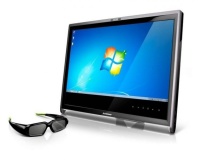
I watched Avatar in 3D at the imax which was amazing but after about 2 hours I also felt a little queasy, although that could be because of the size of the screen. I feel fine playing games on the Zalman 3D monitor at home.
Its not like HD is even for the most part as high res as computers have been for years, let alone has many TV channels actually available in it.
I suspect we'll have hologrammatic 3D before HD-3D is ubiquitous.
still worth it for the occasional buzz though and not that expensive
I think the problem with 3D is your eyes are seing a "pseduo-3d" image whilst your brain is clealy saying "It's not 3D, it's a trick on a screen". :/
A couple of corrections needed (2 more in the quotes too but I assume they were present from wherever they were pasted from):
passive polarised lenses for thie 3D glasses
the 3D Blu-ray spec has only just [been] released
+1 to that
Now combine Battlefield, Natal, 3D and a solid VOIP and I'm sold.
"you'll but more expensive glasses but it"
It does seem to be horses for courses as I'm the opposite - I get a blinding headache after just a few minutes using the active lenses and it takes quite a bit of effort to focus on the image yet I can see the 3D effect perfectly with the passive polarised lenses and don't feel any eye strain afterwards. The less said the better about the passive, coloured lenses...
As a glasses user the 3d tech is wierd and causes eye strain. Till it becomes that you dont need the stupid 3d glasses that arnt comfortable to wear then i cant see it ever taking off.
As Grimloon said, it is horses for courses. Some like it, some hate it. I'm a lover. It works very well for me and I don't get sick or eye strain.
Yes, because those of us with vertical and horizontal alignment issues (cross-eyed, for those that were never on the recieving end of the name) will actually be able to see it then - though still in our normal 2D view of the world.
I've not yet seen a 3d telly, but if it's anything like the stuff from years ago, it'll make the images unviewable for the likes of me.
Could be the new weight loss program for the ever growing couch potato society. Watch too much tv puke up those cheetos.
Hopefully when we have holodecks we wont have pagers :D
No, AMD is saying that it's not backing one 3D standard over another yet, not that 3D is unnecessary.
How is Blu-Ray any more propitiatory than HD-DVD was?
that's not the point - we're only saying that Blu-ray had more backing, so that proprietary format became the adopted standard for HD film distributed on discs. It's not about being more or less proprietary (if that's even possible), if anything we're just saying that competition doesn't always result in the best technology winning, but merely the one with the most support and adoption.
It's too early for 3D because the glasses don't fit well with my over-ear headset
LOL.. I don't think u'd want Nvidia's to be in charge of the standards because they're one of the companies who's like to milk their costumers very much. As for your question, I'd say if only Nvidia would make it open and not only for their own advantages (Physx anyone?), maybe their competitors would start adopting their standards and be nice to them. And if only Nvidia didn't try to mock their competitors........... (opening a can of whoop ass? yea right.... *yawn*)
Sometimes you have to go alone if you want to achieve something. Trying to get some standard is fine and dandy but if that takes years then what is the use?
I would like stereoscopic 3D NOW.