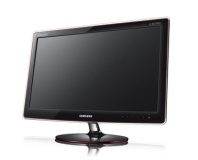
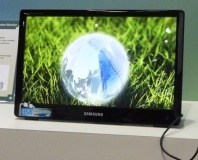
The Advertising Standards Authority has ruled that Samsung's use of "LED TV" to describe LED-backlit LCDs is "misleading."
Samsung has been roundly spanked by the Advertising Standards Authority, the UK's marketing self-regulatory body, for misleading claims that its latest range of displays are "
LED TVs."
As reported over on
EngadgetHD, the company has been pulled up over a series of magazine adverts - as well as a TV advert - which advised consumers they were in for a treat thanks to "
the ultra slim Samsung LED TV." As two fun-loving complainants pointed out, the only problem was the fact that it's a common or garden LCD screen.
The confusion - or misleading marketing, depending on whether you're Samsung or the ASA - comes from the fact that while the display technology powering the screens is LCD, the lighting uses LED technology rather than the more common cold cathode lamp system used by most other TVs. While this, in Samsung's words, produces "
sharper images, deeper blacks and brighter colours," it
doesn't constitute an entirely new class of television.
Accordingly, the ASA has
upheld the complaints against both the TV and magazine advertising runs, stating that they breached rules in misleading advertising and truthfulness in advertising. Stating that the phrase "LED TV" "
was not adopted consistently throughout the industry" despite Samsung's claims to the contrary, the ASA ruled that the adverts "
implied the TV displays were comprised totally of LEDs similar to some outdoor displays when that was not the case" and were thus likely to mislead.
The ruling means that Samsung will no longer be allowed to refer to its screens as "LED TVs" in UK advertising - unless, you know, they actually
are LED TVs - and neither will it be allowed to run its current adverts in their present form. Although the adjudication doesn't cover the company's website, it's probably advisable if it makes some
modifications there, too.
Do you believe that the ASA were right to call Samsung on its claims, or is the distinction between "LED TV" and "LED LCD TV" too fine for an average consumer to care about? Share your thoughts over in
the forums.
Updated: Samsung has issued the following statement, clarifying that the ruling allows them to continue using the term LED TV within certain parameters.
“
Samsung welcomes the clarification the ASA decision gives in relation to our LED TV advertisements. We are pleased that we can continue to use the term LED TV as we believe it will continue to be the commonly used industry term. We appreciate that more clarification is required in relation to the LED usage within the product and will ensure this is clearly outlined in future communication.”

43 Comments
Discuss in the forums ReplyQFT This...
The worst advertising LIE is of course the broadband speed claims.
now, when there is an amazing TV on the market or produces its picture useing millions of LED's, then ASA would have a foot to stand on
but I can undestand the point, simply lable them LED LCD Screens
BT! Unbeatable wireless connection? I've not seen those adds though I don't see how BT can "beat" Virgins 50MB Broadband+Wireless N router combo, BT suck
Fair play, I get the full advertised speed on my cable connection, but I only get it for an hour before I'm throttled to 25% speed.
but then you have the edge-lit LED backlit LCD TVs which are no different from CCFL backlit LCD TVs, and the locally-dimmed LED backlit LCD TVs which are much more expensive but actually provide some advantages (even though it's only a poor pretender to plasma's throne )
That's the problem. LEDs are being used in two very distinct ways by manufacturers, and it's unfair to not distinguish between the two.
Thankfully I'm in no position to buy one anyway.
There are still other reasons to buy these though, the thinness and weight for a start..........
This belief that government needs to protect Average Joe Consumer from making uninformed choices because he can't do some basic research is absurd and should be insulting to anyone with half a brain.
+1
If you presume they aren't technologically aware how would saying 'LED backlit TV' help. I wouldn't have thought they even realised the TV was backlit or what that meant.
LED LCD TV would make more sense, although it's a bit of a mouthful. Personally I didnt see an issue with it. They are definately a different kind of TV when you see them in the flesh, so why not distinguish them differently.
How, exactly? Sharpness is determined, assuming a "perfect" input signal, by the locations of the TFT's pixels and the accuracy with which they're driven. Notwithstanding a few dead pixels on large displays, TFTs are capable of resolving exactly the amount of detail represented by their pixel dimensions, give or take nyquist. The backlight technology is completely irrelevant. Even if real OLED displays become available, there's no reason to suspect they'd be sharper. Brighter, less power hungry and with much better contrast ratio, sure, but not sharper.
Again, how? There is technology that allows local dimming of the backlight, but I'm fairly sure that most of the devices currently being promoted as "LED TVs" are not using that approach. The black level of the display is, again, determined by the TFT panel - the efficiency of its polariser and the correctness of the drive electronics.
Once again, how? The backlight plus the intrinsic characteristics of the display should combine to produce the advertised white point with reasonable CRI. If some other technology isn't doing that, then it's simply wrong. From a purely technical perspective, white LEDs actually have an extremely strange spectral output which is somewhat less good than the average cold-cathode fluorescent lamp (and RGB triplets are even worse).
Why is the practice of using LEDs to backlight TFT panels is actually any sort of technological advancement?
I think this is the sticking point -
LED TVs are the big ones you see in city centres comprised of, you guessed it, lots of LEDs. LED backlit TVs are not LED TVs.
Apple have been in trouble multiple times over here for misleading ads (specifically the iphone). I'm not sure if MS have actually complained yet, though.
i can recommend you to go to your favorite store and ask the clerk to show you a samsung led 6000 or 7000 next to another lcd ccfl or plasma with the same video input
[rant]
Steady there nelly! you DO get an unlimited connection with Virgin.
You pay a flat rate and you dont get charged any more regardless of how much you rape it. Not only that, they bung the speed up again after a couple of hours. Do your downloading during off peak times and you wont get throttled! Also if you really dont like it, change ISP. good luck finding an ISP that gives you the same service as Virgin does over POTS and DSL.
[/rant]
excuse me for the rant but i cant stand people going on about how crap virgin is blah blah blah. for the price its good value.
I totally agree, if you're looking for a crappy service, you've chosen the right ISP....
But yes broadband advertising is utter crap in all it claims to be. If it says unlimited that should mean unlimited.
The simple fact of the matter is LED TVs are very different things to LED backlit ones. Obviously there's the billboard LED screens as mentioned but also OLED TVs are available and being much talked about as the technology of the future. This is quite clearly a case of Samsung trying to leverage this hype and use it to sell conventional LCD TVs.
Then there's the fact that you can also get local dimming LED backlit TVs, though trying to distinguish between the two technolgies (normal and local dimming LED backlighting) is probably beyond the means of a simple ad campaign so one could forgive them blurring the lines.
All that said, Samsung's new edge-lit LED TVs are some of the best LCD TVs I've ever seen. They have great viewing angles, superb colour rendition, incredible sharpness, very even backlighting, and impressive black levels. Not that I'd ever buy one over a plasma screen - LCDs still can't do motion properly.
totaly agree with this!! i have had no problems with virgin and probably never will. i have never been throttled by there speed! has always been totaly exceptable for the price!!!!!!
I agree that the Samsung marketing technique of referring to their screens as 'LED TVs' is very misleading to the general public and it should stop.
It is similar to 'regular' LCDs being branded as 'CCFL TVs'. Nobody calls them that. The main technology is LCD, but it is backlit by Cold Cathode Fluorescent Lamps.
Back in the day when the superior TFT LCDs came out to replace STN LCD's, companies would advertize the screens as TFT screens instead of TFT LCD screens. So the general public became fooled into thinking that TFT was a completely separate technology from LCD and that LCD was old tech when in fact it was simply a different type of LCD. Even up to this day, I still hear people trying to convince me that a TFT screen is not an LCD.
So what the hell are you going to call actual, real LED TVs when you figure out how to make them?
http://www.bit-tech.net/hardware/2005/10/04/brightside_hdr_edr/1
im fairly certain they were the first to produce this tech, and its called IMLED - Individually modulated light emitting diode)
http://en.wikipedia.org/wiki/Individually-modulated_LED
so i think their idea of calling this back light tech something misleading to presume it is a new type of screen tech is ludicrous. obviously the only difference is the back light. i can not see how they can just start calling these LED televisions when there are no LEDs used in creating the images. pisses me off.
I work retail for a summer job, and trust me when i say people can be rather... dense when they purchase something. The ASA's point does hold merit...
Few days ago a customer came in to ask where we sold the '50" LG TV that supports only 720p'. if said average joe used his brain to figure out that every TV bigger than 42" was 1080p, we wouldnt have spent 15 mins trying to convince him it didnt exist, nor was it in our inventory.
Another lovely example was from today, when someone returned a bike with a tire that constantly lost pressure to the rear wheel (mind you this bike went out of stock weeks ago). Again, if said average joe used their brain, they would have realized that ANY tire on the market (including car tires) will lose pressure over a couple of weeks... I check tire pressure before I ride as one of my standard checks before leaving... my father checks the car tires on a weekly basis, and fills them back up as required as well.
As for trying to mislead the average consumer into thinking the TV is fundamentally different in operation, I've got news for all of you: the average consumer doesn't have the slightest clue as to how and LCD or Plasma TV differs in operation from a CRT TV. All they know is that they're thinner and newer and therefore "better".
You're right that the term "LED TV" implies that the panel is different, but WHO CARES! People who know that that's not the case understand the benefits, and the people who don't know couldn't care less.
Lastly, again, if the consumer is so uninformed and so lazy as to not make an effort to understand what they're buying, they deserve to be parted from their money.
Very misleading advertising.
The only difference that is readily apparent is the fact that the screen is still insanely bright, and that there's more bleeding in black screens.:|
In reality, an "LED" TV may not always be superior to a conventional CCFL backlit LCD TV. Unknown to most people outside of the industry, it is extremely difficult to make consistent LEDs in white. There is a huge range of fluctuation in terms of brightness and color tinge in any production batch of white LEDs. Though there is a standard sorting procedure used by LED mfrs to grade brightness and color tinge (called variation in color coordinates), in reality every LED in the backlight array is different. Out of 100,000 TVs made, perhaps there is only one or two that would have the perfect LED backlight. From one end of the TV screen to the other, there will be bound to be variations in brightness and color tinge. And the brightness variation problem will get worse as time goes on, because as lower grade LEDs in the array are driven harder to compensate for their inherent lower brightness, their lives get shorter than the higher grade ones. Even this leads to uneven brightness across the screen.
In any batch of production of white LEDs, the range of so-called acceptable grades is really small, no more than 50% at best. This often leads to a supply crunch, as the other TFT LCD applications such as mobile phones and increasingly, monitor screens and notebook pcs, compete for white LED supplies. When push comes to shove, inevitably, TV manufacturers will have to compromise and start widening their "acceptable range" of grades. This eventually appears as less-than-satisfactory displays in the TVs.
It is claimed that "LED TVs" have higher NTSC color gamut, but this is again doubtful unless the display screen under test has that perfect backlight. Also, the color filters on the TFT LCD that makes up the screen are still the predominant factor in rendering color vividness. So dont be taken in so fast yet.
Apparently the main advantage with LED backlighting appears to be that it is more "green" and thus more environmental-friendly than the CCFL type. There are hazardous materials used inside the CFFL coatings and the mercury vapor that fills CCFL is also poisonous. Plus CCFL needs special electronic circuits called invertors to get them to light up. However, for the whole equation to be considered valid, one needs to evaluate the production of white LEDs in detail. They still need a special fluorescent coating that converts the original blue light from the LED dice into white, plus special white LED driver ICs are needed to drive the finished LEDs. Time will tell all if it is all that green.
Talking about mobile phones, everyone of them has an LED backlight, strangely nobody calls them LED displays or LED phones !
In reality, an "LED" TV may not always be superior to a conventional CCFL backlit LCD TV. Unknown to most people outside of the industry, it is extremely difficult to make consistent LEDs in white. There is a huge range of fluctuation in terms of brightness and color tinge in any production batch of white LEDs. Though there is a standard sorting procedure used by LED mfrs to grade brightness and color tinge (called variation in color coordinates), in reality every LED in the backlight array is different. Out of 100,000 TVs made, perhaps there is only one or two that would have the perfect LED backlight. From one end of the TV screen to the other, there will be bound to be variations in brightness and color tinge. And the brightness variation problem will get worse as time goes on, because as lower grade LEDs in the array are driven harder to compensate for their inherent lower brightness, their lives get shorter than the higher grade ones. Even this leads to uneven brightness across the screen.
In any batch of production of white LEDs, the range of so-called acceptable grades is really small, no more than 50% at best. This often leads to a supply crunch, as the other TFT LCD applications such as mobile phones and increasingly, monitor screens and notebook pcs, compete for white LED supplies. When push comes to shove, inevitably, TV manufacturers will have to compromise and start widening their "acceptable range" of grades. This eventually appears as less-than-satisfactory displays in the TVs.
It is claimed that "LED TVs" have higher NTSC color gamut, but this is again doubtful unless the display screen under test has that perfect backlight. Also, the color filters on the TFT LCD that makes up the screen are still the predominant factor in rendering color vividness. So dont be taken in so fast yet.
Apparently the main advantage with LED backlighting appears to be that it is more "green" and thus more environmental-friendly than the CCFL type. There are hazardous materials used inside the CFFL coatings and the mercury vapor that fills CCFL is also poisonous. Plus CCFL needs special electronic circuits called invertors to get them to light up. However, for the whole equation to be considered valid, one needs to evaluate the production of white LEDs in detail. They still need a special fluorescent coating that converts the original blue light from the LED dice into white, plus special white LED driver ICs are needed to drive the finished LEDs. Time will tell all if it is all that green.
Talking about mobile phones, everyone of them has an LED backlight, strangely nobody calls them LED displays or LED phones !
www.crystalimage-lcd.com
www.dogsbed.biz
+1 to you as this is the exact problem you face when Buying a new TV if it says LED on the box you have offten no way of finding out what type of LED is being use. I could only find a few TVs that use RGB LED lighting by reading through Chip.de (german site) listing of top 100 LCD TV's and geuse what ONLY TWO TV's used RGB LED's
I've been utterly annoyed about this term ever since Samsung first introduced it. It's been a deliberately misleading lie from the outset. I wish the Danish counterpart to the ASA would get some balls and do the same.
EDIT: I see this was originally reported back in september 2009. Must've fallen through the cracks in my browser back then. :p