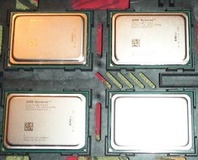
AMD this weekend introduced a new Opteron series featuring six processing cores and a rather amazing 40W power draw.
As reported over on
Maximum PC, the processors - which are aimed at the same server market as rival Intel's Xeon chips - are designed to be low-power units for use in blade servers and dense rack environments. Impressively, the 40W ACP is the same as the companby's quad-core processors released back in April, meaning that you get an additional two processing cores for free - electrically speaking.
Accusing rival Intel's Xeon chips of ditching features in favour of a lower power draw, AMD's Brant Kerby claims that the low power consumption of the new range does not come at the cost of reduced "
memory speed, bus support, hyperthreading, or cache size."
The price point of the new chips has not yet been confirmed, but it's the low ACP is thought to come at a premium compared to the company's existing quad-core 40W Opteron units.
The low power draw is indicative of the impressive strides made in processor technology ove the past few years: AMD's director of business development John Mure has pointed out that a mere six years ago single-core chips were drawing 58W, with the new Opteron series coming out at a positively minuscule 6.67W per core.
Where server technology leads, the mainstream will follow: accordingly, 2010 is likely to bring a range of low-power cool-running six-core chips from AMD - and Intel isn't likely to take the challenge lying down.
Does the thought of a six-core chip drawing just 40W fill you with desire, or would you need more details on clock speeds and pricing before you were prepared to be impressed? Share your thoughts over in
the forums.










Want to comment? Please log in.