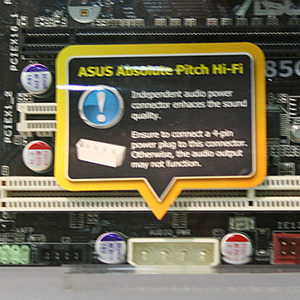
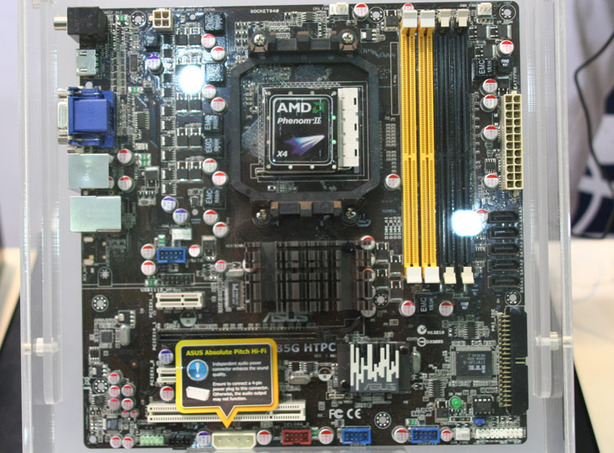
COMPUTEX 2009: Asus is making a HTPC specific micro-ATX motherboard with AMD's latest 785G chipset, AM2+ CPU and DDR2 memory, as well as a feature it calls Absolute Pitch Audio. Basically this is a separate molex plug on the PCB that allows the onboard audio to have its own 'cleaner' power source, greatly reducing crosstalk across the PCB and creating higher fidelity audio. Well, as high as onboard sound can be.
The feature is also common to Asus' Xonar soundcards, but no Xonar chip makes its way onto this motherboard. Instead, the audio is powered by a VIA HD audio chip. Asus said that to differentiate itself from the competition it has worked closely with VIA to improve software and create a unique solution.
This board, and others in the future, will get DTS' latest "Surround Sensation: Ultra PC" (with separate options for headphones and speakers), that bolts on another software layer over the top of DTS:Neo PC.
DTS: Neo PC upscales stereo content to multichannel and DTS Surround Sensation takes this multichannel content, or native multichannel audio, and converts it BACK to stereo, creating a virtual surround. It's convoluted at best, and equivalent to Dolby's Virtual Surround and Dolby Headphone Technology already on the market.
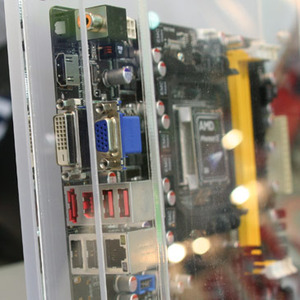
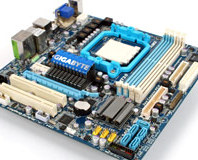
In addition to this Asus uses a tasty black PCB, a single PCI-Express x16 2.0, two PCI-Express x1, one PCI, five SATA 3Gbps (with one eSATA), DVI, HDMI and VGA out from the rear I/O. The PCI-Express x1s might be a little useless though - one is directly inline with the northbridge heatsink and the other sits underneath the x16 slot.
CPU power is a normal 4+1, but an HTPC isn't going to need super high power hardware with the 785G that features AMD's latest UVD 2.0 anyway.
Discuss in the forums.










Want to comment? Please log in.