Nvidia has already hinted at plans to produce an
x86-compatible platform for mobile Internet devices (MIDs), but the company has now shown that even its existing ARM-based TEGRA platform is capable of powering a basic netbook.
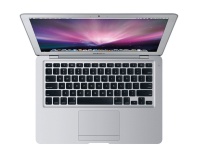
To prove its point, Nvidia gutted an HP Mini 1000, which is usually based on Intel’s Atom CPU, and replaced its innards with a Tegra board and a basic version of Windows CE. The netbook prototype was shown off at the CTIA Wireless 2009 http://www.ctiawireless.com/ show in Las Vegas, and
Engadget took some shots of it, as well as a photo of an entire Tegra computer that’s around the same size as your average SODIMM.
So are we ever likely to see Tegra-based netbooks going into production? We asked Nvidia’s senior corporate communications manager, Bea Longworth, who replied with a definite
“absolutely,” adding that Nvidia hopes to
“announce OEMs at Computex.” However, Longworth wouldn’t reveal whether HP itself was interested in making a Tegra-based netbook, saying that Nvidia
“can't comment on our partners' plans."
In the meantime, though, this prototype shows the potential for using Tegra in a netbook. At first, it might seem like a bit of a redundant idea, seeing as full versions of Windows such as XP and Vista require an x86 processor, and you won’t be able to run them on an ARM CPU.
However, Windows CE is still capable of running everyday computing tasks and more. As Tegra is basically a smartphone platform, and there’s space for a much larger battery in a netbook. Nvidia says that the Tegra 600’s integrated media processor results in up to ten hours of HD video playback, or 100 hours of audio playback, on a standard smartphone battery, so there’s a lot of potential for a Tegra-based netbook with battery life that extends into days rather than hours.
Plus, Tegra 600 already has features such as 1080p video playback, HDMI output, wi-fi support and basic 3D acceleration. The lack of a fully-fledged Atom CPU and Microsoft OS could also help to bring down the cost of such devices. At the Mobile World Congress show in February, Nvidia first announced its new platform that enabled Tegra 600 to be used in MIDs. The company said that such devices could cost as little as $99 US, and could be switched on for days at a time.
Would you be interested in a cheap Tegra-based netbook with long battery life, or would you rather have an Intel Atom and a full version of Windows? Let us know your thoughts in the forums.










Want to comment? Please log in.