The announcement in November last year that Intel's chief executive Paul Otellini was to
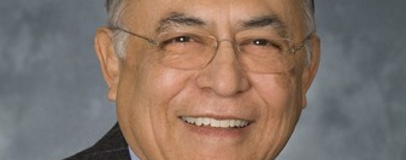
retire from the company in May didn't come as much of a shock, but the fact that the company has yet to name a successor is at the very least mildly surprising. With the tock ticking down to Otellini's departure, the former chief executive of long-time rival AMD Hector Ruiz has offered some words of advice.
Ruiz left AMD in 2008, when the company was
suffering from extensive losses. Now, however, he has offered some sage advice for whomever is to take the helm at his once and former biggest rival - and claims that Intel needs to change its ways.
'
Intel isn’t the company it was a decade ago, when it could use its dominance to sway nearly every aspect of the computing market in its favour,' Ruiz writes in a column for
Businessweek, offhandedly referring to the company's well-documented
anti-competitive behaviour in the past. '
Although Intel remains the top player in PCs, mobile technology for smartphones and tablets is the faster-growing arena, and more nimble rivals have taken control. In mobile, Intel is the underdog.'
His advice to combat ARM, the market leader in mobile and embedded processors and a company making increasing waves in the laptop and server markets that drive Intel's principal profits, is simple: branch out from being a 'PC chip' maker to being a computing company. '
There is no reason to let the media, Wall Street, or anyone else define Intel as purely a PC technology company. Intel may be the underdog in mobile today, but if the company makes a serious commitment to developing technology for that market, it could quickly outstrip competitors. Intel should re-position itself as a leader in computing of all kinds.
Ruiz also tells Intel's incoming chief to split the company up, becoming a portfolio company in charge of multiple autonomous business units. It's a risky strategy, but one that could pay dividends: each unit will be able to operate independently, but draw upon the resources of the holding company above them. It could, in theory, result in shorter times to market and more innovative products - but it would also likely increase costs at a time when companies are looking to trim the bottom line.
While Ruiz's advice is sound, it comes somewhat ironically as Ruiz himself admits: '
I spent an important part of my career battling Intel as the head of smaller rival Advanced Micro Devices, both in the marketplace and in the courtroom where we challenged Intel’s monopolistic practices.' Another irony will doubtless have occurred to fans of AMD, a company which is equally no longer the relative giant it was ten years ago: where were these bright, hopeful and potentially disaster-averting ideas in 2008, when Ruiz could have put his mind to work saving the slowly sinking ship that was AMD?
Nevertheless, the column is worth
reading in full, and Ruiz is certainly right about one thing: whoever Intel names as Otellini's successor is going to have an interesting career ahead of them.









Want to comment? Please log in.