Windows 8 will be launching on the 26th of October, but the European Commission is already investigating allegations of anticompetitive behaviour.
Microsoft's Steven Sinofsky has finally firmed up the launch schedule for his company's next-generation Windows 8 operating system, announcing that the software will be released to the public on the 26th of October.
Although the actual launch may vary by a couple of days in certain markets, the 26th of October marks the day that Windows 8 goes 'General Availability' - product-launch code for 'it should be on shop shelves now.' On that day, buyers will be able to pick up retail and upgrade editions from both high-street and internet retailers, while original equipment manufacturers (OEMs) will be free to start shipping Windows 8 by default with their new hardware.
One thing Microsoft hasn't confirmed is the availability of its System Builders Edition, a special build of Windows 8 which provides a cheaper OEM-style licence for those building their own machines or running a small business that doesn't qualify for full-fat OEM licensing. While this should, theoretically, be available when the standard editions hit General Availability, Microsoft isn't stating categorically either way - and is quiet on how much buyers will save over a retail copy, too.
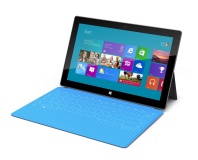
It's thought that Surface, Microsoft's Windows 8 and Windows RT family of tablet computers, will also be launching at the same time as Windows 8. Windows RT devices from other manufacturers, meanwhile, should follow closely behind.
One thing threatening to rain on Microsoft's parade - aside from some concern from users about the
alleged benefits of the new Windows Phone-inspired Metro UI - is the European Commission, which has confirmed plans to extend its investigation into Microsoft's allegedly anticompetitive practises in the software bundling market to include Windows 8.
The investigation, which led to the 'browser ballot' screen that asked Windows users whether they'd like to install an alternative web browser or just use Internet Explorer, will now address concerns regarding the integration of Internet Explorer into Windows 8 and the lack of APIs for adding third-party browsers to Windows RT.
According to a Commission spokesperson, the investigation is being extended as a result of allegations received by unnamed third parties, although none have gone so far as to file a formal complaint against the software giant.

86 Comments
Discuss in the forums ReplyI support Microsoft's endeavours to bail out the EU debt crisis. Intentionally or otherwise. :P
Completely pointless from a desktop perspective, short of confusing you when you click on the desktop 'tile'
My only complain so far, is that the default Start Screen layout sucks really bad for non-tablet devices. But once you arrange everything, create and name groups, and add folders to it, it's fine.
W8 for desktops is just W7 with fancy animations and a pretty face. A desktop OS should be practical with a user friendly GUI; encouraging simplicity and high performance. The OS should not be jumping out at you every second like some attention seeking child, it should be doing its job in the background making it easier for the user to use applications.
In fact, W8 breaks many established principles on a good GUI design by basing metro around horizontal scrolling, big flashing and changing animations, LOADS of colour that it is difficult to just glance over and spot a file. It looks unattractive on a big screen as it is just wasteful blocks of colour everywhere - smart phones and tablets have tiny displays in comparison making it not so bold.
Metro is a good idea for phones and touch screen tablets as small text/icons are less user friendly to be pressing all day and as there is only 2-6 tiles per screen it is easily read and when one changes it is not so distracting. But wow, on a desktop seeing loads of tiles update at once and sliding along just slows down navigation and is distracting.
W8 built for tablets/phones, but marketed to desktops too for some more sales.
I have a pretty vast stash : )
I'll probably give win 8 a miss until its more mature (sp1 at least) or until win 9 comes out. Its hard not to compare win 8 to vista in what its trying to do.
Windows 8 Pro Upgrade will be available for ALL at 40$. You can upgrade Windows XP, Vista and 7 to Win 8 Pro.
If this is true I could be tempted. Performance interests me, not a shiny OS with groovy animated menus.
To be totally honest, apart from being aversive to the idea of Metro I am totally ignorant when it comes to Windows 8 -- it interests me that much.
Successive Windows releases are becoming increasingly nannyish to the point of being unusable to a tech savvy user -- I should be telling the operating system what *I* want it to do, not the other way around. Granted Windows 7 isn't too bad, but the interface still seems largely arbitrarily organized to me, despite using it for a good while now.
I admit I'm backwards and come from the Windows 2000 school of interface design. I don't like an operating system and programs that look like they were designed by the teletubbies.
I'm well aware and accept we're not the target audience for Windows -- joe user is.
This is why I like *nix -- you don't like a Window manager? You change it. You don't want any GUI? Dump X altogether.
Yeah, but you've got all the caveats that go with it -- lack of user base on the desktop (when compared with Windows), sketchy/non-existent hardware support, the extreme ball-ache that goes hand in hand with setting certain things up, gaming support...
I know die hards will probably contest most of the above points but it's still the case that it's still quite a niche desktop environment and suffers because of it.
I wouldn't willfully wish for something to fail, it's just the skeptic in me sees this as a monetizing exercise involving more bloat and UI muddling. I'd like nothing more than Microsoft to attain OS nirvana as they're no doubt proselytizing.
If you want a mainstream desktop with almost universal support, you will have to accept that it is designed for mainstream users.
It's just a bit rough around the edges right now, but in three years' time, everybody will wonder why not all OS' are like this.
Win+D ;)
Yes, I can just skip Windows 8. And as it stands I will. It just pains me to see this excellent OS being handicapped so on the desktop.
And please stop with this "mainstream users" stuff. Mainstream users don't really have a say or choice in this matter. Windows 8 will come pre-installed on whatever PC the buy off the shelf, but that doesn't mean they'll actually like it. More AIOs will probably now be shipped with touch screens, but I can't see this as being an anywhere near ergonomical solution. If you have a desktop PC just stretch out your arm towards your monitor and try "emulating" touch control. Pain in the a**, right? Nothing you would want to do for any length of time.
/rant :)
Sort of...at least, as far as I know. I know it was technically possible to strip IE out of XP (had been somewhat popular with the nLite sort of crowd.) However, it does break some things - .chm help files are dependent on the IE engine and so will not work if you strip IE. There are some things like that, but I can't recall them at the moment.
Personally, I don't necessarily have a problem with IE being integrated into Windows itself - inevitably, I still run across sites that only work correctly in IE (which is just inexcusable in 2012, imo.) Plus, my primary browser being Opera, I do still need a second browser (although IE9 kind of sucks still, so I also have FF.) Storage being (formerly, at least) cheap, I don't mind the space three browsers take up (plus for dev purposes, IE and FF are good test browsers, since they have an enormous chunk of marketshare - things might be written to standards and work beautifully in Opera, but IE is retarded with it, and FF might have some minor funkiness.) And I refuse to put Chrome on my PC.
The stupid thing about the EU being all pissy about the SP1 flaw is that no one noticed for over a year. How big a deal is it, really?
And Nexxo - no. Not everyone wants to spend forever dinking around with configuring the PC. Some of us might dig it occasionally, but mostly prefer to use their PCs. Once there is a desktop distro of Linux that seems to be as mature as Windows (much as you'll hate my having drawn the comparison), I'll look again. Until then, I'll stick with Windows - I used XP for 5 years, I don't see a problem with doing the same with Win7.
85% of metro haters and win 8 doom sayers will have willingly upgraded for one killer feature or another.
8% will have a win 8 machine in the house and grudgingly admit the OS has some benefits.
5% will have abandoned windows for OSX / Linux / iOS / Android
1% will still be on windows 7 because it's the best OS ever.
1% will still be on XP because it's the best OS ever.
I use it for everything other than games. Love it.
I would contest most of this yes :D
And I would like to see some facts to back up the claim for getting better frame rates. Because that is a compelling reason to upgrade just for playing games.
If you still hate it then, switch to OS X or Linux or stick with Windows 7. Use the OS that suits you best instead of complaining about it.
Again: you have no vision.
It always surprises me how conservative this forum membership is. You're supposed to be geeks, ferchrissakes! But it seems to me that it is the mainstream muggles who willingly embrace new technology, and in doing so drive it forward. Whether it is smart phones, tablets or Windows 8; it's allways the same story: "My old Nokia does me just fine". "It's not a real computer, what's it for? My netbook works just fine". "Windows XP is fine for me". Nope, you'll happily drop £400,-- on a marginally faster GPU to play the same old remixed game with slightly prettier graphics, but God forbid someone out there actually introduces something new.
With Windows 8 there is no fallback position, its the Microsoft way or other OS.
User choice is no longer present.
So we should just embrace the new even if its gives us no benefit...? No thank you.
And those "mainstream muggles" you talk about probably do not embrace new technology as willingly as you believe. It gets forced upon them. I have quite a lot of these socalled "mainstream muggles" and regularly tend to their computers and whatnot. Often when there's a major change in the way they have to do stuff I can hear a resigned "Oh well, if it has to be this way...".
If you believe Windows 8 gives you *no* benefit, then he's right, you lack vision.
I use win7 for playing games. Thats it. Steam, Origin, browser and few other gaming related software packages are the only things I have installed. Unless the latter about increased frame rates in gaming is true then no it does not give me any benefits.
Oh and AVG.
Well it is a fact that Windows 8 uses a smaller memory footprint/resource allocation than Windows 7, so that's where the performance boost would come from.
Yeah, I frequently walk past the Apple shop as they drag in unsuspecting members of the public and force iPads and iPhones into their hands. Oh, the humanity!
Muggles vote with their wallet, like every other consumer. It's why Apple is doing do well, lately. It produces tech that is simple (and dare I say it, fun) to use by the mainstream user. When you tend to people's computers it's because they ran into a wall of user-unfriendly technical stuff that we enjoy, but other people just find a cumbersome hassle. They want simple. They want big friendly icons and simple dialogs spelling out simple options. Muggles will LOVE Windows 8.
Windows 8 has had some improvements under the hood. The part about forced Metro (Start Screen, Metro apps, charms) is what damages its reception.
A Windows 8 that allowed for UI user choice would have an enthusiastic recepetion everywhere and by everybody.
I am actually finding I couldn't care less about Windows 8.
I always thought I would be an early adopter with all OS upgrades. But this time I don't care. I really don't.
It's akin to saying "I don't want this Bentley because it has a bumper sticker on it".
It's easy to remove ;)
Oh, and 95% of users will just leave it there and get used to it. Because 95% of users are "mainstream muggles", and they are the ones filling Microsoft's bank accounts, not us.
EDIT: I'm referring to the home market in this post.
Fair play. If there is gaming related performance boosts then I may well. It would just come down to whether I can be arsed spending £40 and learning that stupid new interface. I like the traditional start bar and interface. That why I use KDE for working.
No its not.
In my situation I don't see windows 8 giving me anything. Im not jumping on the windows 8 wagon till I can actually get some serious benefit. Smaller memory footprint? Does that really mater on a machine with 8GB+ of RAM? I wouldn't have thought so.
I don't want to stop technology moving forward. I just think win8 is not what I want or need. For somebody that spends little time on windows its not worth the upgrade.
And yes it probably will be a hit with its big flashy buttons but as you said above...
Windows 7 is fine for me
EDIT: Sorry for double post only seen the reply after.
I don't think you understand Microsoft's business strategy. It's long-term vision is to have their OS everywhere: at work, at home, in your home, on mobile devices, in your car. The main problem has been how to make a brand-recognisable GUI that is familiar to use in each of these environments, which can vary widely in terms of screen size, input devices and processing power.
Microsoft has always tried to cram the desktop GUI into smaller devices and finally realised that it was woefully unsuitable for that. Now it is trying from the other end: start with Metro on small mobile devices, and scale it up to larger, more powerful devices by judiciously adding features without losing the essential user experience. Windows 8 is a bit of a hybrid, and has a few clunky features as a result. But it is a bit like turning an oil tanker. The next version will be much more integrated, and as even small mobile devices become more powerful, a little eye-candy will sneak back into the minimalist design. But Metro tiles are going to be awesome. You haven't seen a fraction of the possibilities yet.
I'm not entirely sure you can call the MS approach to things strategy, the enormous size of the company means there is rarely a cohesive plan, Plays for Sure being an excellent example.
Yes they've always pushed the windows look and feel, and failed, but this has always (traditionally) been about making sure people continue to use windows at work and continue to use there productivity software.
They may now be looking toward Apple and seeing how well the ecosystem approach has worked for them but MS has also looked at Google in the past and seen how well search has worked. But just this week we've found that strategy hasn't really made them any money either.
They might be pushing growth in other sectors but MS bread and butter is the office and its office suite and if you think this forum is conservative you want to hear the complaints this week when we finally upgraded to office 2010.
Beside, even if you hate it, it won't change in Windows 9, nor 10. Get used to it. I sure did, and with a proper layout, and color I find it practical. Not to mention the huge list of features.
My laptop now, only has 1 OS, and it's Windows 8. Use my laptop everyday, including work. (soft development).
W8 and Metro will be successful. The Metro UI is an exciting development that really challenges the popular belief that Apple appliances 'just work' - my parents get lost on their iMacs but I really can't see them struggling with Metro once they've learnt it.
I got a Lumia 800 when they came out because, as a mobile UI, Metro is streets ahead of Android and iOS (albeit less flexible than Android). Desktop Metro will be an improvement on this, Microsoft have a lot riding on it and they've learnt from their past mistakes.
Either way, W7 licenses will be available for years, so let's not be too upset.
However there are definite signs that this is changing, in the light of the shining example provided by Apple: one boss, one vision, one hardware manufacturer. Lo: Microsoft suddenly produces its own hardware (Surface) to promote Windows 8: one OS (kernel)/GUI for all platforms. Lo: Google produces its own hardware (Nexus) to promote its one Android OS for all platforms. The times, they are a-changin'.
Microsoft is waking up to the idea that the business sector is not the biggest market. Home consumers are. Apple proved that. Google and Microsoft are now changing tack to the same prevailing winds.
You've got a point, I think it's largely down to the fact that as geeks we have some misguided belief that because we generally know more about tech than the general user we should have sole dominion over the tech sphere -- tech is for everyone.
Personally I've happily admitted in the past I'm a luddite when it comes to change in the tech world. I'm trying to break these habits (I've forced the default 7 shell on myself instead of reaching for the nearest shell replacement app) but it's still difficult.
I try and maintain an open mind, however Metro still doesn't make sense to me on the desktop. I'll need to actually try it out to know for sure though, so admit I could be completely wrong.
While the home market might be larger for Apple, MS is playing for a small chunk of it (the desktop) there hope may be to use metro to sell tablets but that sector of the market is pretty well sewn up by Apple. Google has demonstrated this by launching a near loss leader to try and grab some market share.
In the play to move into the larger home market there is a risk it loses share in the business market which may have slow growth but its constant, and more importantly consistent cash flow has allowed to fail in so many other markets.
Metro can go burn in hell for all I care, Microsoft were a bit thick to include it within windows 8 as a forced function, but the rest of the OS is sound from what I've seen of it. Despite crashing the release candidate in my VM because I taxed it too much.
Is this a sales pitch..?
About 90% of home computers are Windows PC's; hardly a 'small chunk' of the home market. Where Apple has dominion is in tablets and smartphones, which are increasingly the go-to devices for ordinary users wanting to use specific web, media and social network applications. That is where Microsoft perceives the next big money to be. It tries to pitch its sales around convergence: "We can give you all the fun of Apple, and all the productivity associated with Windows (Office). We can be the best of all worlds".
Microsoft is big enough to be able to focus a branch on its productivity cash cows, while focusing another branch on domination of all OS ecosystems, which has always been its ultimate goal. To expect Microsoft and Google to give up because "Apple has it all sown up" is naive --it's like expecting Apple to give up in the 90's because Microsoft was the dominant OS. But Apple is showing signs of complacency and stagnation in innovation while Microsoft and Google are busily reinventing themselves in the face of fierce competition (as indeed Apple did, back in the 90's). The saga continues.
Yes but they already own that market, they're not competing with any one in the desktop market they don't have to, others have tried to compete with MS in desktops and failed. Apple have moved the goal posts and convinced people they don't need a bulky desktop. Google, meanwhile is pretty platform agnostic, it may make money from Android but it also makes, likely, more from Windows desktops and a fair chunk (i would guess) from Apple users. MS are looking for growth in the home market and they can not get that from the desktop, the 10% non MS users are non MS users for their own reasons and they'll never switch.
The small chunk they're trying to get hold off is the tablet/smartphone users who don't want to be tied to Apple/Google. This part of the market will never be as big as the corporate market, not for MS, they're too far behind to make any real market share. I don't expect them to just give up, I do expect them to stop trying to chase Apple or Google and realise their strengths are else where.
Intersting aside MS normal approach of embrace, extend and extinguish has singularly failed them of late.
I assume MS have plenty of carrots for app developers? This is what pushed Apple devices into home users hands. MS are incomparison, rather bereft of apps.
http://www.wacom.com/en/Products/Cintiq/Cintiq24touch.aspx
Used with a keyboard.
I feel like my experience is somewhere in between geek and muggle. I've tried Ubuntu, I assemble my own systems, but in the end I just want something that works. I don't want to fuss about with too many configuration settings. I want to turn on my computer, easily access programs, and just generally be able to use the darn thing. With that in mind, and considering a motherboard/CPU/RAM upgrade in the near future, I think I'm finally at a point where I want to upgrade.
When I say "Windows XP just works," what I mean to say is that up to now my personal experience has not warranted the need to upgrade. It is not meant as a slight toward Win7 or Win8. To be honest, I think Windows 7 is a great OS, and if I had the need for better hardware than a 32-bit version of Win XP could support, I would have upgraded sooner. Have I spent money on a new video card? Yes, but only because my old one stopped working; it was not to get a marginal frame rate increase.
Now that I'm at a point at which video and graphics output is asking for more power, I'm ready for some new core hardware; therefore I'm ready to upgrade. Considering Microsoft's low-cost upgrade offer, and given the more recent reviews, I think I'll be happy with Windows 8.
(j/k :p)
Having a game playing on one monitor, a desktop display on the second, and the Metro home screen on a third seems like it could be pretty nifty with a bit of tinkering.
Looking back on it, it reads a bit like an intern's first draft for one! I just get a little tired of backwards-looking hypocrites who will, in the long run, appreciate the changes. UIs will not be tied to physical interaction, either through keyboard and mouse or touch, forever. This is a step forward, and we should at the very least be curious about it - it is pretty original.
Microsoft is basically doing what Apple is doing, and Apple is getting similar flak for iOS-ifying OSX as Microsoft gets for Metro-fying Windows. People just seem unable to see that both are creating an OS not for today's hardware, but next year's. The OS is driving hardware development now, which is how it should be, not the other way around.
If what you're alluding to is a single, portable device that streams or connects to extenders that are purchased separately, I can see this is a good idea, but it will never happen due to patent court cases and monopolistic practices. There will never be a single device that does everything, however nice it may sound.
Oh really?
Motorola Atrix
sjZI94VfC1U
(It's a bit old phone) The main problem with the device at the time was the very high price tag.
ASUS PadPhone
Rrh_EwFaZ7I
This is the future, and it's out now, and slowly gaining popularity. I expect with Windows 8 late life or during Windows 9 life, this is be quite popular.
Of course there will be, as GoodBytes shows. They will just be divided into competing brands/ecosystems (with some third-party devices catering to several, perhaps). It is this competition that you see playing out now: Apple vs Microsoft vs Google.
Ha yeh it was a bit. I just like my traditional desktop always have, along with a healthy dose of command line it makes up my workspace and its really laziness that i cant be arsed learning a new UI.
Moving from CLI to GUI Desktop was often called a backwards step but look how that turned out.
Device convergence is happening, aye. They're lovely but the examples given by Goodbytes, good and exciting though they are, have not exactly taken the market by storm. Given that the iPad and subsequent models sell so much that there must be warehouses full of grandmothers and kidneys, there is the money there to be spent on these devices but if they're no good, well.. Atrix case in point. I'm just being a bit critical, is all.