The work carried out at Imperial College London holds the key to devices powered by their own casings.
While it may seem that every week brings a new 'next big thing' in the world of batteries, this latest development in the world of portable power should have heads turning nonetheless.
As reported over on
HotHardware, researchers at Imperial College London - in partnership with boffins at Volvo, interested in creating hybrid electric cars with better ranges - have come up with a plastic capable of storing a charge in much the same way as a traditional battery.
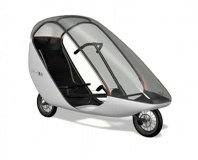
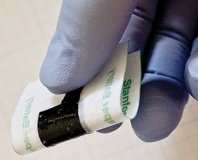
The so-called 'plastic supercapacitor' is an impressive leap forward in the concept of power storage, allowing the actual casing of a device to provide the power it requires to run. In the case of cars, this means non-structural elements such as the bumpers and interior spaces could provide additional power for increased range; in portable devices, the actual case itself could store the energy required to make the device work.
The technology could be used in portable gadgets in two ways: certainly at first it's likely to be as an additional power source, helping to make a more traditional Lithium-Ion or Lithium-Polymer battery last that little bit longer; once the technology has been sufficiently improved, however, it's possible that the battery can be dispensed of entirely - paving the way for thinner, lighter portable devices.
It's good news from a green perspective, too: requiring fewer harmful chemicals during its manufacture, the plastic supercapacitor concept represents much less of an environmental concern when it comes time to dispose of your once-beloved gadget.
Project co-ordinator Dr. Emile Greenhaigh admits that "
we’re at the first stage of this project and there is a long way to go," but envisions a future where "
you might have a mobile phone that is as thin as a credit card because it no longer needs a bulky battery, or a laptop that can draw energy from its casing so it can run for a longer time without recharging." Sadly, the project is at too early a stage to offer even a guesstimate of when it'll be ready for commercial exploitation.
Are you excited at the thought of finally ditching the bulky battery, or is it the idea that week-long laptop power might finally be a reality that has you salivating? Share your thoughts over in
the forums.

17 Comments
Discuss in the forums ReplyThis... Until I can see some numbers, its just a good-looking concept/rumor as far as im concerned...
If only you can make solar panels (that are as thin as this could be) and this come together your laptop could charge itself and store the electricity in its case.
Any numbers for this thing?
http://forums.bit-tech.net/showthread.php?t=162506
Remember the phone charger that can charge off transmissions? shame it doesn't even cover the standby power.
Even many batteries explode when shorted. They can dump so much current that the heat melts or sets them on fire. Sometimes really impressive fires!!
I guess they could use some of the space they've saved for some light armour. Kevlar covered devices, cool!
I agree with Nexxo, what are the energy densities for these new materials? Overall storage capacity? Charging times/frequency?
A paper-thin cell phone is a novel idea, but won't be of much use if it must be recharged every 90 minutes.
XKCD? Maybe you mean... SSDD (Same **** Different Day)? :p
ultra-capacitor on the other hand..... my friend was involved in another project, tried to replace battery used in MoD's standard issue radio with ultra-caps. final product: 24 hours talk time with normal 2xAA battery ends up to be 1.5 hour with four 100F 5v ultra-caps.
on the issue whether it's safe to touch, of course it's safe, we are talking about electronics, not electrical high voltage. super-caps usually comes in 2.5v or 5v, and doesn't discharge as fast as a good ceramic capacitor.
never bitch xkcd on a tech forum, this is blasphemy
I don't see how it's always the same everyday... I actually think it's the complete opposite
they are good for supplying steady power when the pull exceeds what the alternator can do- like during bass notes the amps pull a lot of power- during that time it will get what it needs from the capacitors and the caps recharge in between.. but they discharge very quickly- they don't hold a charge
I'm thinking he means SSDD for new techs like this.
Although if he is slagging off xkcd I will kick his ass with you...
actually, by XKCD logic this means they will be keeping the technology to themselves:
"we're not really looking at market applications yet." -----> "I like being the only one with a hovercar"