You may remember the teeny-tiny supercomputer that the guys over at the
University of Antwerp built using eight GPUs across four Nvidia GeForce 9800GX2 graphics cards - well, the guys have upped their game.
As reported over on
Engadget, FASTRA II features an impressive
thirteen general purpose graphics processing cores for a total performance of twelve teraflops - trillion floating-point operations per second - at a minuscule cost of just €6000 (£5,400).
The
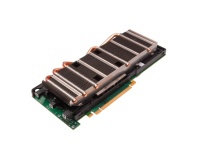
official website explains that the rather impressive build - requiring a special cage to hold the graphics cards which are connected to the motherboard via flexible riser cables - features six Nvidia GTX295 dual-GPU graphics cards along with a GTX275 single-GPU graphics card for a total of thirteen addressable processing cores - not including the system's CPU. In order to satisfy the power demands of all that graphics hardware, FASTRA II uses four individual power supplies all snugly nestled up on a Lian-Li PC-P80 Armorsuit case.
A build as complicated as this is not, naturally, without problems: the team behind FASTRA II needed some custom BIOS code from Asus in order to use all the graphics cards together, and is "
still experiencing software stability issues, probably caused by an incompatibility between the video drivers and the BIOS and Linux modifications we had to use."
The system - which is designed for use in tomography applications - shows a major speed boost over its predecessor, managing 4.08 computer-aided tomography slice reconstructions per second compared to just 1.14 for the original FASTRA. By comparison, a system based around Intel's Core i7 940 CPU running four processing cores at 2.93GHz manages just 0.18 slice reconstructions per second.
All this power comes at a price, of course: under full load, the rig pulls a whopping 1.2KW of power, which is significantly more than the slower desktop based around the Core i7 chip at just 260W peak draw. That said, the FASTRA II system is four times as fast as the university's 512-core AMD Opteron-based cluster - built almost five years ago for supercomputer work - which draws a massive 90KW under load. Indeed, when energy efficiency - measured in slice reconstructions per Watt-hour - is measured, FASTRA II leaves every other solution standing.
If you fancy having a go at building your own supercomputer, the team has produced a list of the
hardware used in FASTRA II.
Does GPGPU represent the future of supercomputing, or is it only a matter of time before the CPU reigns supreme once again? Share your thoughts over in
the forums.










Want to comment? Please log in.