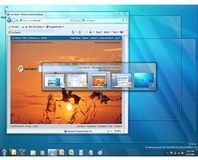
The three-running-application limit might be due to go, but Microsoft's insistence on crippling netbook specs is still very much in place.
The rumour that Microsoft might be looking to move its Starter Edition version of Windows away from the developing nations and towards netbook users just got more plausible with the news that the three active application limit may be heading the way of the dodo.
According to inveterate Microsoft watcher
Paul Thurrott – via
CNet – the software giant is looking to make Windows 7 Starter Edition a bit more usable than previous releases.
While Starter Edition versions of Windows were first developed for use in developing nations – where Microsoft figured nobody would want more than three applications running at any one time – the improved performance on lighter hardware of Windows 7 has piqued the interest of the netbook market, which currently relies on the soon-to-disappear Windows XP operating system. Although a lightweight Windows 7 would seem ideal on low-powered netbooks, a three application limit is a hard sell in countries used to the joys of multitasking.
As a result, it seems likely that Thurrott's claims that Microsoft is “
to remove 3 app limit from Windows 7 Starter [Edition]” has some meat to it – although he has yet to post any additional details or official comment from Microsoft to back up the statement.
The news comes as TechArp
posted the supposed maximum hardware specifications allowable to run the netbook-oriented version of Windows 7. With a maximum screen size of 10.2” - down from the current 12.1” limit imposed by Windows XP's licensing – and 1GB of RAM, it's clear that netbooks won't be getting any more powerful if Microsoft has any say. The company is also placing a limitation on the processor that can be used in a netbook if the manufacturer wants to licence the Starter Edition of Windows 7, with only single-core sub-2GHz chips with a TDP of 15W being accepted.
Do you believe that Microsoft is doing the right thing by removing the three application limit in the Starter Edition of Windows 7, or should the company go one step further and ditch the limited system specifications required for licensing? Share your thoughts over in
the forums.

19 Comments
Discuss in the forums ReplyIt's a bit short-sighted of MS, imho.
You're completely missing the point. They're not trying to limit the hardware at all, what they want is for more premium versions of Windows 7 (like Home Premium) to be installed instead of the low-end, limited versions.
Starter edition is there to get Windows on to the very cheapest netbooks (rather than Linux). Home Premium and all of the "Premium" versions are aimed at the masses who want a more complete experience and are willing to pay for it.
It'll force even more people into using linux, and convince even more that it's the way to go.
Two main things are keeping them in the lead for the desktop/server. 1) exchange, and 2) the lack of newer games for linux.
I say let them shoot themselves in their foot and see where it gets them. It's no wonder so many people resort to pirating their dodgy OS. They pretend to provide a valuable piece of software and the users pretend to pay. ;)
C'mon M$, even Apple went the Unix route years ago.
(I'm very sorry to all the M$ fanboys/fangirls/fanits that I may have offended. The truth hurts, no go cry in the corner.)
p.s. I use linux on everything. I'm not missing anything for games since I have a couple consoles for those. And on a plus side I don't have to worry about rootkits like you do on a PC (spore, bioshock, sony pictures DVDs (maybe blu-rays too), etc.)
p.p.s. I don't mean to start a flame war. I'm just stating my opinion, which is based on my experience with the above mentioned products. I know a lot of peoples opinions may differ quite substantially and I accept that. It all really comes down to what you want to do with your computer and what your personal preferences are.
I think a nice Win7 netbook for next Christmas might be something I could look forward to. Getting rid of the 3-apps-at-a-time limit is a good idea though I think Needles might be right, depending on the applications used they'll be struggling running more than 3 anyways.
I've had 99% positive experiences with Win7 so far and MS seem to do a couple of things a lot better than with previous versions. I'm aware there are a lot of people who had trouble of some sort or another with it and I won't say it's anywhere near perfect, but it's the closest MS have ever come in my opinion.
Yes but they do it so well... don't you agree?
They're really just making sure the right products target the right market. There's no point pushing Premium editions on the Netbook market, and they'll only get problems if they push Starter Edition on anything other than the weakeast of Netbooks.
Because it's there program and they can make it do whatever the hell they like.
What they'll achieve: cripple an entire genre of laptops into being artificially underpowered, pissing off everyone in the process.
I can see why they're doing it, but damn it's a stupid move...
I think you'll find its the hardware vendors making the netbooks underpowered... not Microsoft. Windows 7 runs just as well as Linux or XP on netbooks.
think i maybe worded it a bit wrong.
win7 does run nice on slow hardware, but thats not the point.
it's the arbitrary hardware limitations that annoys me.
It is not Windows 7 Netbook Edition, it's Starter Edition. It is not meant for you and me, it is meant for developing countries where you can't get a 4870X2 or a GTX 295. I would be surprised if they even had 3 programs that they needed/wanted to run.
This all just feels like people complaining about how a Ferrari has no decent boot, so is useless as a family car. It isn't meant to be a family car!
If MS decide they do want to move it towards netbooks, you will see these specs get much better in a rather short time. But as it looks, they are still aimng for developing countries.
That was the old line, now it will be sold internationally to OEM's provided the specs of the machine do not exceed these artificial limit's imposed at the request of Intel.