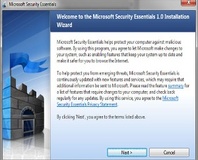
With Windows Activation Technologies, the option to activate later will no longer be greyed out for 15 seconds.
Microsoft’s Windows Genuine Advantage scheme has already had a drastic effect on software piracy, particularly as you need to be able to update Windows every time another security hole is revealed. However, Microsoft has revealed that Windows 7 will take this a step further with a new tweaked anti-piracy system that’s built on the Software Protection Platform technology used in Windows Vista.
Called Windows Activation Technologies (WAT), the system will eventually replace Windows Genuine Advantage (WGA). Future Windows Vista and Windows 7 updates will use WAT, although future Windows XP updates will still use WGA.
Microsoft’s general manager of Worldwide Genuine Windows, Joe Williams, explained that WAT won’t run on Windows XP because it apparently uses a
“fundamentally different” technology.
“It consists of new code and the latest methods for protecting Windows,” says Williams, which he says function
“in ways that can only really be achieved with the components that are built in to both Windows Vista and now Windows 7.”
Without revealing any specifics, Williams claims that the anti-piracy technology developed for Windows Vista made the OS
“harder to pirate,” and adds that
“we’re seeing fewer copies of non-genuine Windows Vista on customers’ machines.” Windows 7 will feature the latest generation of the anti-piracy technology first used in Vista, and will also improve on it in a few ways.
Williams gives the example of the activation system forced upon people installing Windows Vista with Service Pack 1. If you didn’t activate Windows during the login process, you would periodically get a reminder to activate Windows, which gave you the option to activate Windows immediately or later. However, the option to activate later would be greyed out for 15 seconds. Williams says that
“customers told us that while the prompt grabbed their attention, they didn’t understand why they needed to activate immediately and that the delay was annoying.”
As such, Windows 7 will no longer feature the delay if you want to activate later, and will instead be given a dialogue box detailing the benefits of activation. Generally, Williams says that “
In Windows 7 we’ve made changes so that users will see more informative notifications messages and be able to more easily complete the tasks they need to.”
Justifying the need for stringent anti-piracy systems in Windows, Williams said that
“as a public company, we have a responsibility to our shareholders and employees to protect our intellectual property and get paid for the products we bring to the market.” Williams also said that Microsoft’s research revealed that
“up to a third of customers worldwide may be running counterfeit copies of Windows.”
Does Windows need anti-piracy technology on top of the need to activate Windows, and in what ways would you like Microsoft to improve its anti-piracy measures? Let us know your thoughts
in the forums.

21 Comments
Discuss in the forums ReplyI will be buying Windows 7 as I have been very impressed with the beta and RC. If it limits installs or anything annoying and unreasonable like that though. I may have to get a copy by other means once those installs run out.
I guess we have to wait and see how WAT works.
As for Vista, I have a completely legal version of Vista Ultimate but also ran an illegal copy for a bit when I needed to do a reinstall and didn't have my disks available. The only times I have had problems with the anti piracy measures have been when running the legal version. I turned my computer on one day after making no changes to it and it told me that it needed re-activating!
Amazing, I wonder if there will be a server version, called Terminal Windows Activation Technologies, what would its acronym be?
I think that this will be a case of wait and see to see how the piracy teams respond to cracking this now. The only real way to prevent piracy would be to build a database of all the serial numbers on the windows CDs and keep track of which ones are activated.
Anyway, I just hope the new thing won't have you call them regularly after swapping hw.
I'm guessing MS will have learnt from this mistake.
find a way to avoid it. A never ending story.
At the end we will probably end up streaming our OS from MS servers.
However, if this Activation gives me headaches with a legit copy, while a friend runs an illegitimate copy and has no issues... well, it'll be like every other type of DRM out there, really. Cracked about five minutes after it's released. Problem is... they still need a way of allowing quick unattended mass installs for companies like Dell and HP. If they don't do that, the companies are going to be annoyed... and if they do do that, well, that's a potential place for the pirated versions to latch on to and exploit.
Windows Azure - it'll be here sooner than we think, methinks :)
I will buy 7... but as was said, as long as paying customers don't have to support the problems that this new system bring, it's alright... and it will be cracked no matter how well they think it's coded.
I sometimes wonder what Microsoft could have achieved if they had used all those man hours implementing DRM structures to fix bugs and security issues instead...
Actually ~25-30% of all Windows installations are illegal (Microsoft gives a far lower figure but they base it on WGA which is passed OK by almost all pirated copies), so phasing all those people out would mean that most of them have to switch to something else. In eastern Europe a copy of Vista costs around an average monthly pay which is about half of a price of an average computer or even more if you want a basic home machine. That's the reason for extremely high volumes of piracy here, nobody wants to pay for Windows more than they paid for their GPU (to be precise, quick check in my friend's shop - Home Premium costs about 75% of an 280GTX, while the Ultimate is 110% of a GTX)
While this pricing policy might work in western Europe where average pay is ~800% higher and people don't care about those few extra pounds or euros, it is not as good here.
The upside is the fact that i see far more people using XP and Linux than Vista.
far as all the different versions of windows- I don't like it myself either.. they just need 2 versions really- one for business and one for home.. business being the full version- all this security stuff is pretty funny considering how bill gates himself grew up.. if you've read his biography he's a havard dropout who used to sneak into the computer lab and steal time.. he is essentially one of us at his roots- now balmer, that guy just makes me sick XD like looking at a little kid in a grownups body.. I'm sure he's a pedo
But will it address all the problems legit users face if they try and allocate a key for use as a VM "sandbox" machine. By the very nature of such a machine you want to play with it, rebuild, re-config, restore etc and then activation becomes pain. That is why I know a lot of people use "activation hacks" to activate their own legal software without worrying about MS kicking up a storm.
This is a real issue for those with MSDN subs (or similar) where one key can be activated a given number of times. It's currently impossible to check the state of play on a key and whether it's been activated on multiple machines, multiple VM machines or even just one VM machine multiple times.
It's a farce!
Has this point been discussed? Thanks