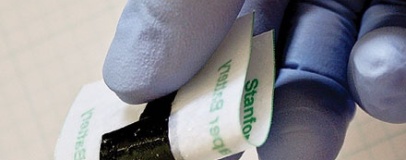
A team of scientists have created ultra-thin rechargeable batteries that sit on a single sheet of paper, heralding a future of slim, lightweight, bendable devices.
The breakthrough, made by Stanford materials scientists and reported over on
Chemical & Engineering News, involves everyone's favourite future-chaining technology: carbon nanotubes.
By coating a solid support structure with the nanotubes, and coating
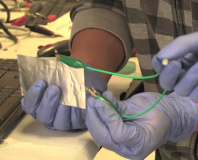
that with a layer of metal-doped lithium - much the same material as used in today's lithium-ion batteries, the team created an energy-holding double-layered film. This film was then placed on both sides of a piece of standard paper, creating an ultra-slim, incredibly flexible rechargeable battery.
It's still early days for the technology, but the group's prototypes, which measure an incredible 300μm thick, demonstrate higher energy densities than existing thin battery types - and survived a 300 recharge cycle lifespan test.
If the technology takes off, and with its surprisingly simple construction methods there's no reason that it shouldn't, future portable devices could be no thicker than a sheet of card.
Better still, combined with work being carried out into
flexible displays, it could be possible to create a smartphone, e-book reader or other portable gadget that rolls up for easy storage.
The team's work joins that of another group at Tsinghua University in Beijing, which
PhysOrg reports has created an ultra-thin, flexible supercapacitor for wearable electronics projects.
Are you impressed at the work that has gone in to creating 'paper' batteries, or will it take an actual marketable product to get you excited? Share your thoughts over
in the forums.










Want to comment? Please log in.