If you're a developing nation wanting to bring the wonders of computing to your citizens but unable to afford even the $100 laptop, perhaps the $20 PC is more your style?
The
Humane Reader - via
Make - is designed to offer a digital library of five thousand books to households or schools that have no access to the Internet, and it does so for just £13.
Designed originally as a device for offline viewing of Wikipedia, the Humane Reader aims to bring on-line content to areas of the world where Internet access is simply not available - and is extremely low-power and eminently hackable.
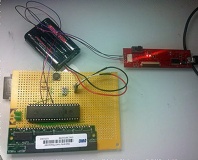
The device is based around the atmega328p microcontroller, with one powering the video output - a 38x25 character black and white display capable of text or "
simple graphics" and designed to be connected to a TV via a composite cable - another offering USB connectivity, and one to actually run the device itself.
A microSD slot is included for storing the content - and for adding new content to the device at a later date - and the device will work with any PS/2 keyboard, making it an extremely inexpensive way for a developing nation to increase its citizens' access to knowledge: if you've got a TV set, you can read digital content.
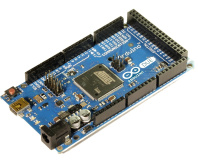
The team behind the Humane Reader have released the design and software under an open-source licence, and encourage others to hack and improve the device - and with compatibility with software and accessories designed for the popular Arduino microcontroller range, there are plenty of possibilities for this compact little marvel.
Is your mind swimming with the possibilities of such a low-power, compact computing device, or are you struggling to imagine reading Wikipedia on a 38x25 black and white display? Share your thoughts over in
the forums.










Want to comment? Please log in.