Third-party chip maker, TSMC, is rumoured to have receieved fewer orders for 40nm GPUs than originally expected
Following recent reports about the market for GPUs
dramatically shrinking at the end of last year, the rumour engine is reporting that Nvidia and AMD have slashed their orders for their forthcoming 40nm GPUs.
Taiwanese tech site
Digitimes claims to have spoken to market sources who say that Taiwan Semiconductor Manufacturing Company (TSMC), which announced its 40nm facilities in
March 2008, has now taken on ‘fewer orders from AMD and Nvidia than originally expected.’ This, says the site, is because both AMD and Nvidia are now becoming cautious because of the current economic climate.
In comparison to the two companies’ orders when moving to previous processor generations, the sources say that ‘orders for the 40nm segment have been scaled down by 30-40 per cent.’ Earlier today, Digitimes also claimed to have spoken to market sources who said that TSMC has
cut its foundry prices by up to 15 percent for large-volume orders placed by major clients.
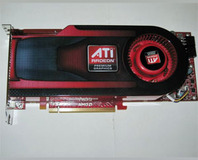
AMD and Nvidia haven’t officially announced which specific GPUs will be built on the new 40nm process yet, but the first products are expected to appear later this year. Earlier reports also suggested that AMD’s rumoured
Radeon HD 4890 GPU will be built on a 55nm process, rather than a 40nm process.
Are you considering upgrading to a new graphics card this year, or are you going to cautiously watch the pennies? Let us know your thoughts in the forums.

8 Comments
Discuss in the forums ReplyThe biggest worry must be that innovation will slow down (why spend x billion dollars making something new ... assuming you can get that kind of finance these days ... if you can't sell it ?). Conversely, we must innovate to create new revenue channels in order to get us out of recession !!!
If I'm not mistaken, video card makers make most of their money in the entry and mainstream markets. The margins are smaller, but the difference is far offset by the volume of the cards sold.
i heard the same thing from the INQ, here's the link: http://www.theinquirer.net/inquirer/news/878/1050878/tsmc-40nm-revealed
also, much of the drops in process size have been around the 10nm mark (65 to 55, 55 to 45), so a drop of 5nm is likely to not hold that much of an advantage over 45, and so apart from some enthusiast parts, most companies will likely wait for a stable 32nm process (as Intel has done, going from 45nm straight down to 32nm)
what is wrong above, is 35 not good?
90>65>40>28. Those are the "full" nodes.
80>55>32 are the half nodes...aka "dumb" transistor shrinks that don't require a redesign of the chip for the new process.
You can figure the next full node is ~70% of the transistor size of the previous node, and half nodes 85%. '5's' have nothing to do with it.
ex: a 40nm product could be shrank to 32nm in the same way 65nm was shrank to 55nm (ex: GTX280->GTX285) without being redrafted. A 65/55nm part on 40nm would, however (ex: R600 on 80nm to Rv670 on 55nm.). This is why we are likely to see GT300 on 40nm (by then a "known" process) and a 'easy' dumb shrink to 32nm later, as this is what nvidia is known for. From my understanding though, 28nm will VERY CLOSELY follow 32nm (Q4 - 32nm, Q1 2010 - 28nm), and this is IMHO what we should expect ATi's post Rv870 chips on, as they are known to quickly adopt new processes even if requiring a redesign, and play it less safe than nvidia (although sometimes that bites them in the ass.)
To further cement this theory, figure Rv870 is approx. the size of Rv670-Rv770 on 40nm, ~200mm2. This product shrank to 28nm would be approximately the size of Rv730/Rv740. Coincidence? I think not. Notice how Rv730 is similar to Rv670, and rv740 to rv770 (although units are dropped because rv770 was on 55nm, not 65nm). Expect this trend to continue, with each full node ATi's high-end chip dropping to mid-range with half the bus size. This is how ATi now designs their chips; with the future in mind and a 'trickle-down' effect. My theory is they shoot for a roughly 15x15-16x16mm chip (196-225mm2), the smallest a 256-bit chip could be, knowing that the next node will be ~70% of that, equalling a chip roughly 140-150mm2, perfect for midrange.
Hopefully that answers your question, and didn't put you to sleep. :)