The company is hoping to use existing LCD manufacturing lines to produce its new range of low-power displays.
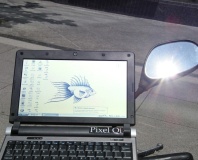
If you're the type of person who is constantly forgetting to put their gadgets on charge, you'll be itching to get your hands on a laptop based around Pixel Qi's new technology.
According to
Yahoo, Mary Lou Jepsen – previously the head of Intel's display division, and then later chief technology officer at Negroponte's One Laptop Per Child – is hoping that her newly-formed company will revolutionise the laptop industry.
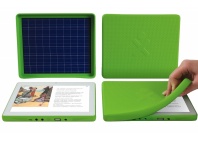
Rather than concentrate on improving the technology behind the battery – hairy work involving worrying chemicals and always gaining the tiniest percentage improvement with each generation – Pixel Qi is looking to use display technology developed as part of the One Laptop Per Child program to dramatically reduce the amount of energy a laptop needs in order to run – and the company is talking about devices capable of running between 20 and
40 hours without a recharge.
Jepsen believes that the inventions her company is working on “
go well beyond the [One Laptop Per Child] screen that we are developing right now,” and claims that the low power draw of the new screens is such that “
we can enable an increase of 5-10x battery life between charges compared with a standard notebook.”
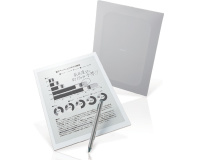
The displays – which will include ultra-low power LCD ranges for notebooks and netbooks alongside colour electronic paper screens for e-book readers – are likely to start shipping later next year.
Hoping that the technology will have proven itself the next time you're looking to upgrade your laptop, or is anything more than a ten-hour runtime a waste? Share your thoughts over in
the forums.

They are probably developing some kind of bi-stable TFT screens (same as so called "e-ink") which use less energy than "normal" screens, but they still need some when the picture changes (and on PC screens something changes pretty much all the time) and for the backlight (which actually uses around 75% of all the dosplay's power). So unless they ship those laptops with a 60AH gel battery, just adding a power-saving screen won't give you much more battery life.
Oh, and one more thing - bi-stable screens are (for now) monochromatic.
Fair point but components are getting more efficient all the time, the more powerful processors of today use less energy than processors of the previous generation. In time I believe 40 hours will happen but it's a matter of when.
My laptop today is certainly much more powerful than than my laptop of 5 years ago yet I have about 4 times the battery life.
Anyway, yay for development! I'm wondering how these screens will perform though...
Which would actually be fine for most of what I use a netbook for, and which I'd happily go for if it gave me enough endurance to last, say, a London to LA plane flight.
Ye im thinking more about that theyll just put in more powerful and therefore power hungry components it might be achieveable at some point but not just yet.
this. screens simply do not draw a high enough percentage of the laptop's power for a claim like this to be true. unless the screen is a hybrid LCD/solar panel that charges the battery while it runs.
Have you considered what it takes to print store, ship and keep current enough books to educate one African country? All the African countries? Africa and India? Add in all the other remote and poor places and suddenly the idea of a low powered laptop makes sense. Not to mention, with basic GPRS net access, the kid's have access to online resources and lectures they might never see. Parents suddenly have access to weather, soil and agriculture data to help them plant better. They have access to market rates so they know where to sell the produce and how much to sell it for; often cutting out a middle man. They get access to medical information, information on green tech. Suddenly they know that is s larger world out there, with options for them to better their lives.
While I love books, I recognize that they have limitations when it comes to educating 1/2 the world's population that live in poverty. Never before has so much information been available to those with net access. Simply having that access levels the playing field to a degree not seen in a long times. OLPC has the potential to be a force multiplier.
Who then comes and cuts their throats...
Oh, maybe my view of Africa is a bit biassed by the tendancy to civil wars down there...
Xir