Bletchley Park, the home of code breaking during the Second World War, is hoping to secure its future as an important historical site – with a little help from IBM and PGP.
The unassuming set of buildings in Milton Keynes was home to some of the brightest minds in the world – and was key in the Allied victory in World War 2. It was at Bletchley Park where some of the most important work was done on codebreaking and computing, and without advances such as the
Turing Bombe it's fair to say modern computing would look very different.
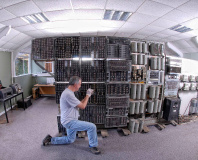
Bletchley Park, as well as being a code museum, is home to the
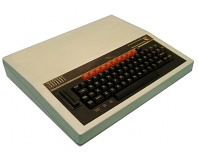
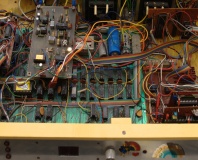
National Museum of Computing – an ambitious project to gather fully-working examples of as many different computing devices as possible, from a fully-working Colossus to the microcomputers of my youth.
Sadly, the future of the facility is starting to look uncertain. According to
CNet many of the buildings are in a poor state of repair, and without an injection of cash soon both the museums may have to close their doors.
Accordingly, two companies that have perhaps the most to thank Bletchley Park for have joined forces to begin a fundraising drive: IBM, one of the earliest successful computing corporations; and PGP, the encryption specialist corporation founded by Phil Zimmerman. The current CEO of PGP, Phil Dunkelberger, told CNet that his company hopes to call “
attention [to the fact] that Bletchley is falling into disrepair, and that, probably, the world owes a debt of gratitude to that place.”
The National Museum of Computing is feeling the squeeze especially badly: with no external funding, the Museum attempted to get a National Lottery grant and was turned down. Following this, it applied for funding from the Bill and Melinda Gates Foundation – a company with more than a passing knowledge of the history of computing – but was again denied.
I can only hope that the fundraising campaign is a success, as the nation – and, indeed, the world – will lose a valuable memorial and educational resource with regards the early days of computing technology should the facility be allowed to moulder.
Have any of our readers been to Bletchley Park, or were you unaware of its existence? Share your thoughts over in
the forums.










Want to comment? Please log in.