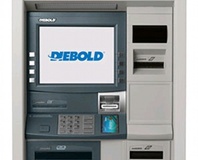
Premier, previously known as Diebold, has admitted an error in its voting software stretching back over ten years.
Anyone who has been paying attention to the US voting scene over the last few years will have heard of Diebold, the manufacturer of controversial digital voting systems which recently renamed itself to Premier. Well, the company has addressed that controversy – with an admission that the machines are faulty.
Techdirt noticed the admission from the company, the content of which won't surprise
critics of the electronic voting machine manufacturer, on the
Washington Post website. It seems that machines used in thirty-four US states contain a “
programming error” which causes the devices to discount valid votes: as far as you're aware the vote went fine, but your particular choice never makes it to the official record. Something of a problem in a voting machine, really.
Diebold/Premier has also admitted that not only does this rather serious glitch exist, but it can be traced back in the affected machines for more than a decade – which brings into question over ten years of votes taken via the machines.
Diebold, as it was then known, became famous for refusing researchers access to its machines to verify their operations, insisting that such independent testing was unnecessary as the systems were perfectly designed so as not to make errors. Clearly, this wasn't true – and still isn't. While the problem will be fixed in the near future, until such time as Diebold/Premier makes its machines and source code available for
thorough analysis by disinterested third parties I can't imagine
ever trusting a closed digital system to record my votes correctly.
Would you trust a voting machine from a company with Diebold's track record, or would you rather stick with the 'tick the box next to the candidate and stick the paper in a box' method of voting? Share your thoughts over in
the forums.

paper = cheesecake
These are incredilby simple devices - no color display, no touch screen, no punch cards. People vote by punching in their candidate's number - two digits for president, governor or mayor, 3 digits for senator, 4 and 5 digits for other representatives.
Before the voting begins, a report called ZERESIMA is printed out, to verify that there are no votes already in the ballot's memory. Voters arrive, are identified and their ID number is punched into a remote terminal, which unlocks the ballot. After all the votes are cast (up to 5), the ballot locks itfself, waiting for the next voter. At the end of election day, a code is typed into the remote terminal, several reports are generated (including a vote count, which must match the number of voters who have signed the voter list), all the data is verified and recorded into a floppy (yes, floppy) disk and uploaded via the internet to a central server. Results are cast in less than 24 hours.
Bear in mind that voting in Brazil is mandatory, and we have over 100 million voters.
If you want to get a feel for Brazilian ballots, go to:
http://www.tse.gov.br/eleicoes/urna_eletronica/simulacao_votacao/UrnaApplet2.htm
(I have worked on several elections already)
Oh, BTW, << an American who knows how ridiculous our electoral system is and has been saying so for years. Snide remarks from outsiders helps people like GWB. Please try to remember that if you don't like the guy.
always stick to a hard copy when doing something important
Trolling aside, I wouldn't be at all surprised if they're trying to overextend their perceived incompetence to cover up something more sinister. As it's closed source, we have no way of knowing what is or isn't accurate; all we know is that they've long since proven that we can't trust them.
Fox Mulder: "Trust no(t) one" politician.