AMD 770X Motherboard Duel
Following Tim’s recent article on building a
£400 gaming PC, where we utilised a sub-£45 Gigabyte GA-P31-DS3L to achieve not only a rock solid system but also some pretty impressive overclocks, we’ve been thinking about what else is available in the bargain side of the motherboard market.
With our £400 gaming PC article we proved from the Intel side at least, that a low price tag needn’t mean poor performance or crippled features, so we were keen to investigate the budget board options on the red (or is it green?) side of the fence, with AMD’s low end 770X CrossFire chipsets a prime target for a thrifty motherboard showdown.
The AMD 770X chipset is right at the bottom of the AMD chipset ladder, beneath the 780G, 790X and 790FX, so you won’t be seeing many extraneous features, like quad gigabit LAN, on these boards, and their price point very much reflects this. However, the two boards we've selected, the Sapphire AM2RX780 (which is a 770X chipset board, despite its name) and the Abit AX78 still come ready for modern technologies, with support for quad and triple-core Phenom processors and ATI CrossFire.
Can these feature light budget boards offer the stability and overclocking headroom comparable to their more expensive competition? Are they enough to tempt people away from the popular Intel camp? We rolled out the benchmarks and found out.
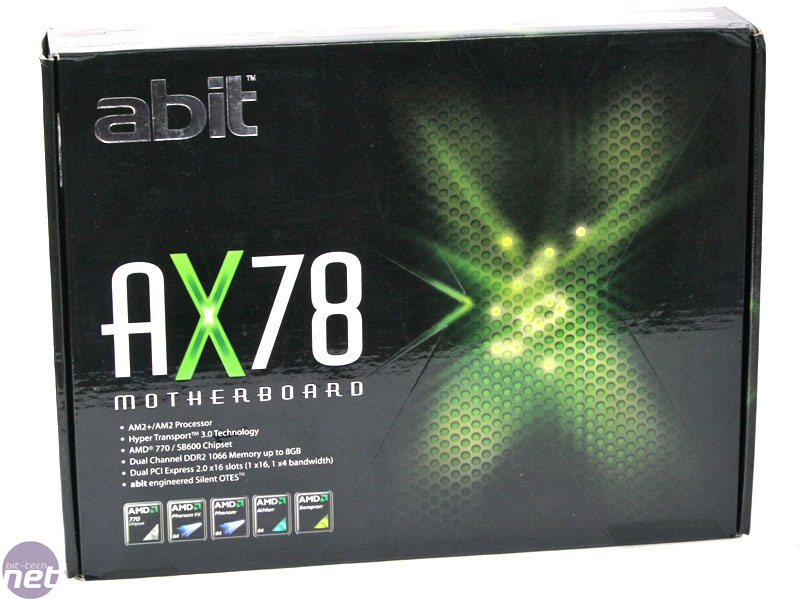
Abit AX78
Manufacturer: Abit
UK Price (as reviewed): £47.60 (inc. VAT)
US Price (as reviewed): $79.99 (ex. Tax)
Abit AX78 Features
- Support for socket AM2 and AM2+ Athlon 64, Athlon 64 X2 dual-core processors along with triple and quad-core Phenom CPUs
- AMD 770X north bridge
- AMD SB600 south bridge
- Four DDR2 DIMM slots supporting up to 8GB of memory at 1,066, 800 or 667MHz
- Realtek ALC883 audio codec supporting 7.1 channel High-Definition surround sound
- One Marvell ME8056 PCI-Express Gigabit LAN
- One PCI-Express x16 Slot (x16 bandwidth)
- One PCI-Express x16 Slot (x4 Bandwidth)
- One PCI-Express x1 slot
- Three PCI slots
- Four SATA 3Gbps ports including support for RAID 0, 1, 0+1
- One IDE and one floppy port
- Ten USB 2.0 ports (four on rear I/O and six via pin-outs)
- One Optical S/PDIF Out
- LCD post readout display
- External CMOS clearing switch
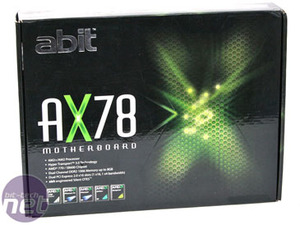
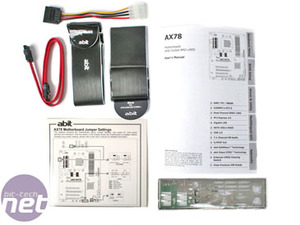
Box Contents
- User Manual
- Driver Disc
- Two red SATA cables
- One black floppy cable
- One black IDE Cable
- Backplate
- One four pin Molex to SATA power connector.
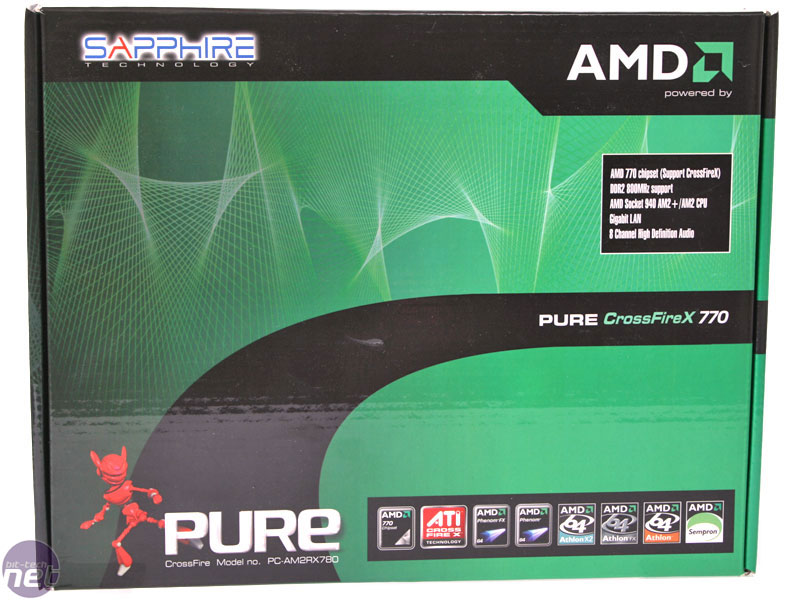
Sapphire AM2RX780
Manufacturer: Sapphire
UK Price (as reviewed): TBC - around £60 inc. VAT
US Price (as reviewed): TBC - around $100 Exc. TAX
Sapphire AM2 RX780 features
- Support for socket AM2 and AM2+ Athlon 64, Athlon 64 X2 dual-core processors along with triple and quad-core Phenom CPUs
- AMD 770X north bridge
- AMD SB600 south bridge
- Four DDR2 DIMM slots supporting up to 8GB of memory at 1,066, 800 or 667MHz
- Realtek ALC883 audio codec supporting 7.1 channel High-Definition surround sound
- One Marvell ME8056 PCI-Express Gigabit LAN
- Two PCI-Express x16 2.0 slots (x8 bandwidth, switch card included to force single lane x16 bandwidth)
- Two PCI-Express x1 slots
- Two PCI slots
- Four SATA 3Gbps ports including support for RAID 0, 1, 10
- One IDE and one floppy port
- Ten USB 2.0 ports (four on rear I/O and six via pin-outs)
- SPDIF in/out coaxial headers
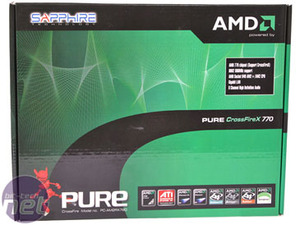
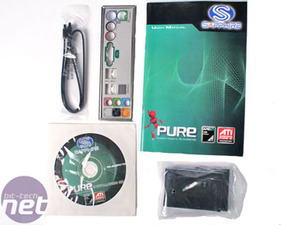
Box contents
- User Manual
- One Driver Disc
- One Black SATA Cable
- One IDE Cable
- One Back Plate+sticker sheet
- One PCI-Express Switch card
Both boards are targeted at the budget market, and so include very limited bundles and pretty basic feature sets. In the boxes we get almost identical extras from both boards, although Abit does throw in an additional SATA to Molex adapter and quick layout guide, but both only include a single SATA cable to be getting on with.












Want to comment? Please log in.