XFX nForce 790i Ultra SLI
Manufacturer: XFX
UK Pricing: £258.44 (inc. VAT)
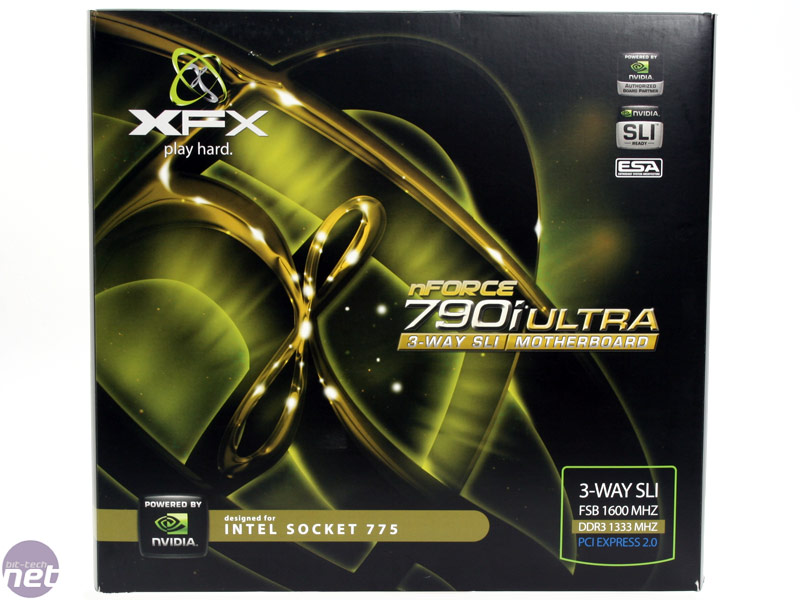
The XFX nForce 790i Ultra SLI motherboard is based on the Nvidia reference design that we saw out at CeBIT, while the box and packaging is much like the company’s nForce 780i SLI board we’ve looked at in the past.
Feature List
- Support for all LGA775 CPUs (including 45nm): Intel Core 2 Quad, Core 2 Duo, Pentium Dual Core, EE, D and Pentium
- Nvidia nForce 790i Ultra SLI SPP north bridge
- Nvidia nForce 570 MCP south bridge
- Supports 8GB dual channel DDR3 1,333MHz memory and also support for SLI-Ready EPP 2.0 memory up to 2,000MHz.
- Two PCI-Express x16 2.0 slots
- One PCI-Express x16 1.0 slots
- Two PCI-Express x1 1.0 slots
- Two legacy PCI slots
- 10 USB 2.0 ports
- Six native 3Gbps SATA sockets with Nvidia MediaShield that supports RAID 0, 1, 10, 5 and JBOD as well as NCQ and hot plugging
- JMicron JMB362 chipset supplying one ESATA and one SATA port
- Two PHY Broadcom BGA Gigabit Ethernet controllers that support FirstPacket and DualNet technologies
- Texas Instruments IEEE1394a Firewire chipset with two connectors
- Realtek ALC885 premium 7.1 channel High-Definition surround sound codec with S/PDIF support
Box Contents
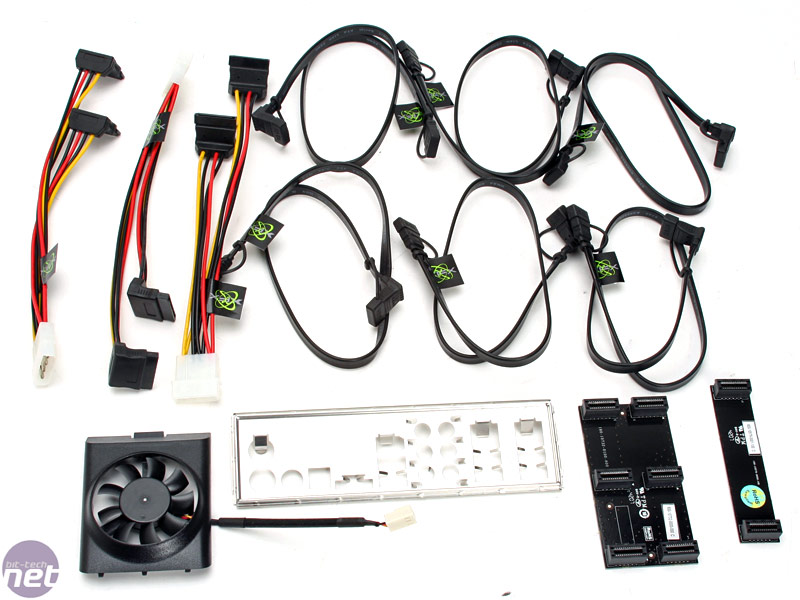
- Six black SATA cables with XFX labels and dust caps
- Three molex to six SATA power connectors
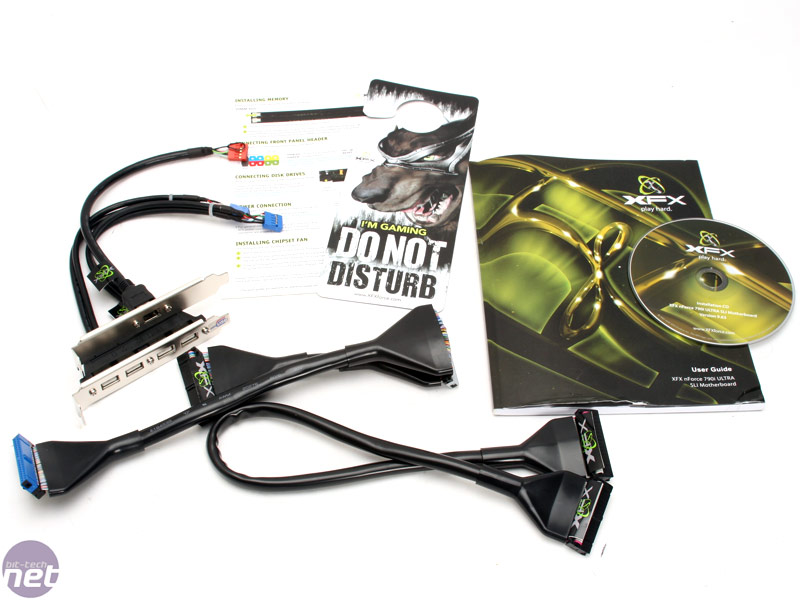
- One black, rounded floppy cable
- One black, rounded IDE cable
- One PCI bracket with four USB sockets
- One PCI bracket with one Firewire socket
- Manual and driver CD
The package is very good – all the native SATA ports have cables and even power connectors, although for anyone looking to utilise 3-way SLI will require at least a 1,100W PSU so you’d expect there to be plenty of SATA cables provided. It’s missing just one SATA cable for the extra socket, but to be honest, it’s in such an awkward place it’s not worth bothering with.
The IDE and floppy cables are also included and the whole black theme fits together very nicely. XFX has even included all four USB connectors on a single PCI bracket to maximise space saving – that’s great to see in our opinion.
Strangely, the most impressive part is the manual; it’s very detailed and is certainly worth the read. Most noteworthy are the explanations of key BIOS features, like each memory timing option – it tells you what they are, what they do and how they relate to each other. Not to mention that the motherboard layout is covered in depth with photos, the Nvidia software is all explained and all the additional features like SLI and ESA are also covered. It’s a genuine value add, unlike something that’s just a customary addition.











Want to comment? Please log in.