Manufacturer: Biostar
UK Price (as reviewed): £44.36 (inc. VAT)
UK Price (as reviewed): $85.59
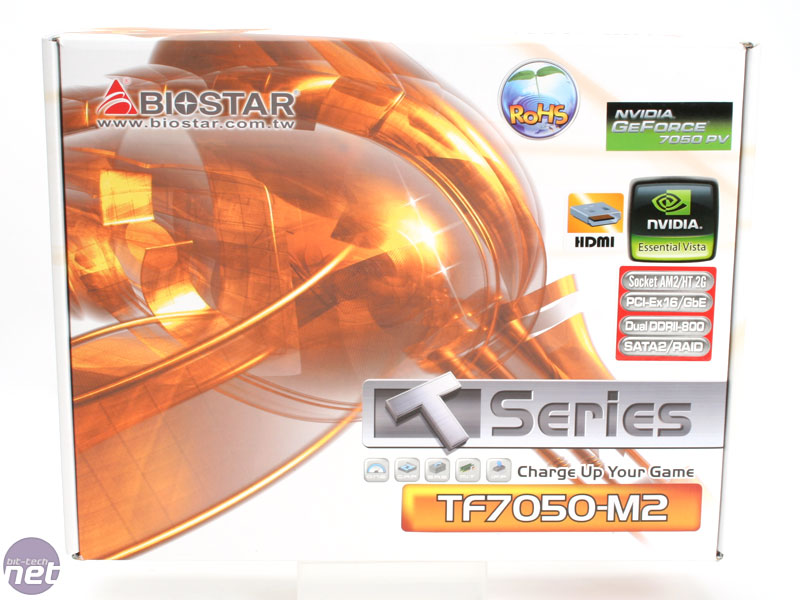
Biostar TF7050-M2 Overview
- AMD Athlon 64 X2, Athlon 64, Athlon FX and Sempron in socket AM2 that support a HyperTransport speed up to 1GHz (2000MT/s)
- GeForce 7050PV/nForce 630a single chip
- Supports up to 4GB of dual DDR2 400/533/667/800 DIMMs (240-pin / 1.8V)
- One PCI Express x16 slot
- One PCI Express x1 slot
- Two PCI slots
- One IDE port supporting UDMA 66/100/133
- Four SATA 3Gbps ports supporting RAID 0, 1, 0+1 and 5
- Realtek ALC888 providing eight-channel High-Definition audio with jack sensing
- Realtek 8111B Ethernet Controller, supporting 10/100/1000 Gigabit Ethernet over PCI-Express
- TV out, VGA and HDMI connectors on rear I/O
- 24.4cm(L) x 21.5cm(W) Micro-ATX form factor
Biostar does both GeForce 7050PV and GeForce 7025 variants of the motherboard, with the "50" being the more fully featured of the two, thanks to the inclusion of HDMI, HDMI audio and TV out on-board. The GeForce 7025 variant just offers VGA and DVI but still comes with HDCP.
Box Contents
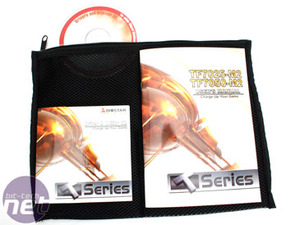
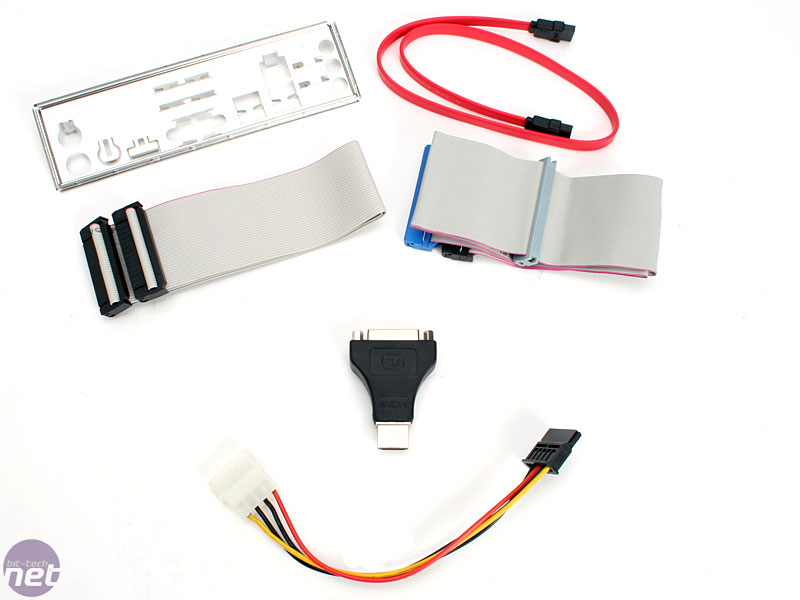
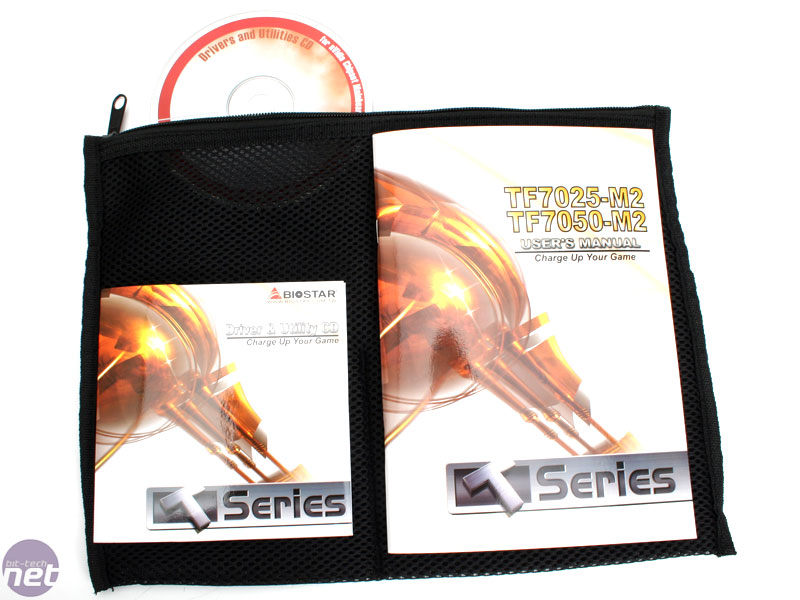
- A black zip pouch to keep everything tidy!
- HDMI to DVI adapter
- One red SATA cable
- One Molex to SATA power adapter
- metal rear I/O plate
- IDE and floppy cable
- Manual and driver CD
I'd like to say, "in all a really poor package", which it is if I was directing the statement at the contents only, however the zip pouch has a certain understated usefulness for keeping everything tidy and in one place. The HDMI to DVI adapter allows for even more on-board video connectivity than the already large variety of VGA, HDMI and component video out. However, without the component video cable that socket is effectively useless until you source a break out cable yourself.
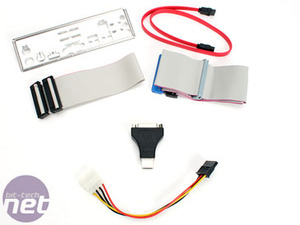
Including just a single Molex to SATA power adapter might be acceptable if you consider every PSU in the last few years has at least a couple of SATA power connectors. However if you're using a low power, hand-me-down PSU of old for a HTPC or low power box it's likely it won't have many, if any SATA connectors on it. Throwing in just a single SATA cable is worse though, considering four ports are provided on board. There are both IDE and floppy cables given, but they are the boring standard variety rather than something colour coordinated and perhaps rounded. But in all you get what you pay for: the board is only £45 so should you really expect everything under the sun like on a £200
Asus Striker Extreme?
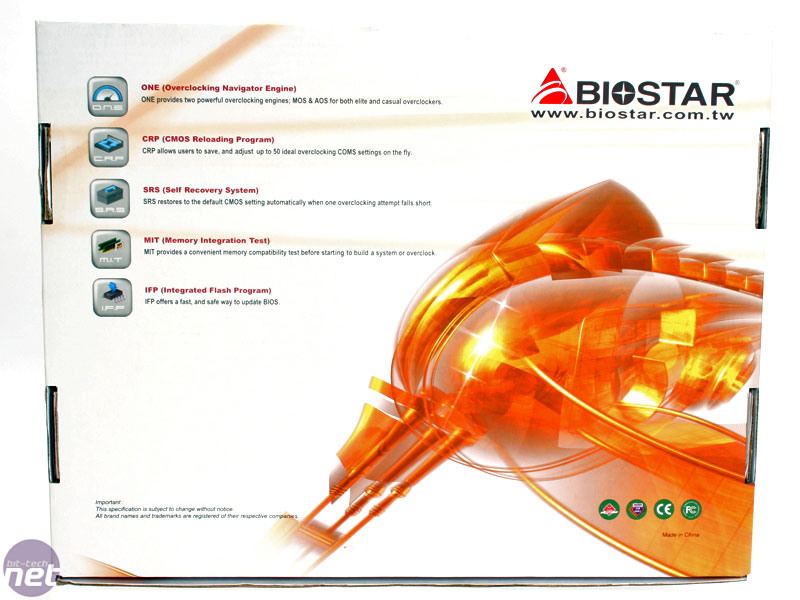
On the other hand the manual is pretty comprehensive, providing detailed information on the layout of the ports and pin-outs as well as information on what the RAID functions do. In addition there's information on the BIOS including overclocking, and there's details on the Windows software too.









Want to comment? Please log in.