Intel Core i3-2100 Review
Manufacturer: Intel
UK price (as reviewed): £89.16 (inc VAT)
US price (as reviewed): $124 (ex tax)
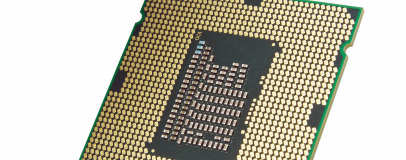
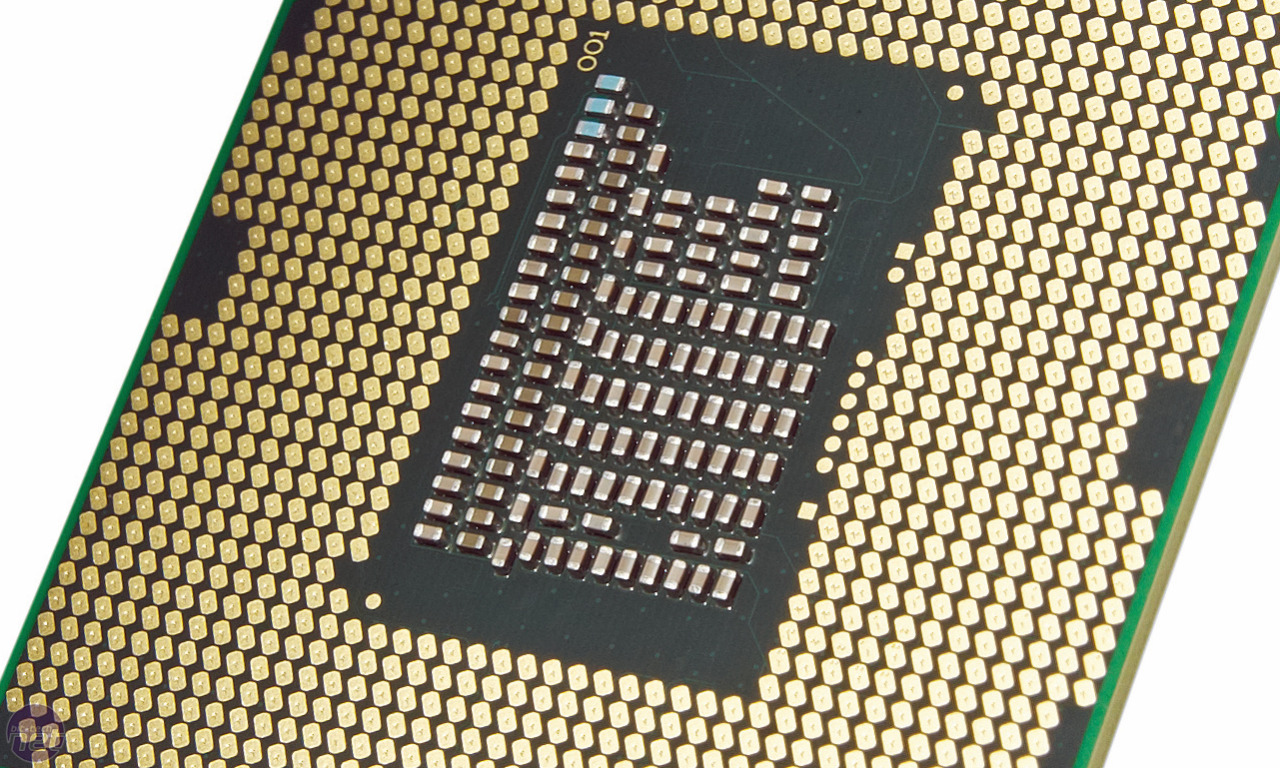
Intel's LGA1155
Sandy Bridge CPUs are fantastic, but the range has made little impression on the budget end of the market yet. The dual-core Core i3-2100, retailing for £90, is out to set this straight. At first glance, the i3-2100 looks like a CPU lightweight. It doesn’t support Turbo Boost, and to hammer this unpleasant nail home further, lacks the ‘K’ designation that denotes an unlocked multiplier too. This means that the i3-2100 won’t be winning any prizes for being a budget overclocking CPU.
What's more, now that many games and applications are finally making use of four or more cores, the i3-2100’s dual-core configuration means that its list of selling points is fairly short. Thankfully, it has Hyper-Threading to add two logical cores. Meanwhile, the i3-2100 has a clock frequency of 3.1GHz and, as it’s made using a 32nm production process, Intel states that it has a maximum TDP of just 65W - a third less than the power consumption of the Core i5-2500K quad-core CPU.
Click to enlarge
Unlike the Core i5-2500K, however, the i3-2100 has only 3MB of shared Level 3 cache (the i5-2500K boasts 6MB). Nevertheless, with 256KB of Level 2 cache per core, it should be able to keep up relatively well in the majority of tasks.
The i3-2100 is also equipped with Intel’s HD Graphics 2000 unit, although you’ll need to use a motherboard equipped with an H67 or Z68, rather than P67, chipset to access it. The Processor Graphics (PG) unit is a small upgrade from the unit included with Intel’s previous-generation Clarkdale CPUs, adding DirectX 10.1 support.
However, the PG manages to take significant loads, such as video encoding, off the CPU, which means that even very basic H67-based systems should be more adept at multi-tasking, especially if your limited budget means that you don't want to include a discrete graphics card.
Specifications
- Frequency 3.1GHz
- Core Sandy Bridge
- Manufacturing process 32nm
- GPU Intel HD Graphics 2000
- Number of cores 2x physical, 2x logical
- Cache L1: 32KB + 32KB (each core), L2: 256KB (each core), L3: 3MB (shared)
- Packaging LGA1155
- Thermal design power (TDP) 65W
- Features SSE, SSE2, SSE3, SSE4.2, EM64T, EIST, Execute Disable Bit,
Hyper-Threading, VT, AES-NI, AVX, Quick Sync Video










Want to comment? Please log in.