Battlefield: Bad Company 2
Publisher: Electronic Arts
From our
Battlefield: Bad Company 2 review:
“
Whether you’re blasting buildings apart with rockets, laying down controlled bursts with an assault rifle or putting in big booming hits with a shotgun, there’s real beef to the weaponry which again adds to the atmosphere of the game. DICE has managed once again to tap into the childish joy of shooting guns at people and things. Outside of shooting other people, the effects are equally good when you’re on the receiving end. There’s blood and dust aplenty from bullet hits and the death animations are suitably cinematic without being needlessly unpleasant or overly silly.”
Bad Company 2 uses the Frostbite game engine, and is the first PC game to use this engine. It’s DX11-compatible and uses
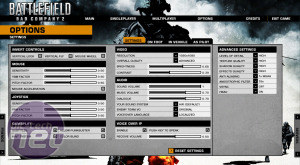
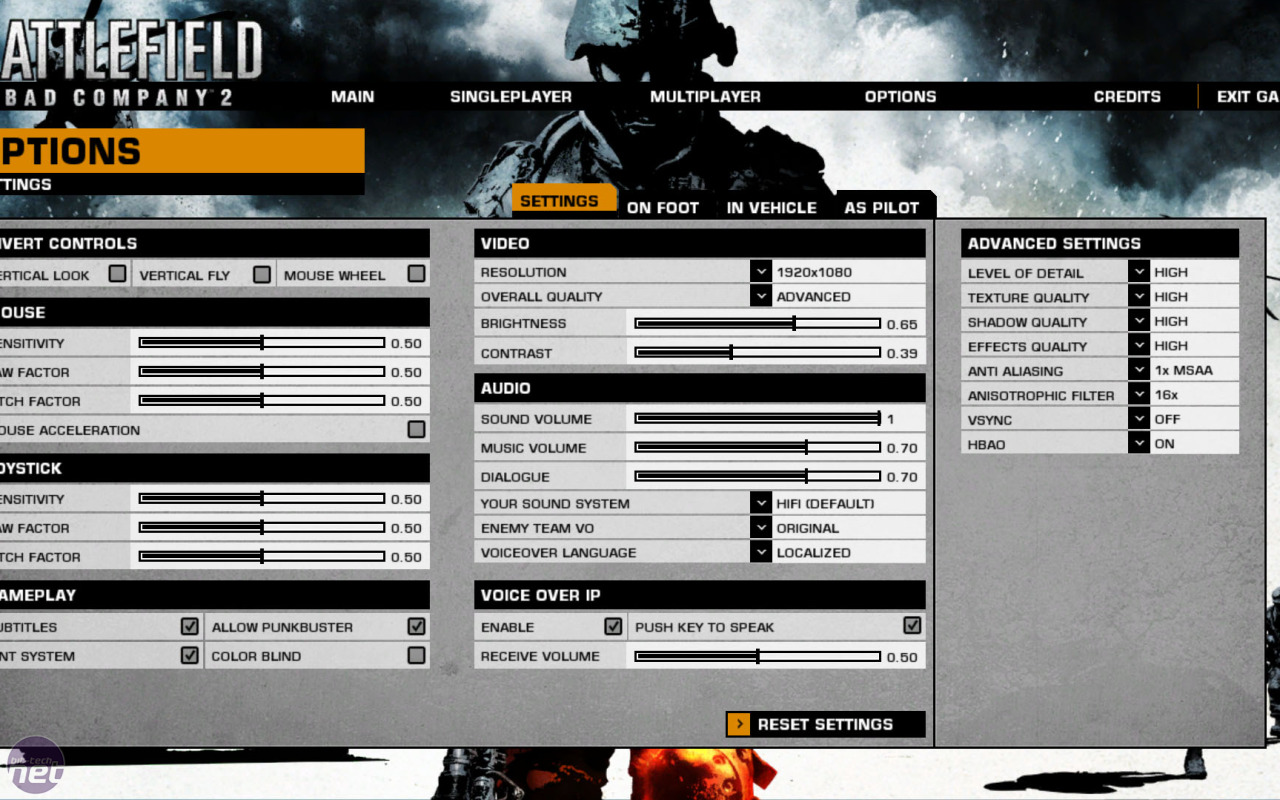
tessellation and other advanced rendering techniques to deliver incredible visuals and bash next-gen hardware. We take a 60 second sample of us playing through a section of the Heart of Darkness level with FRAPs, always following the same path and performing the same actions. We repeat each test three times, discarding anomalous results and averaging the consistent ones.
 Click to enlarge
-
1 CPU Core
-
2 CPU Cores
-
3 CPU Cores
-
4 CPU Cores
-
5 CPU Cores
-
6 CPU Cores
0
10
20
30
40
50
60
70
80
Frames per second (higher is better)
-
1 CPU Core
-
2 CPU Cores
-
3 CPU Cores
-
4 CPU Cores
-
5 CPU Cores
-
6 CPU Cores
Frames per second (higher is better)
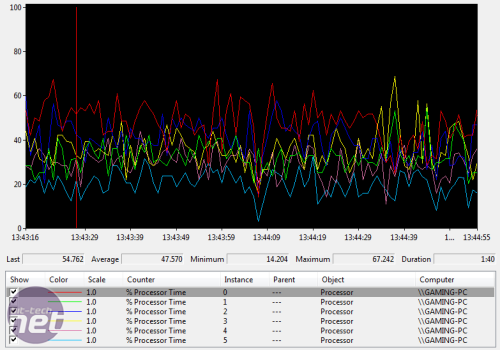
CPU usage in-game
 Click to enlarge
Interestingly it seems Nvidia requires three cores to get going whereas ATI only needs two. We repeated testing on both cards and found the results to be consistent. That said, using an ATI card also seems to cause
slight performance dents with triple and five cores versus four and six - something which doesn't happen with Nvidia.
In the bottom graph the engine appears highly threaded, with no core left untouched and between 15/20 to 60 per cent usage.













Want to comment? Please log in.