Audio Performance
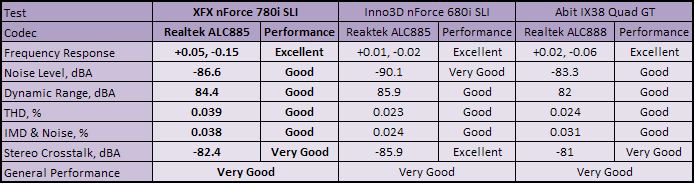
The audio performance tests were done using Audio Rightmark 6.0.5 and a 3.5mm gold plated, oxygen free stereo loop back cable between stereo out and microphone input. Results were taken at the DVD sample rate of 16-bit/48KHz and High Definition 24-bit/96KHz.
What we're looking for:
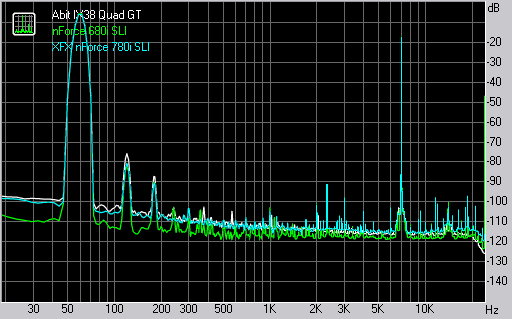
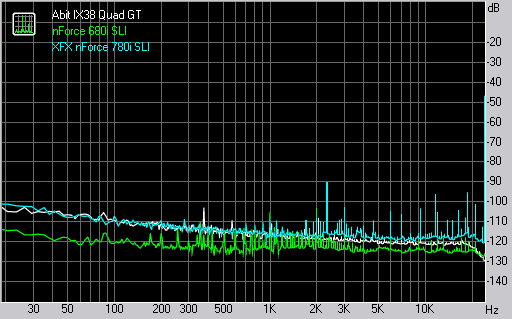
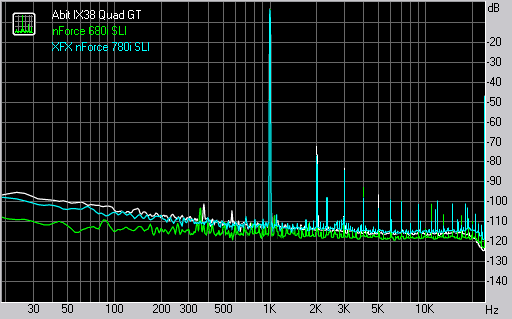
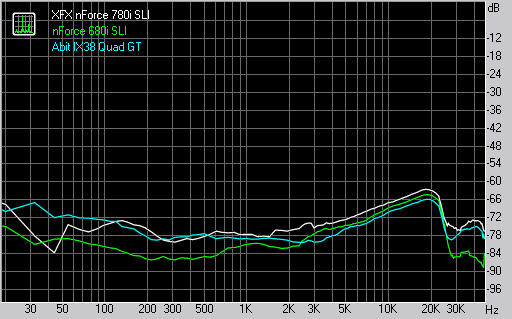
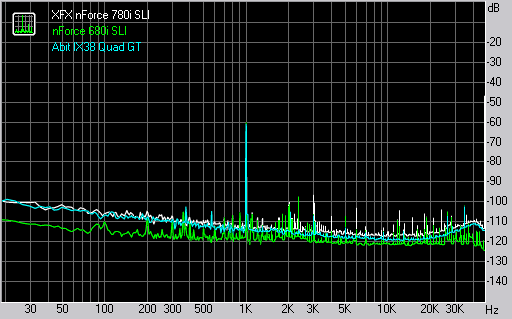
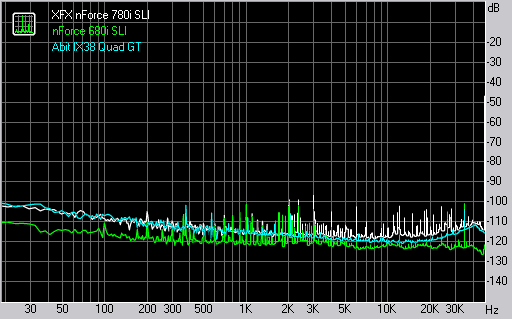
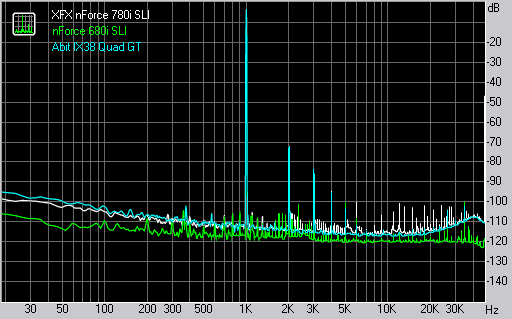
- Noise Level: A higher negative is better. This is usually viewed in relation to a signal level which provides a signal to noise ratio. As you get closer to zero there's more noise and lesser audio fidelity.
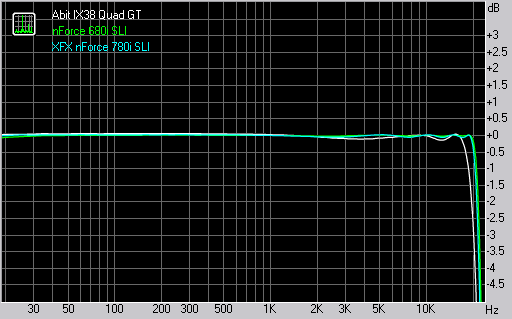
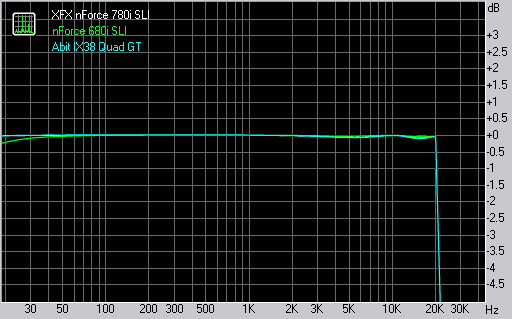
- Frequency Response: Two values listing how close to the lower higher frequencies the codec can reach. If it hits them perfectly it'll display a 0, 0.
- Dynamic Range: The difference between the loudest and quietest sounds the codec can make before it distorts them. The larger the gap, the better.
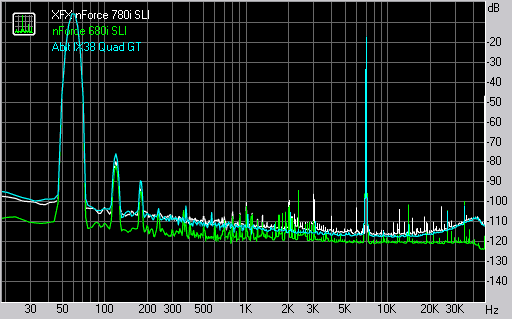
- THD and IMD percentage: Closer to zero is better. THD and IMD are best looked at together because if you have a lot of THD and not much IMD, then it'll offer a warmer accurate sound. High THD and IMD provides a warm, inaccurate sound, low THD and high IMD gives a cold inaccurate sound and finally low THD and IMD gives a cold accurate sound.
- IMD = intermodulation distortion and is a fancy way of saying conversion interpolation, which is a basic detection of the quality loss after an analogue to digital then digital to analogue conversion. By comparing it to a highly compressed source it shows up problems with the codec and converters.
- THD = total harmonic distortion, which shows up unwanted harmonics; integer multiples of the original component sound that can be second, third, fourth degrees or overtones for example.
- Stereo Crosstalk: where the stereo channels "talk" to each other and interact. Ideally you want them entirely separate, unmixed or echoed in either channel, so a higher negative a result as possible is preferred.
16-bit / 48KHz
 Click to enlarge
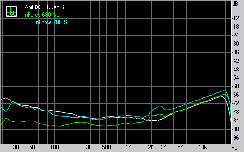
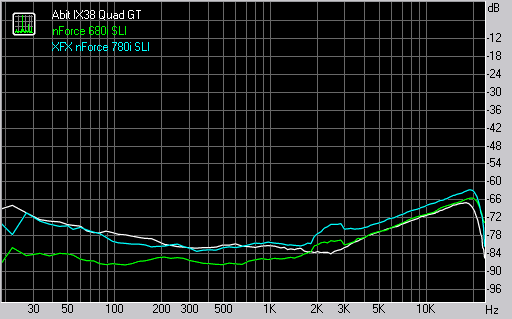
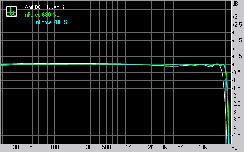 Crosstalk, Dynamic Range and Frequency Response
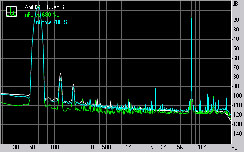
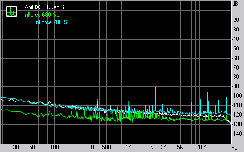
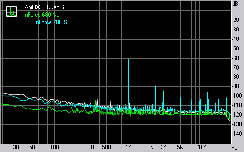
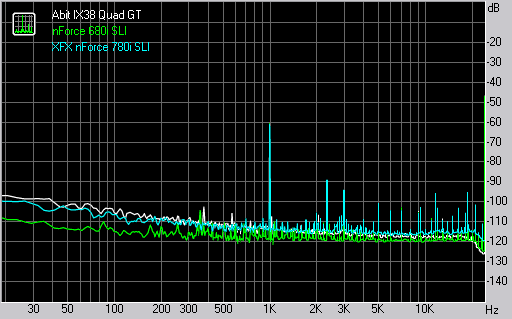
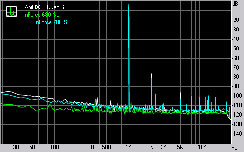 Intermodulation Distortion, Intermodulation Distortion Swept and Noise Level, Total Harmonic Distortion
24-bit / 96KHz
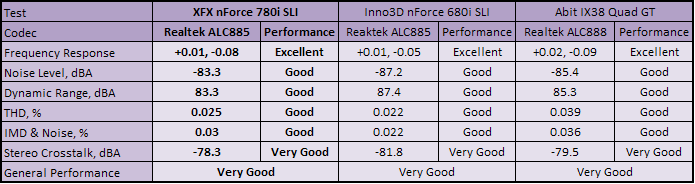 Click to enlarge
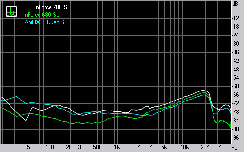
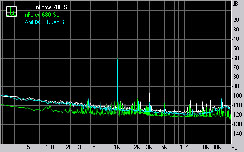
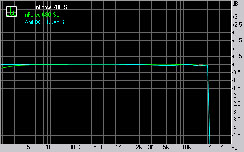 Crosstalk, Dynamic Range and Frequency Response
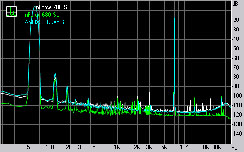
 Intermodulation Distortion, Intermodulation Distortion Swept and Noise Level, Total Harmonic Distortion
Both nForce reference designs use the Realtek ALC885 premium High-Definition audio codec which supports "protected content" that allows "full-rate audio enjoyment from DVD audio, Blu-ray DVD, or HD DVD discs". In comparison the Abit IX38 Quad GT uses the more popular 7.1 plus an additional 2 channel ALC888 codec. The ADCs and DACs on the ALC885 are rated at a higher performance than the ALC888.
We found that over 50 percent speaker output volume caused quite serious distortion and clipping in the audio stream for both Nvidia nForce motherboards - we had to compensate this by balancing microphone input with a medium speaker output to get the best results. On the other hand, the Abit IX38 Quad GT also uses a Realtek chipset and could set a much higher speaker output volume without such problems, and use a minimal microphone volume to minimise noise.
Despite this difference in setup, the quality from all was very even throughout our testing.









Want to comment? Please log in.