Test Setup
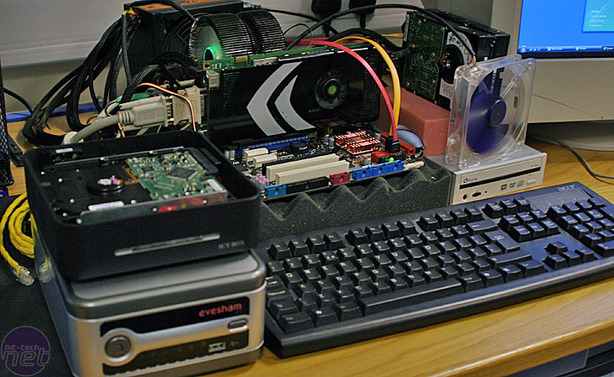
- Asus P5K Pro (0904 BIOS)
- Intel Core 2 Duo E6750, 2.66GHz
- 2GB OCZ Reaper PC-8500 at 800MHz 4-4-4-12-1T
- Nvidia GeForce 8800 GT
- 2x Western Digital Raptor 150GB WD1500AHFD (separate drives, non-RAID)
- Plextor PX-708A DVD-RW Drive
- Corsair TW750W PSU
- Icy Box IB-MP303S-B with a Seagate 7200.9 500GB SATA Hard Drive for USB file transfer testing
- Thecus N2100 with a Samsung Spinpoint HD103UJ 1TB Hard Drive and CAT5e crossover cable for Network testing.
- Intel Inf 8.3.1.1009 WHQL
- Nvidia Forceware 169.25 WHQL
- Windows Vista Home Premium 32-bit
We first installed Windows Vista onto a clean drive partition, then the latest hardware drivers were sourced and installed. Finally the system was fully patched (as of 25th March 2008) up to but not including Service Pack 1.
The drives were then cleaned (in the case of file copy testing), defragmented and rebooted between each test run. Each run was also done three times in order to get an accurate average result. After installing SP1 the drives were again defragmented using the Windows defrag utility.
In addition the Vista OS was set up in the same way that we always do in order to minimise the differences between individual test runs: File Indexing and Aero were left on, while ReadyBoost, Superfetch and System Protection were all disabled.
Boot Times
We tested the boot time from AFTER the system had successfully completed its POST procedure because this is independent of the OS booting and we took an average of three runs in succession.
-
Windows Vista 32-bit SP1
-
Windows Vista 32-bit non-SP1
Time in Seconds (lower is better)
On average, the SP1 machine booted several seconds slower than the non-SP1 machine. There are no extra visible elements in the boot process – it just does slightly more, which ends up making it a bit slower.













Want to comment? Please log in.